Burnham Attributes UK's Low Growth to Brexit and Thatcher's Legacy
PM Burnham blames Brexit and Margaret Thatcher for Britain's decade of low growth, calling for honesty about 40 years of political mistakes in first Commons speech.
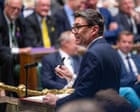
Burnham Addresses Commons on Britain's Economic Challenges
Prime Minister Andy Burnham has attributed Britain's sluggish economic performance to Brexit and the policies of Margaret Thatcher, emphasizing that the nation must confront the reality of taking "a series of wrong turns" over the past four decades. During his first parliamentary appearance since assuming office approximately six weeks ago, Burnham presented a comprehensive assessment of Britain's political trajectory and outlined his vision for restoring confidence in the nation's future.
The Prime Minister's remarks represented a significant moment in his early tenure, as he sought to establish a clear narrative about the causes of Britain's economic malaise. Burnham stressed the necessity for straightforward acknowledgment of past policy failures, arguing that only through such honesty could the government chart a more productive course. His reference to Brexit and the Thatcher era signaled an intention to move beyond partisan disputes and address structural weaknesses in the British economy that have accumulated over decades.
Defence Spending Commitments and Cabinet Appointments
In his parliamentary statement, Burnham indicated his administration's commitment to elevated defence expenditure, hinting at a pledge to allocate three percent of gross domestic product to military spending by 2030. The Prime Minister underscored this priority through his selection of John Healey as chancellor, explicitly noting that Healey's appointment reflected the government's resolve regarding defence investment. This strategic positioning suggests that Burnham views national security spending as integral to his broader economic and political agenda.
The emphasis on defence spending reflects broader geopolitical considerations affecting British policy formation. By placing a defence-focused figure in the role of chancellor, Burnham demonstrated his intention to integrate security concerns into financial decision-making processes, signaling to allies and adversaries alike a renewed commitment to military preparedness.
Water Industry Privatisation and Renationalisation Prospects
Burnham signaled receptiveness to renationalising Britain's water industry, characterizing the current state of the sector as a "leaking monument" to the failures of privatisation policies. The Prime Minister indicated that his government would examine "all possible solutions" for addressing systemic problems within the water sector, suggesting flexibility in approaching this contentious policy area. This position reflects growing public and political discontent with private water company performance and environmental management practices.
The water industry statement carries significant symbolic weight, given that privatisation formed a cornerstone of Thatcher-era reforms. By proposing to reverse or fundamentally alter this privatisation legacy, Burnham positioned himself as willing to reconsider policies that have become synonymous with decades of political conservatism. The reference to water as a failed privatisation experiment connects directly to his earlier critique of the Thatcher period and Brexit, suggesting a coherent ideological framework for his government's policy direction.
Electoral Reform and Democratic Change
The Prime Minister opened possibilities for revisiting electoral reform within Labour's forthcoming election manifesto. Burnham acknowledged diverse viewpoints within Parliament while emphasizing his belief that meaningful electoral change would require building consensus among political parties. His approach suggested a measured strategy rather than unilateral action, proposing that any significant constitutional reform would need to secure support across the political spectrum during the next general election campaign.
This cautious positioning on electoral reform reflects the complexity of implementing major constitutional changes while governing. By framing reform as contingent upon electoral consensus, Burnham avoided committing definitively to a specific course while keeping the possibility open for future consideration. The statement indicates recognition that such changes represent substantial undertakings requiring sustained political support.
Climate Policy and Energy Strategy
Regarding environmental policy, Burnham confirmed his intention to participate in the Cop31 climate summit in Turkey and maintain Britain's commitment to green energy development. However, he signaled pragmatism regarding energy supply management, indicating that the government would pursue both renewable and conventional energy sources rather than adopting an ideologically restrictive approach. This flexibility suggests potential approval of the Jackdaw gasfield project, reflecting tensions between climate objectives and practical energy security considerations.
The Prime Minister articulated a nuanced energy philosophy, rejecting false dichotomies between fossil fuels and renewable energy. His statement that "the mistake is saying it's got to be one or the other for political purposes" reflects recognition that energy policy must balance environmental ambitions with immediate energy supply requirements and economic stability. This pragmatic stance distinguishes his approach from more absolutist environmental positions, suggesting a governance philosophy grounded in practical necessity rather than ideological purity.
Building Optimism for the Future
Throughout his parliamentary address, Burnham emphasized his desire to cultivate renewed optimism among the British public. He articulated a vision wherein honest acknowledgment of past policy failures would facilitate the creation of a political environment conducive to positive change. The Prime Minister's overarching message suggested that confronting historical mistakes—whether related to Brexit, Thatcher-era policies, or more recent governance decisions—represented necessary preconditions for establishing a more prosperous and confident Britain in the coming decade.
Burnham's first Commons speech as Prime Minister established several key themes that appear likely to define his administration's approach: acknowledgment of structural economic problems, commitment to defence spending, flexibility on nationalisation questions, careful consideration of constitutional reform, and pragmatic energy policy. His rhetorical framing positioned the government as simultaneously honest about past failures and optimistic about future possibilities, attempting to bridge the gap between critical assessment and forward-looking confidence that may prove central to his political success.