US Measles Cases Surge Past 2025 Record in 2026
US measles cases exceed 2025 record with 2,318 infections in 2026, marking the worst year since 1991. CDC reports ongoing surge five months into the year.
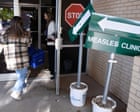
Record-Breaking Measles Surge in United States
The United States is facing an unprecedented public health challenge as US measles cases continue to climb dramatically throughout 2026. Recent data from the Centers for Disease Control and Prevention reveals that the nation has now documented 2,318 confirmed measles infections, surpassing the previous annual record established in 2025 when 2,289 cases were reported across the entire year. With five months still remaining on the calendar, the 2026 figures already represent the most significant measles outbreak since the disease received official elimination status in 2000.
CDC Data Confirms Alarming Trajectory
On Friday, federal health officials released updated statistics confirming that US measles cases have reached unprecedented levels in the current year. The CDC's comprehensive tracking shows that monthly case counts continue accelerating, with July marking a particularly concerning spike in reported infections. The nation crossed the critical 2,000-case threshold in June, but has now expanded well beyond that milestone as transmission continues across multiple communities.
The progression of US measles cases demonstrates the speed at which this highly contagious disease spreads when vaccination rates decline. Each week brings new confirmed cases from different regions, suggesting that measles is establishing itself in pockets of lower immunization coverage throughout the country.
Worst Year Since 1991
Public health analysts emphasize that 2026 now stands as the worst year for measles in America since 1991, marking a dramatic reversal of decades of progress against a disease that once caused significant childhood mortality. The resurgence of measles infections represents a concerning departure from the elimination milestone achieved in 2000, when sustained vaccination campaigns had effectively eliminated endemic transmission within US borders.
The comparison to 1991 statistics underscores how substantially measles cases have grown. In the 35 years between 1991 and 2026, medical infrastructure improved, vaccines became more accessible, and public health systems became more sophisticated. Yet despite these advances, US measles cases have climbed to exceed previous modern records, indicating that immunity gaps have widened considerably across certain populations.
Understanding the Current Outbreak Pattern
The timing of the measles surge, with particularly sharp increases noted in July, suggests that cases may continue rising as summer transitions into autumn. Healthcare providers nationwide report that confirmed measles cases are appearing across diverse geographic regions, complicating containment efforts. The CDC's ongoing surveillance tracks each reported infection, with epidemiologists investigating transmission chains to identify exposure sources and at-risk populations.
Medical experts note that measles, caused by the highly infectious measles virus, spreads through respiratory droplets and can infect approximately 90 percent of unvaccinated individuals exposed to an infected person. This transmission characteristic explains why rapidly escalating US measles cases often indicate substantial immunity gaps within specific communities.
Implications for Public Health Response
The record-breaking measles infections documented in 2026 have prompted intensified public health response measures. The CDC has mobilized resources to support outbreak investigations, vaccination campaigns, and community education efforts aimed at increasing immunization rates. State health departments work alongside federal agencies to track each confirmed case and identify contacts requiring monitoring.
Healthcare systems across the nation have heightened awareness and preparedness protocols. Clinicians are reviewing diagnostic procedures to ensure rapid identification of suspected measles cases, while laboratories prioritize testing to confirm infections quickly. This coordinated response reflects recognition that controlling measles depends on swift detection and swift public health action.
Vaccination Gaps and Community Immunity
Behind the alarming rise in US measles cases lies a documented erosion of vaccination coverage in certain communities. Measles elimination achieved in 2000 depended on maintaining high population immunity through consistent vaccination campaigns. However, recent years have witnessed declining vaccination rates among specific populations, creating vulnerability to measles reintroduction and transmission.
Public health officials emphasize that the measles vaccine remains highly effective at preventing disease when administered according to recommended schedules. Two doses of the MMR vaccine provide approximately 97 percent protection against measles, yet communities with lower vaccination rates lack this collective protection. This disparity in immunity explains why US measles cases concentrate in regions with elevated vaccine hesitancy or vaccine access barriers.
Looking Forward
As 2026 continues, public health authorities anticipate that US measles cases may continue rising unless vaccination coverage improves substantially. The CDC projects case counts based on current transmission patterns, though actual numbers depend heavily on community response to vaccination outreach campaigns. Health officials urge healthcare providers and parents to prioritize MMR vaccination, emphasizing that preventing measles protects not only individuals but entire communities from this potentially serious disease.