Trump's Auto Tariff Threats Spark Canada Trade Crisis
Trump threatens major tariff increases on Canadian autos as tensions rise. Mark Carney vows retaliation, demanding US negotiations with proper approach to resolve trade dispute.
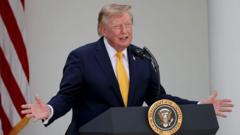
Trump's Auto Tariff Threats Intensify US-Canada Trade Tensions
The escalating trade conflict between the United States and Canada has reached a critical juncture as Trump's auto tariff proposals threaten to reshape North American commerce. The controversial Trump auto tariffs have become the centerpiece of an increasingly contentious negotiation process that shows no signs of immediate resolution.
Mark Carney, a prominent Canadian political figure, has taken a firm stance against what he characterizes as deliberate efforts to undermine Canada's automotive sector. His statements reflect growing frustration within Canadian leadership circles regarding the administration's protectionist trade policies.
Carney's Strong Response to Tariff Escalation
Carney has explicitly stated that Trump is attempting to "destroy" Canada's auto industry through aggressive tariff mechanisms. This accusation underscores the severity of the situation and represents a significant escalation in rhetorical intensity between the two nations.
The Canadian official has made clear that any meaningful dialogue cannot proceed without a fundamental shift in the American negotiating posture. He has stipulated that the United States must approach future discussions with what he describes as the "right attitude," signaling that the current trajectory is incompatible with productive engagement.
Retaliation Measures and Threats
Carney's vows to retaliate represent more than symbolic resistance; they indicate Canada's readiness to implement countermeasures against American tariff increases. This tit-for-tat dynamic threatens to create a destabilizing cycle that could severely impact bilateral trade relationships and broader economic cooperation.
The threat of Canadian retaliation introduces additional uncertainty into markets already sensitive to trade policy developments. Investors and businesses on both sides of the border are closely monitoring developments, recognizing that unilateral tariff actions could trigger reciprocal responses with widespread economic consequences.
The Automotive Sector at the Center of Dispute
The auto industry remains the focal point of this trade disagreement, given its strategic importance to both economies. The sector employs hundreds of thousands of workers across North America and represents a cornerstone of continental economic integration that has developed over decades.
Any disruption to automotive trade flows through Trump auto tariffs would reverberate throughout supply chains, affecting manufacturers, component suppliers, and ultimately consumers. The interconnected nature of North American auto production means that unilateral tariff actions create cascading effects across multiple countries and industries.
Negotiation Stalemate and Path Forward
The current impasse reflects fundamentally divergent approaches to trade policy. While the Trump administration appears committed to using tariffs as leverage, Canadian officials argue that such aggressive measures undermine the foundation necessary for productive negotiations.
Carney's insistence on a shift in "attitude" suggests that technical negotiations alone are insufficient; broader changes in approach and tone are required. This positioning indicates that the dispute transcends mere numbers and percentages, touching on fundamental questions about how trade relationships should be conducted between neighboring nations.
Broader Implications for Trade Relations
The escalating tensions raise questions about the future of trade arrangements between the United States and Canada. Both nations have deep economic integration, and disruptions could carry significant consequences for workers, businesses, and consumers across North America.
The standoff demonstrates how quickly commercial disputes can escalate when political will hardens and each side becomes entrenched in its position. Without meaningful concessions or changes in strategy from either party, the risk of further deterioration in trade relations remains substantial and concerning to observers monitoring the situation closely.