Trump Endorses United Ireland: 'May as Well Happen Now'
Donald Trump expresses support for Irish unification during his Ireland visit, saying it will happen eventually. UK and Northern Ireland unionists swiftly respond.
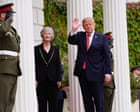
Trump's Surprising Statement on Irish Unification
During an official state visit to the Republic of Ireland, US President Donald Trump expressed his personal support for Trump United Ireland, suggesting that the process of reunification "may as well happen now" rather than waiting for an indefinite future. The president's remarks, made at the beginning of a two-day diplomatic mission, caught many observers by surprise due to the sensitive nature of the topic in British-Irish relations.
Trump stated he would "love" to witness a united Ireland, framing his position as an acknowledgment that such unification appears inevitable. His unexpected intervention into Irish constitutional matters sparked immediate controversy across the Irish Sea, with officials from London and Belfast responding defensively to his comments.
Political Context of Trump's Intervention
The Trump United Ireland comments arrived during a period of ongoing discussion about potential constitutional change on the island of Ireland. While Irish nationalism has long advocated for reunification, such statements from international leaders—particularly the sitting US president—remain relatively uncommon in diplomatic spheres.
Trump's endorsement of this position represents a significant moment in transatlantic relations, as American presidents typically exercise caution when addressing internal matters between the United Kingdom and Ireland. The president's willingness to voice support for Irish unification demonstrates either a departure from traditional diplomatic protocol or a calculated political gesture toward Irish-American constituencies.
UK and Northern Ireland's Swift Response
The British government issued a prompt rebuttal to Trump's remarks on Irish unification. Officials in London expressed concern about foreign interference in what they consider an internal matter for the United Kingdom and its constituent parts. Northern Ireland's unionist political leaders similarly condemned the president's statement, arguing that such external pressure undermines the carefully balanced constitutional arrangements established through the Good Friday Agreement.
Unionist representatives emphasized that any changes to Northern Ireland's constitutional status must occur through democratic processes involving the people of Northern Ireland themselves, not through encouragement from foreign dignitaries. The swift and coordinated response from UK authorities and Northern Ireland's unionist community underscored the contentious nature of Trump's intervention.
The Two-Day State Visit Context
Trump's statement came at the outset of a scheduled two-day visit to the Republic of Ireland, a trip that was meant to focus on bilateral relations, historical connections, and economic ties between the United States and Ireland. The controversial remarks about Irish reunification quickly overshadowed other elements of the diplomatic agenda, dominating media coverage and political discussion.
The timing of Trump's comments, delivered early in the visit, suggested either a deliberate strategy to signal American sympathies toward Irish aspirations or an unscripted observation that was not carefully vetted by his diplomatic advisors. Either interpretation raised questions about the direction of Trump's foreign policy approach toward the United Kingdom and Ireland.
Broader Implications for Irish Politics
Trump's endorsement of Irish unification adds an international dimension to an already complex domestic political debate in Ireland. While the statement may resonate with Irish nationalists and supporters of reunification, it also complicates relations between the United States and its longtime ally, the United Kingdom.
The president's assertion that unification "will happen eventually" reflects demographic and political trends that have been discussed in Irish and international political circles, yet his public endorsement of this outcome from the White House carries significant symbolic weight. His comments potentially embolden those advocating for constitutional change while strengthening unionist resolve to resist what they perceive as external pressure.
Historical and Constitutional Background
Ireland's partition in 1921 created the Irish Free State in the south and remained Northern Ireland within the United Kingdom. The island has remained divided for over a century, with ongoing political, cultural, and historical significance attached to the question of reunification. The Good Friday Agreement of 1998 established the current constitutional framework, providing mechanisms for potential reunification if majorities in both jurisdictions support it.
Trump's comments, though framed informally, intersect with these deep historical and constitutional matters that continue to shape Irish and British politics. His willingness to voice an opinion on this matter represents an unusual moment in which a major international figure publicly endorsed a position that remains deeply divisive on the island of Ireland and across the Irish Sea.