Trump Backs Burnham as UK PM Despite AI and Iran Disputes
Trump praises Burnham as 'natural businessperson' at UN meeting, signaling improved US-UK relations despite tensions over AI regulation and regional conflicts.
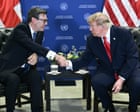
Trump Endorses Burnham in High-Stakes UN Encounter
During a pivotal meeting at the United Nations General Assembly in New York, Donald Trump has expressed confidence in strengthening Trump Burnham UK relations, marking a significant shift in transatlantic diplomacy. The American president convened with the British counterpart for their inaugural face-to-face encounter, where he articulated optimism about the bilateral partnership while acknowledging ongoing disagreements on critical policy matters.
Trump characterized the current state of affairs as substantially improved compared to previous administrations, specifically contrasting his assessment with the tenure of Keir Starmer. The US leader's remarks suggest a recalibration of diplomatic priorities and a personal rapport with the incoming British leadership, despite existing friction points that continue to complicate the relationship.
Trump's Assessment of New UK Leadership
The American president offered unqualified praise for his British counterpart, describing him as a "natural businessperson" possessed of considerable strengths and potential for leadership. Trump stated his belief that the UK prime minister would prove to be "great" in his forthcoming role, highlighting qualities he perceives as essential for executive success on the international stage.
This endorsement carries significant weight within diplomatic circles, as Trump's public support could influence perceptions of legitimacy and capability among international stakeholders. The president's emphasis on business acumen reflects his own background and suggests he values pragmatic, results-oriented approaches to governance and international engagement.
Persistent Tensions on Critical Issues
Despite the ostensibly positive tone of their meeting, substantial disagreements remain unresolved between Washington and London. The regulation of artificial intelligence represents one of the most contentious areas of divergence, with the two nations pursuing divergent regulatory frameworks that reflect differing philosophies on innovation, safety, and governmental oversight.
The Chagos Islands dispute continues to generate diplomatic friction, as the United States maintains strategic interests in maintaining control over the territory while the United Kingdom has committed to returning sovereignty to Mauritius. This territorial question involves complex historical, geopolitical, and military considerations that defy easy resolution.
Furthermore, tensions surrounding the Iran situation persist as a significant source of disagreement between the two allies. The nations maintain different approaches to engagement with Tehran, reflecting broader strategic divergences in Middle Eastern policy and nuclear non-proliferation strategies.
AI Regulation as a Central Point of Contention
The artificial intelligence regulation debate exemplifies broader differences in how the two countries approach technological governance. The UK has adopted a more principle-based regulatory approach, while the US has emphasized market-driven innovation with lighter-touch oversight. These divergent paths create potential complications for companies operating in both jurisdictions and signal deeper philosophical differences about the relationship between government and private sector innovation.
Both nations recognize the transformative potential of AI technologies but disagree fundamentally on how to balance innovation with risk mitigation. The regulatory environment each country establishes will have profound implications for technology companies, research institutions, and ultimately, global technological development trajectories.
Geopolitical Realignment and Strategic Priorities
The evolution of Trump Burnham UK relations reflects broader shifts in the international geopolitical landscape. The changing political composition of both governments has created opportunities for reassessing priorities and establishing new frameworks for cooperation. Trump's apparent preference for Burnham over his predecessor suggests a potential shift toward greater alignment on certain strategic issues.
The meeting at the United Nations provided an opportunity for both leaders to articulate their respective visions for the transatlantic partnership and to explore potential areas of expanded cooperation. The dialogue occurred against a backdrop of evolving global challenges, from economic competition to security threats to technological advancement.
Implications for Bilateral Trade and Economic Relations
The improved tone in bilateral diplomatic relations may create favorable conditions for advancing trade negotiations and economic cooperation between the nations. Trump's historically transactional approach to international relations suggests he will evaluate partnerships based on perceived mutual advantage. His optimistic assessment of the new British leadership indicates potential willingness to negotiate agreements that both nations find mutually beneficial.
Economic partnership between the US and UK encompasses numerous sectors, from financial services to defense manufacturing to emerging technology industries. The quality of political relationships often influences the trajectory of commercial negotiations and market access arrangements.
Looking Forward: Challenges and Opportunities
As Trump Burnham UK relations continue to develop, both governments will need to navigate legitimate disagreements while identifying common ground on shared interests. The meeting at the UN assembly demonstrated that diplomatic engagement can proceed even amid substantive policy differences. The challenge lies in translating positive personal rapport into concrete policy achievements that address the concerns of both populations.
The resolution of disputes regarding AI regulation, territorial claims, and regional security matters will require sustained diplomatic effort and a willingness to find creative compromises. The apparent warmth between the two leaders provides a foundation upon which productive negotiations might occur, though the inherent complexity of these issues suggests that easy resolutions remain unlikely in the near term.