Secret Service's Hidden Tactics Protecting US Presidents Daily
Discover how the Secret Service uses sophisticated deception operations and decoys to protect US presidents in plain sight. Advanced security tactics revealed.
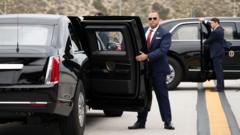
Secret Service Protection Tactics: Safeguarding America's Leaders
The Secret Service protection tactics employed to defend the United States president represent one of the most complex and sophisticated security operations in the world. Through a carefully orchestrated series of strategic maneuvers and tactical deployments, federal agents work tirelessly to ensure presidential safety while maintaining operational discretion. These multilayered security protocols involve an intricate combination of advanced technology, personnel coordination, and psychological countermeasures designed to outmaneuver would-be threats before they materialize.
The Evolution of Deception Operations
Throughout decades of safeguarding executive leadership, security professionals have refined deception operations into a precise methodology. These elaborate schemes involve coordinated movements that systematically mislead individuals intent on causing harm. By creating multiple potential scenarios and maintaining unpredictability in presidential routing and scheduling, security teams significantly reduce vulnerabilities. The fundamental principle underlying these Secret Service protection tactics rests on the understanding that predictability represents one of the greatest security liabilities.
Strategic Misdirection Techniques
Modern deception strategies extend far beyond simple diversions. Security protocols now incorporate real-time intelligence gathering, threat assessment analysis, and predictive modeling to anticipate potential danger zones. Agents continuously adapt their positioning and procedures based on environmental factors, crowd composition, and emerging intelligence reports. These dynamic responses ensure that Secret Service protection tactics remain perpetually one step ahead of sophisticated adversaries.
Decoy Operations and Look-Alike Deployments
Among the most visible yet least understood aspects of presidential security involve decoy operations. These carefully constructed scenarios utilize trained personnel who mirror presidential appearance and movement patterns. By deploying multiple motorcades simultaneously across different city routes, security teams create genuine ambiguity regarding the president's actual location. This multiplicity of potential targets diffuses threat concentration and forces adversaries to make critical decisions with incomplete information.
The effectiveness of decoy operations relies on meticulous planning and coordination among dozens of personnel working in synchronized teams. Each decoy movement must appear entirely authentic, complete with security formations, communication protocols, and route-specific preparations. This theatrical quality serves essential security functions by maintaining operational obscurity that protects the actual presidential motorcade.
Advanced Technology Integration
Contemporary Secret Service protection tactics incorporate cutting-edge technological systems that enhance threat detection and response capabilities. Sophisticated surveillance equipment, communication encryption standards, and real-time data analysis platforms enable security teams to monitor vast operational areas simultaneously. These technological investments work in conjunction with traditional security measures to create comprehensive protective ecosystems.
Communication Security and Coordination
Secure communication channels represent foundational elements within presidential security frameworks. Encrypted radio systems, compartmentalized information protocols, and need-to-know access restrictions ensure that operational details remain confined to essential personnel only. This compartmentalization principle strengthens overall security posture by limiting exposure of comprehensive operational blueprints.
Threat Assessment and Risk Mitigation
Every presidential movement initiates extensive threat assessment procedures examining multiple risk categories. Security analysts evaluate crowd dynamics, weather conditions, historical patterns, and current intelligence to establish baseline threat levels. These assessments inform tactical decision-making regarding route selection, personnel deployment, and contingency procedure activation. The rigorous analytical processes supporting Secret Service protection tactics demonstrate commitment to evidence-based security practices.
Personnel Training and Operational Excellence
Secret Service agents undergo continuous professional development emphasizing tactical proficiency, threat recognition, and emergency response protocols. Training scenarios simulate complex situations requiring split-second decision-making under extreme pressure. This investment in human capital ensures that personnel possess the skills necessary to execute sophisticated protection operations effectively. The combination of well-trained personnel implementing refined Secret Service protection tactics creates formidable defensive systems.
Conclusion: Protecting Democratic Leadership
The comprehensive security apparatus surrounding presidential protection represents essential governmental infrastructure safeguarding democratic institutions. Through deception operations, strategic personnel deployment, and technological advancement, the Secret Service continues evolving protection methodologies addressing contemporary threats. These Secret Service protection tactics balance security imperatives with public accessibility requirements, enabling democratic leaders to govern effectively while maintaining necessary personal safety protections.