NATO Chief Urges UK and Europe to Strengthen Military Response
NATO Secretary General warns of unprecedented security threats, demanding greater UK and European defense commitments to address the most dangerous geopolitical environment in a generation.
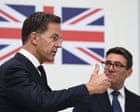
NATO Chief Highlights Critical Security Landscape
The leader of the 32-member NATO alliance delivered a stark warning during a visit to the United Kingdom, emphasizing that NATO defense spending and military readiness have become essential priorities. Mark Rutte, serving as Secretary General, called for an unprecedented level of commitment from both Britain and European nations to confront the most perilous security environment the Western world has encountered in decades.
During his address, Rutte stressed that the organization requires substantial reinforcement through increased military capabilities and sustained financial investment. His remarks underscored the urgency of NATO's mission as member states face mounting geopolitical pressures and evolving threats that demand comprehensive strategic responses.
British Defense Commitment Acknowledged
The NATO chief commended the United Kingdom for its pledge to elevate defense expenditure in alignment with international expectations and strategic requirements. Following discussions with senior British leadership, Rutte recognized London's contribution to the alliance while simultaneously pressing for accelerated and expanded military modernization efforts across the alliance structure.
Britain's commitment to increasing military budgets represents a significant step, yet Rutte emphasized that such measures must extend well beyond immediate pledges. The Secretary General indicated that sustained defense investment over multiple years will prove crucial for maintaining collective security and deterrence capabilities across NATO territories.
European Defense Capabilities Under Scrutiny
Beyond Britain's contributions, Rutte directed considerable attention toward enhancing defense infrastructure and military readiness throughout Europe. The NATO chief articulated concerns about capability gaps and stressed the necessity for European nations to assume greater responsibility for their own security arrangements, particularly in light of unpredictable international circumstances.
The Secretary General's message reflected broader concerns about burden-sharing within the alliance. NATO defense spending requirements have become increasingly pressing as geopolitical tensions intensify across multiple regions, necessitating that all member states contribute proportionally to collective security objectives.
Addressing the Geopolitical Uncertainty
Rutte's warnings focused on the complex nature of contemporary security challenges, which extend beyond traditional military confrontations to encompass cyber threats, hybrid warfare tactics, and destabilization efforts by hostile actors. The evolving threat landscape demands that NATO maintain technological superiority and operational flexibility to respond effectively to emerging dangers.
The Secretary General emphasized that the alliance faces unprecedented complexity in its operational environment. Modern security threats operate across multiple domains simultaneously, requiring coordinated responses from all NATO members. Enhanced defense spending directly supports the development of advanced capabilities necessary to address these multifaceted challenges effectively.
Future NATO Cooperation Framework
Looking forward, Rutte outlined expectations for sustained collaboration among member states to strengthen NATO's institutional capacity and operational effectiveness. The Secretary General advocated for comprehensive defense strategies that incorporate technological innovation, military modernization, and enhanced coordination among allied forces.
His call for "more UK and more Europe" reflected the conviction that the alliance's strength depends fundamentally on collective commitment and resource allocation. NATO defense spending increases must align with strategic objectives designed to enhance deterrence capabilities and ensure rapid response capabilities to emerging threats.
Strategic Implications for Member States
The NATO Secretary General's statements carry significant implications for defense policy across Europe and Britain. Member states face mounting pressure to evaluate their defense budgets critically and allocate resources toward priority areas identified by alliance leadership. Increased military investments will likely focus on cybersecurity, advanced weaponry systems, and enhanced intelligence capabilities.
Rutte's visit to the United Kingdom served as a clear reminder that NATO's security framework requires continuous adaptation and investment. The alliance must evolve its capabilities to match the sophistication of contemporary threats, with each member nation contributing meaningfully to collective defense objectives. Britain's role remains particularly important given its military capabilities and geopolitical influence within the broader Western security architecture.