British Right Rejects Trump's Putin Endorsement
Reform UK and Conservatives distance from Trump after he calls Putin 'friend'. Reform deputy leader condemns Russian leader as 'murderous dictator'.
British Political Parties Condemn Trump's Putin Endorsement
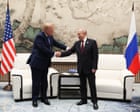
The Trump Putin friendship has sparked significant backlash from Britain's political establishment. Both Reform UK and the Conservative Party have publicly distanced themselves from US President Donald Trump following his recent social media post featuring a photograph of himself alongside Russian leader Vladimir Putin, accompanied by the caption: "My friend."
The controversial Trump Putin friendship declaration comes after the American president made similar remarks about the Russian leader during his attendance at the Asia-Pacific Economic Cooperation summit held in Shenzhen, China, where he also held discussions with Chinese President Xi Jinping.
Reform UK's Strong Condemnation
Reform UK has taken a particularly firm stance against Trump's characterization of Putin. The party's deputy leader issued a scathing response, referring to the Russian president as "a murderous dictator" and expressing deep disapproval of the American leader's apparent endorsement of their relationship. This marks a notable shift in how the right-wing party has previously engaged with Trump, suggesting growing concern about his international diplomatic approach.
The condemnation from Reform UK signals that even parties that have traditionally aligned with Trump's political ideology are unwilling to tolerate what they view as inappropriate international relations with authoritarian figures. The statement reflects broader concerns within British politics about Trump's foreign policy direction and his willingness to publicly embrace controversial world leaders.
Conservative Party Distance
The Conservative Party has similarly expressed discomfort with Trump's comments, joining Reform UK in creating distance between themselves and the US president's statements. This bipartisan British response indicates significant concern about the implications of warming relations between Washington and Moscow at a time of ongoing international tensions.
The timing of Trump's Putin remarks is particularly significant given current geopolitical circumstances. By openly characterizing the Russian president as a friend, Trump appears to be signaling a potential shift in American foreign policy toward Russia, a development that has alarmed British political leaders across the spectrum.
International Implications
The Trump Putin friendship declaration raises questions about future US-UK relations and broader Western cohesion on Russian policy. Britain has historically coordinated closely with the United States on matters concerning Russia, particularly regarding sanctions and diplomatic pressure. Trump's apparent openness to closer relations with Putin contradicts the unified Western stance that the UK and other allies have attempted to maintain.
British politicians fear that Trump's approach could undermine international efforts to maintain pressure on Russia over various geopolitical issues. The public display of camaraderie between the American and Russian leaders, highlighted by Trump's social media post, represents a symbolic break from the traditional Western alliance framework that has governed international relations in recent years.
Broader Political Context
The Trump Putin friendship remarks emerge against the backdrop of Trump's recent trip to Asia, where he conducted high-level meetings with multiple world leaders. His willingness to publicly describe Putin as a friend during and after this international engagement suggests a deliberate diplomatic messaging strategy that prioritizes personal relationships over traditional alliance structures.
For British political parties, the concern extends beyond mere diplomatic protocol. The public nature of Trump's statements about Putin, combined with the symbolic weight of the photograph he shared, indicates a potential realignment in international relations that could have significant consequences for UK security and foreign policy interests.
Both Reform UK and the Conservative Party have recognized the need to establish clear daylight between their positions and Trump's diplomatic approach toward Russia. This distancing reflects the complexity of maintaining conservative political alignment with the United States while simultaneously upholding core Western values regarding authoritarian regimes and international law.