Helium-3 Mining on the Moon: Future Energy Resource
Discover why Helium-3 is becoming crucial for future energy and how lunar mining could revolutionize the global energy landscape.
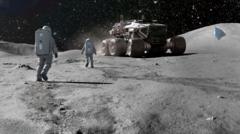
Understanding Helium-3 and Its Growing Importance
Helium-3 represents one of the most promising alternative energy sources for humanity's future. This rare isotope, with its unique properties and limited terrestrial availability, has attracted significant interest from scientists, governments, and private space ventures worldwide. Helium-3 moon mining operations could fundamentally transform how we approach energy production in the coming decades.
Unlike its more common counterpart Helium-4, Helium-3 exists in remarkably small quantities on Earth. Current reserves are concentrated in specialized storage facilities used primarily for scientific and medical research purposes. The scarcity of this isotope on our planet has made it increasingly valuable, with prices reflecting its rarity and specialized applications in advanced technology sectors.
Why Helium-3 Matters for Future Energy Generation
Helium-3 possesses extraordinary potential for nuclear fusion applications. Scientists have identified it as an ideal fuel for next-generation fusion reactors that could provide clean, abundant energy without the radioactive waste concerns associated with traditional fission technology. The demand for Helium-3 has grown exponentially as research institutions and energy companies advance their fusion reactor programs.
The element's unique atomic structure enables efficient fusion reactions that release substantial energy with minimal environmental impact. Fusion reactors powered by Helium-3 could theoretically provide virtually limitless energy, addressing global power demands while eliminating carbon emissions and radioactive byproducts that plague conventional nuclear facilities.
Lunar Deposits: A Vast Untapped Resource
The moon harbors extraordinary concentrations of Helium-3, deposited over billions of years by solar wind interactions with lunar soil. Scientists estimate that the lunar regolith contains millions of tons of this precious isotope, buried beneath the moon's surface across various regions. Helium-3 moon mining would require developing sophisticated extraction technologies capable of operating in the harsh lunar environment.
Research expeditions have confirmed significant Helium-3 accumulations in lunar soil samples collected during the Apollo missions. These findings sparked renewed interest in establishing permanent lunar bases and developing commercial mining operations to harvest this invaluable resource systematically.
Technical Challenges in Lunar Helium-3 Extraction
Extracting Helium-3 from the moon presents formidable technical obstacles. The isotope exists in extremely low concentrations within lunar regolith, requiring processing enormous quantities of soil to obtain meaningful amounts. Mining operations would need to operate under extreme conditions, including temperature fluctuations ranging from -173°C to 127°C, intense radiation exposure, and abrasive dust particles that damage equipment.
Processing lunar material involves heating regolith and extracting trapped gases through specialized industrial processes. Transportation of extracted Helium-3 back to Earth via spacecraft represents another major logistical and financial challenge. Despite these difficulties, advancing technologies in robotics, automation, and space infrastructure continue making Helium-3 moon mining increasingly feasible.
Economic Viability and Market Projections
Current market prices for Helium-3 exceed $10,000 per liter, reflecting its scarcity and high demand among scientific institutions. Fusion energy companies anticipate that as fusion reactor technology matures, Helium-3 demand will increase exponentially, potentially driving prices even higher. This economic incentive has encouraged investment in lunar mining research and infrastructure development.
Several aerospace organizations and energy companies have announced plans for pilot mining operations on the moon within the next two decades. These initiatives aim to establish cost-effective extraction methods before transitioning to large-scale commercial production. The potential profitability of such ventures depends on reducing transportation costs and developing efficient extraction technologies at scale.
International Efforts and Space Exploration Missions
Nations including China, India, and the United States have prioritized lunar exploration programs with explicit attention to resource assessment and potential mining viability. Robotic landers and orbiters have conducted detailed surveys identifying optimal Helium-3 mining locations. International frameworks governing space resource exploitation continue evolving to address legal and ownership questions surrounding extraterrestrial mining activities.
Space agencies worldwide recognize Helium-3 as central to future energy independence and economic advantage. Investment in lunar infrastructure, including bases, transportation systems, and processing facilities, has accelerated significantly across multiple countries and commercial entities competing in the emerging space economy.
The Path Forward for Helium-3 Energy
Helium-3 moon mining represents humanity's most promising near-term solution for establishing a sustainable, clean energy future. As fusion technology approaches commercial viability and lunar infrastructure develops, extraction operations will transition from theoretical planning to operational reality. The convergence of advanced robotics, improved spacecraft capabilities, and increasing energy demands positions lunar Helium-3 harvesting as an essential component of twenty-first-century energy strategy.