Artificial Ice Structures Preserve Water Supply in Indian Mountain Communities
Himalayan villages are building innovative artificial ice pyramids to secure sustainable water resources for spring irrigation and agricultural needs.
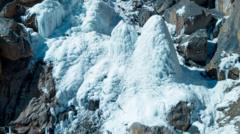
Artificial Ice Pyramids: A Lifeline for Himalayan Agriculture
Communities across India's mountainous regions are implementing innovative artificial ice pyramids as a strategic solution to address critical water scarcity challenges. These engineered structures represent a breakthrough approach to water management in high-altitude villages, where seasonal variations have historically threatened agricultural productivity and food security. The artificial ice pyramids serve as natural reservoirs, storing frozen water during winter months to release gradually during the critical spring planting season.
Understanding the Technology Behind Ice Preservation
The concept of artificial ice pyramids operates on straightforward thermodynamic principles that maximize water preservation in extreme mountain climates. These structures are carefully designed to accumulate ice during winter months when temperatures plummet below freezing. The pyramidal shape serves multiple functions: it minimizes surface area relative to volume, reducing melting rates, while the elevated positioning ensures optimal drainage and prevents water waste through seepage.
Engineers and local technicians work together to construct these ice formations using channeled water flows that freeze naturally in subzero Himalayan temperatures. The process requires no external energy input, making it an environmentally sustainable and economically viable solution for remote communities with limited infrastructure and resources.
Transforming Agricultural Water Management in Mountain Villages
For generations, farmers in Himalayan villages have struggled with unpredictable water availability during critical growing seasons. The introduction of artificial ice pyramids has fundamentally altered this dynamic, enabling more reliable irrigation schedules and improved crop yields. Spring represents the most vital period for agricultural activity, yet natural glacier melt patterns often prove insufficient or inconsistent.
By strategically positioning ice pyramids at higher elevations, communities can capture and preserve water that would otherwise flow away unused. As temperatures rise during spring months, these structures provide a steady, renewable water source that can sustain irrigation needs through the entire planting cycle. Farmers report significant improvements in crop production, enhanced food security, and reduced economic stress associated with failed harvests.
Community Implementation and Local Innovation
Village leaders and agricultural cooperatives have embraced artificial ice pyramids as a collaborative solution requiring minimal investment but substantial returns. The structures can be constructed using local materials and traditional construction methods, ensuring accessibility for economically disadvantaged communities. Hundreds of villages across Himachal Pradesh, Ladakh, and other mountain regions have already established multiple ice pyramid systems.
Knowledge sharing networks have developed among mountain communities, with successful villages mentoring neighbors on optimal construction techniques, ideal positioning, and maintenance protocols. This grassroots approach to environmental problem-solving demonstrates how indigenous wisdom combined with modern engineering can address complex challenges.
Environmental and Economic Benefits
The adoption of artificial ice pyramids generates multiple positive outcomes extending beyond immediate agricultural needs. These structures reduce dependency on unsustainable groundwater extraction, protecting aquifer integrity for future generations. By enhancing spring water availability, they decrease the need for environmentally damaging irrigation infrastructure projects.
Economically, villages benefit from improved agricultural productivity without requiring expensive dam construction, pipeline systems, or electrical pumping infrastructure. The initial investment remains modest, while long-term benefits accumulate through successive growing seasons. Crop diversity increases as reliable water supplies enable cultivation of less drought-resistant varieties, improving nutritional diversity and market opportunities for farmers.
Challenges and Future Expansion
Despite remarkable success, artificial ice pyramids face ongoing challenges in mountain regions experiencing variable climate conditions. Rising global temperatures threaten the sustainability of traditional ice preservation techniques in lower-elevation areas. Researchers continue developing enhanced designs that can function effectively across diverse Himalayan microclimates and altitudes.
Government agencies and international development organizations are expanding support for pyramid construction programs, recognizing their potential as climate adaptation strategies. Training programs now educate younger generations in maintenance and optimization techniques, ensuring knowledge continuity. Plans include scaling successful models to additional communities while monitoring long-term environmental impacts.
Lessons for Global Water Security
The success of artificial ice pyramids in Indian mountain villages offers valuable insights for water-scarce regions worldwide. Similar approaches could benefit communities in Central Asia, the Andes, and other high-altitude regions facing comparable challenges. The low-technology, high-impact nature of this solution makes it adaptable to diverse economic and environmental contexts.
International climate researchers are studying these systems as potential models for climate change adaptation strategies. As extreme weather patterns and glacial recession threaten water supplies globally, innovative community-based solutions like artificial ice pyramids demonstrate how localized interventions can address regional water security while promoting environmental sustainability and economic resilience.