
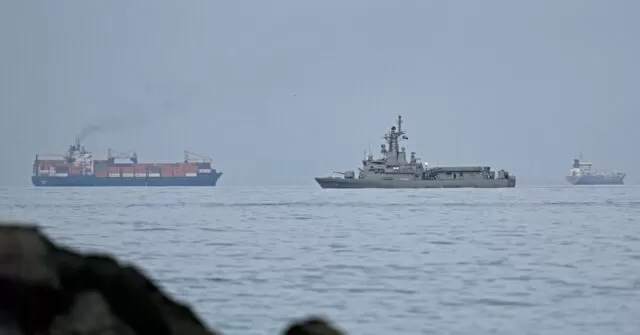
South Korea, France, and Ukraine have recently come together to discuss the safety of commercial ships passing through the Strait of Hormuz. The strategic waterway, located between Iran and Oman, has been a source of tension and conflict in recent years, with attacks on ships and the seizure of tankers by Iranian forces. As the majority of European nations hesitate to step up and defend the strait, South Korea and Ukraine have taken a stand to ensure the safety of commercial shipping in the region.
The discussions between South Korea, France, and Ukraine have highlighted the growing concern over the safety of the Strait of Hormuz. In recent months, there have been several incidents of attacks on commercial ships passing through the strait, including the sabotage of tankers and the seizure of the British-flagged tanker, Stena Impero, by Iran. These incidents have raised serious concerns about the security of this vital shipping route, which sees around one-fifth of the world’s oil supply pass through it.
The involvement of South Korea and Ukraine in the discussions showcases their commitment towards maintaining the safety of the Strait of Hormuz. South Korea, a key importer of oil from the Middle East, has a vested interest in ensuring the uninterrupted flow of oil through the strait. The country has also expressed concerns about the rising tensions in the region and the potential impact on its economy. Similarly, Ukraine, which is a major exporter of grain and mineral resources, relies heavily on the Strait of Hormuz for its trade with countries in the Persian Gulf.
The joint discussions between these countries have resulted in a mutual agreement to take decisive steps to safeguard the strait. South Korea and Ukraine have pledged to increase their naval presence in the region and work closely with the French Navy, which already has a significant presence in the Persian Gulf. This collaboration will not only help to deter any potential threats but also provide a sense of security for commercial ships passing through the strait.
Moreover, these countries have also stressed the importance of maintaining open communication channels and fostering strong diplomatic ties with all parties involved in the region. This approach will help to de-escalate tensions and prevent any further incidents that could disrupt the flow of trade through the Strait of Hormuz. The discussions have also focused on the need for a multilateral approach, with the involvement of other nations, to ensure the safety of the strait.
The proactive stance taken by South Korea and Ukraine in this matter is commendable and sets a positive example for other nations to follow. Despite the hesitation shown by many European countries, these two nations have stepped up to take action and defend the vital shipping route. Their commitment to maintaining the safety of the strait not only protects their own economic interests but also contributes to the stability and security of the region.
As the discussions between South Korea, France, and Ukraine continue, it is crucial for other nations to join in and support their efforts. The safety and security of the Strait of Hormuz should be a collective responsibility and it is essential for all nations to work together towards achieving this goal. The recent actions taken by South Korea and Ukraine demonstrate the importance of acting swiftly and decisively in the face of growing threats in the region.
In conclusion, the joint discussions between South Korea, France, and Ukraine on the safety of the Strait of Hormuz are a positive step towards ensuring the uninterrupted flow of trade through this strategic waterway. Their commitment to defending the strait showcases their determination to maintain stability and security in the region. It is now up to other nations to follow their lead and work towards a peaceful and prosperous future for the Strait of Hormuz.