
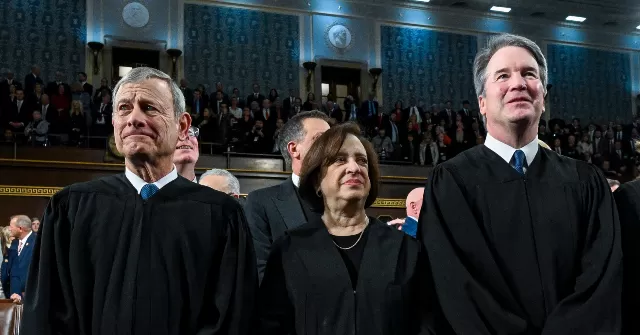
The United States Supreme Court is currently embroiled in a heated debate over the issue of birthright citizenship. The question at hand is whether the U.S. Constitution grants citizenship to every child born in the United States, or if there are exceptions for the children of illegal migrants and temporary visa workers. This contentious issue has sparked intense discussions and has the potential to greatly impact the lives of millions of people.
At the heart of this debate is the interpretation of the 14th Amendment of the U.S. Constitution, which states that “all persons born or naturalized in the United States, and subject to the jurisdiction thereof, are citizens of the United States and of the State wherein they reside.” This amendment was ratified in 1868, in the aftermath of the Civil War, to ensure that all individuals, regardless of race or ethnicity, were granted citizenship and equal protection under the law.
However, the interpretation of this amendment has been a subject of debate for many years. Some argue that the phrase “subject to the jurisdiction thereof” excludes the children of illegal migrants and temporary visa workers, as they are not under the full jurisdiction of the United States. On the other hand, others argue that the amendment was intended to grant citizenship to all individuals born on U.S. soil, regardless of their parents’ immigration status.
This debate has gained renewed attention in recent years, as the number of undocumented immigrants in the United States has increased and the issue of immigration has become a hot-button topic. The Trump administration has taken a hardline stance on immigration, and the question of birthright citizenship has become a key issue in their efforts to restrict immigration.
The Supreme Court’s decision on this matter will have far-reaching consequences. If the court rules in favor of limiting birthright citizenship, it could potentially strip millions of individuals of their citizenship and deny them the rights and privileges that come with it. This would not only affect the individuals themselves but also their families and communities.
On the other hand, if the court upholds birthright citizenship for all individuals born on U.S. soil, it would reaffirm the values of inclusivity and equality that are at the core of the American identity. It would also provide a sense of security and stability for those who have been living in the United States for years, contributing to the country’s economy and society.
The Supreme Court’s debate on this issue is a reminder of the importance of upholding the principles of the U.S. Constitution and ensuring that all individuals are treated equally under the law. It is also a reminder of the power and responsibility of the Supreme Court in interpreting the Constitution and shaping the future of the country.
As the debate continues, it is crucial to remember that at the heart of this issue are real people, with families, hopes, and dreams. These individuals, regardless of their immigration status, are an integral part of the fabric of American society. They deserve to be treated with dignity and respect, and their rights should not be subject to political agendas.
In conclusion, the Supreme Court’s debate on birthright citizenship is a critical moment in our nation’s history. It is a test of our values and our commitment to upholding the principles of equality and justice for all. Let us hope that the court’s decision will reflect these values and provide a path towards a more inclusive and united America.