
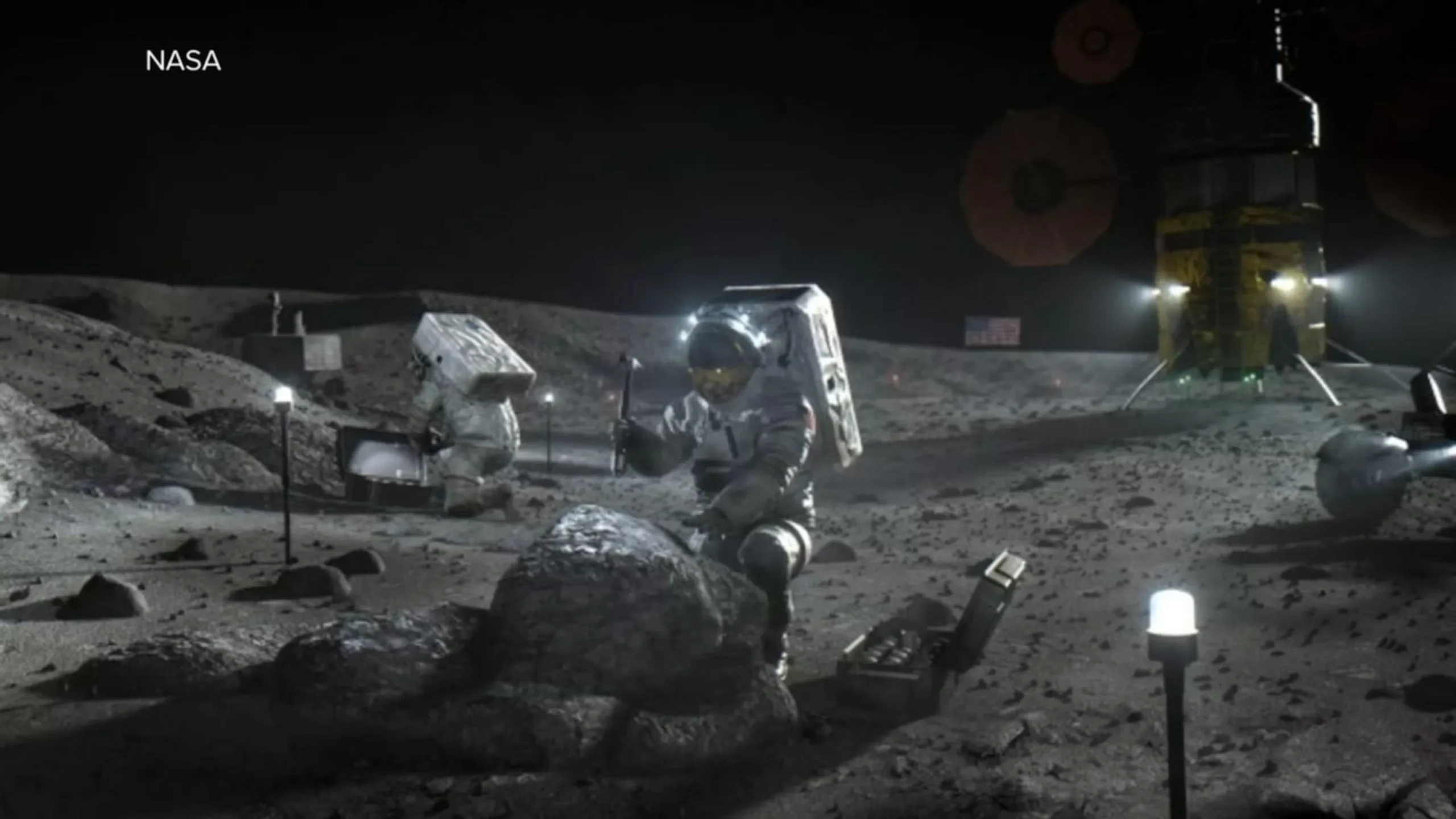
NASA has unveiled an ambitious $20 billion moon base strategy, with the goal of establishing a permanent presence on the lunar surface. The announcement was made by NASA Administrator Jared Isaacman on Tuesday, who emphasized the importance of staying on the moon this time.
“This time, the goal is to stay,” Isaacman said during the unveiling of the strategy. “We have learned from our past missions and now we are ready to take the next step towards a sustainable presence on the moon.”
The new strategy, called Artemis Base Camp, aims to establish a sustainable human presence on the moon by 2028. This will be achieved through a series of missions that will build upon the success of the Apollo program and the recent Artemis missions.
The first step of the strategy is to send astronauts to the lunar south pole by 2024. This will be the first time humans will set foot on the moon since the Apollo 17 mission in 1972. The astronauts will conduct experiments, collect samples, and lay the groundwork for future missions.
The next phase of the strategy involves building a lunar outpost, which will serve as a base for astronauts to live and work on the moon for extended periods of time. This will require the development of new technologies and partnerships with other countries and private companies.
The final phase of the strategy is to establish a sustainable presence on the moon, with the goal of eventually sending humans to Mars. This will involve the construction of a moon base, which will serve as a hub for scientific research and exploration.
The Artemis Base Camp strategy is a crucial step towards NASA’s ultimate goal of sending humans to Mars. By establishing a permanent presence on the moon, NASA will gain valuable experience and knowledge that will be essential for future missions to the Red Planet.
In addition to scientific and exploration goals, the Artemis Base Camp strategy also has economic benefits. The development of new technologies and partnerships will create jobs and stimulate the economy, both in the United States and around the world.
The strategy has already received support from the international community, with several countries expressing interest in collaborating with NASA on the Artemis missions. This global cooperation will not only advance space exploration, but also promote peace and unity among nations.
The Artemis Base Camp strategy also has the potential to inspire future generations. By setting ambitious goals and pushing the boundaries of human exploration, NASA is showing the world that anything is possible with determination and innovation.
“We are not just going back to the moon, we are going forward to the moon,” Isaacman said. “This time, we are staying and we are bringing the world with us.”
The unveiling of the Artemis Base Camp strategy has reignited excitement and hope for the future of space exploration. With the support of governments, private companies, and the public, NASA is well on its way to achieving its goal of a sustainable presence on the moon.
As we look towards the future, let us remember the words of NASA Administrator Jared Isaacman: “This time, the goal is to stay.” With this determination and commitment, we can achieve great things and continue to push the boundaries of human exploration. The moon is just the beginning, and the possibilities are endless.