
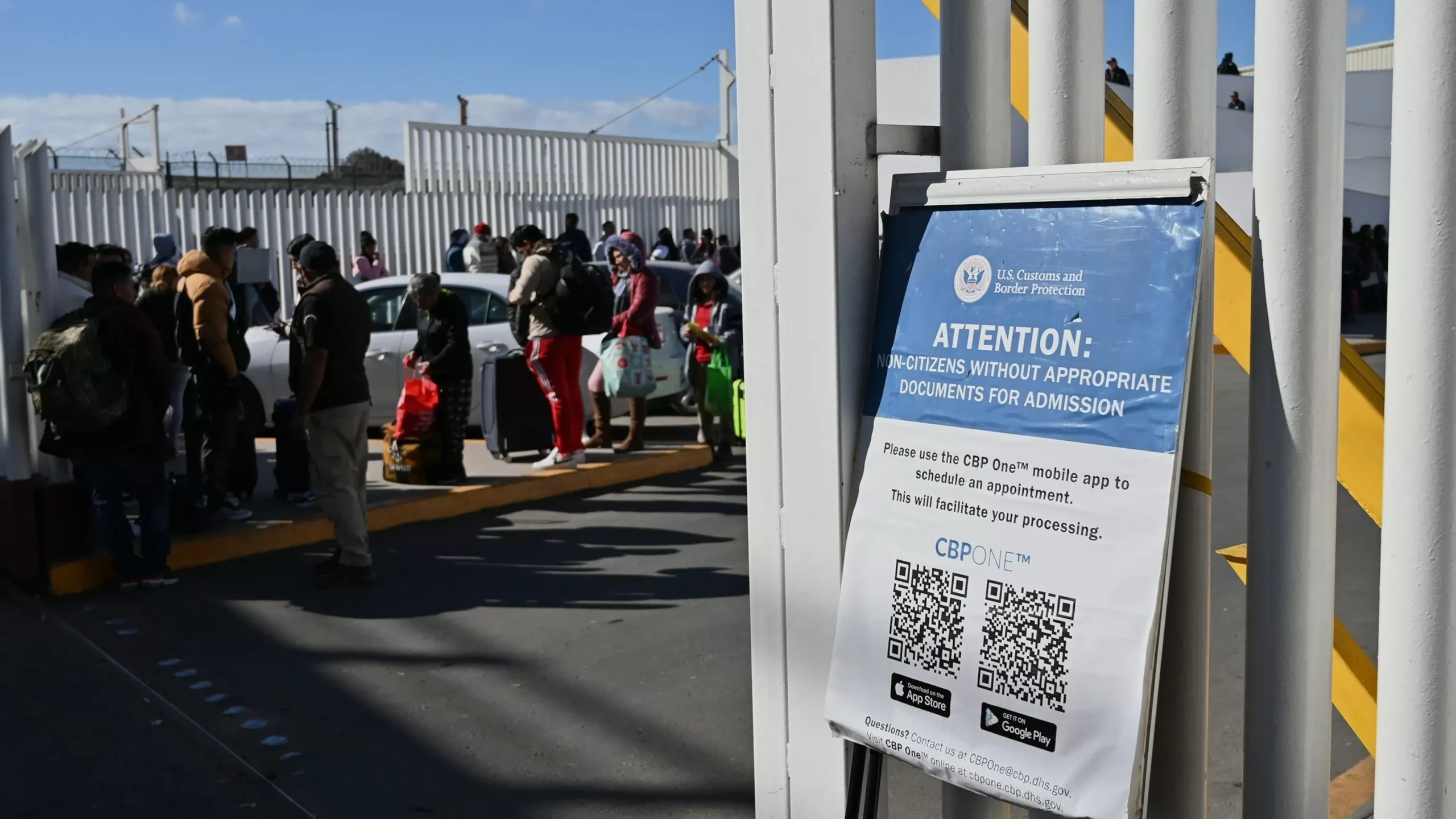
A major legal battle over the ability of asylum seekers to apply for refuge in the U.S. at ports of entry along the border with Mexico has landed at the Supreme Court. This case has the potential to impact thousands of individuals seeking safety and protection in the United States.
The issue at hand is the Trump administration’s controversial policy of denying asylum to individuals who enter the country outside of designated ports of entry. This policy has been met with widespread criticism and legal challenges, with opponents arguing that it violates U.S. and international laws protecting the rights of refugees.
At the center of the case is a group of 13 asylum seekers from Central America who were turned away at the U.S.-Mexico border despite their requests for refuge. They are represented by the American Civil Liberties Union (ACLU) and other immigrant rights organizations, who argue that the administration’s policy is illegal and goes against the principles of due process.
The Supreme Court’s decision in this case will have far-reaching consequences for the U.S. asylum system and the rights of asylum seekers. It will also serve as a crucial test of the country’s commitment to upholding its obligations under international law.
The principle of non-refoulement, which prohibits the return of individuals to a country where they may face persecution, is a cornerstone of international refugee law. By denying asylum seekers the opportunity to apply for protection at ports of entry, the U.S. is effectively shutting its doors to those in need and violating this fundamental principle.
Furthermore, the administration’s policy also undermines the U.S. Refugee Act of 1980, which established a formal process for granting asylum to individuals who have a well-founded fear of persecution in their home country. By denying asylum to those who enter outside of designated ports of entry, the government is effectively creating a new barrier to seeking refuge in the U.S.
This case is not just about legal technicalities, but about the lives of real people who are fleeing violence and persecution in their home countries. These individuals have already endured unimaginable hardships and have made the difficult journey to the U.S. in search of safety and a better future for themselves and their families.
The Supreme Court now has the opportunity to uphold the values of compassion and justice that have long been at the core of American ideals. By ruling in favor of the asylum seekers, the court can send a powerful message that the U.S. remains a beacon of hope and a safe haven for those in need.
It is also worth noting that the outcome of this case will have a significant impact on the U.S.’s relationship with its southern neighbor, Mexico. The Trump administration’s policies have already strained relations between the two countries, and a ruling against the asylum seekers could further damage this important partnership.
It is heartening to see that the case has garnered widespread support from various groups and organizations, including faith-based groups, human rights organizations, and even some members of Congress. This shows that the American people are standing in solidarity with asylum seekers and recognize the importance of upholding the rights of those seeking refuge in the U.S.
In the end, this case is not just about the rights of asylum seekers, but also about the values and principles that define us as a nation. The decision made by the Supreme Court will send a strong message to the world about the U.S.’s commitment to protecting the most vulnerable and standing up for justice.
It is our hope that the Supreme Court will make the right decision and uphold the rights of asylum seekers to seek refuge in the U.S. at designated ports of entry. We must remember that at the heart of this case are real people, with real stories and real hopes for a better future. Let us stand together and show the world that the U.S. remains a beacon of hope and a land of opportunity for all those seeking refuge and protection.