
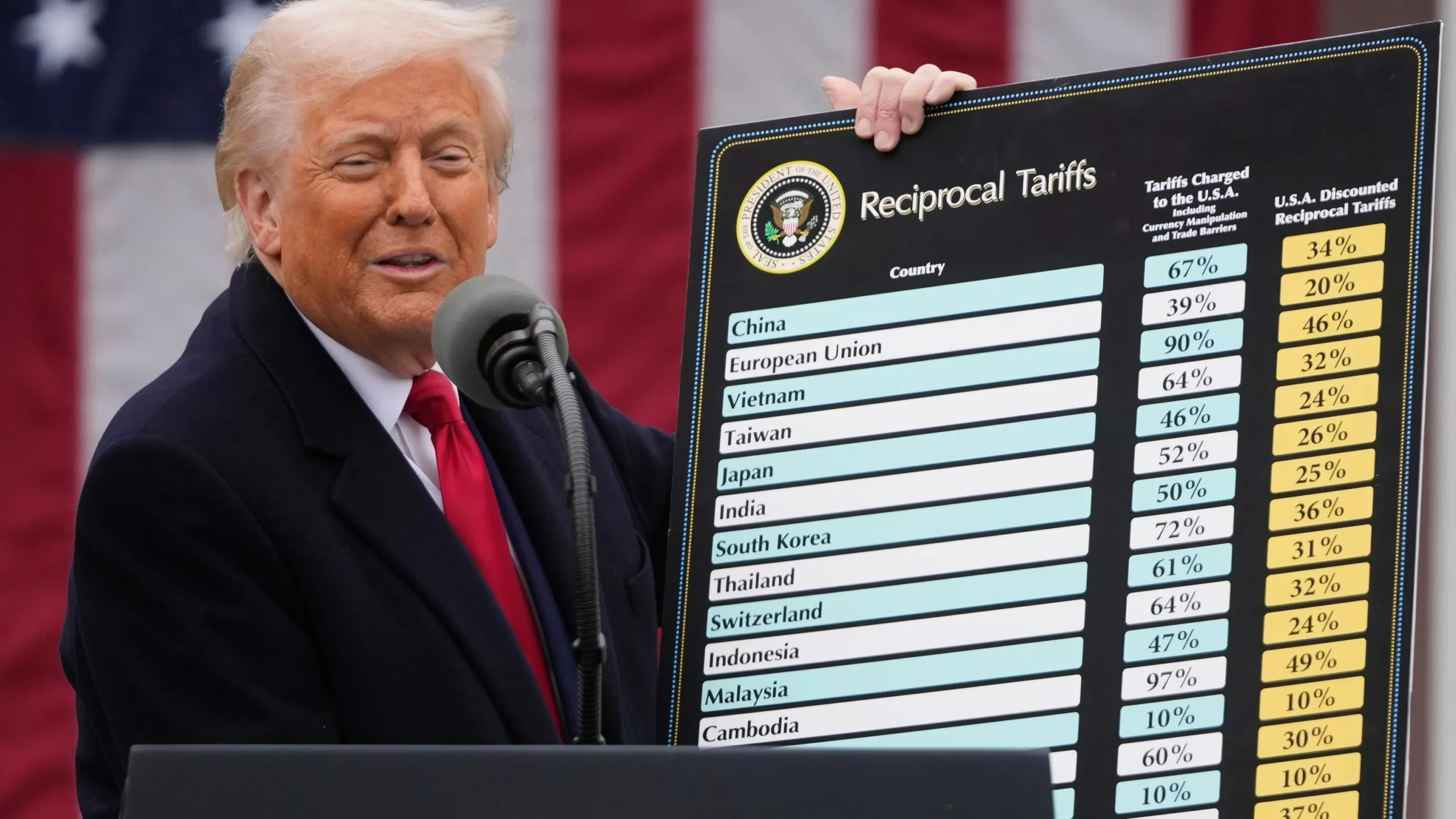
As the midterm elections approach, Democrats across the country are gearing up for a crucial battle to win the governorship in their respective states. And one issue that has emerged as a key element in their political message is tariffs.
Tariffs, or taxes on imported goods, have been a hot topic in recent months, with the Trump administration implementing a series of tariffs on goods from China, Canada, and the European Union. While the goal of these tariffs was to protect American industries and jobs, their impact has been felt by businesses and consumers alike, leading to higher prices and potential trade wars.
In response, Democrats running for governor are taking a strong stance against these tariffs, promising to fight for the interests of their states and their citizens. This move has not only differentiated them from their Republican opponents, who have largely supported the administration’s tariff policies, but has also resonated with voters who are feeling the effects of these tariffs on their daily lives.
One of the most vocal Democrats on this issue is gubernatorial candidate Andrew Gillum in Florida. In a recent interview, Gillum stated, “Tariffs are not the answer. They are hurting our economy and our people. We need to find better solutions that protect American workers without punishing consumers.” This message has struck a chord with Floridians, who rely heavily on international trade and tourism for their economy.
Similarly, in Wisconsin, Democratic candidate Tony Evers has been critical of the tariffs imposed on dairy products by Canada, a major trading partner for the state. Evers has promised to work with the federal government to find a solution that benefits both American farmers and Canadian buyers. This approach has gained him the support of many farmers and agricultural workers in the state.
In Ohio, Democratic gubernatorial candidate Richard Cordray has been highlighting the impact of tariffs on the state’s manufacturing industry. Ohio is one of the largest producers of steel and aluminum in the country, and the recent tariffs have caused concern among workers and business owners. Cordray has pledged to work with the federal government to protect the state’s steel and aluminum industries, while also finding ways to support other industries that may be impacted by retaliatory tariffs.
The Democratic candidates’ strong stance against tariffs has not gone unnoticed by voters in other states as well. In Illinois, JB Pritzker has made it clear that he will not support any tariffs that may harm the state’s agriculture and manufacturing sectors. And in Michigan, Gretchen Whitmer has criticized the administration’s tariffs on cars and auto parts, a major industry in the state.
The Democratic Party’s unified message on tariffs is not just limited to the gubernatorial races. Congressional candidates across the country are also making it a central part of their campaigns. In Pennsylvania, where the steel industry has been hit hard by tariffs, Democratic candidate Conor Lamb has been vocal in his opposition to the administration’s policies. Lamb has been reaching out to voters in steel towns, promising to fight for their jobs and their communities.
The Democrats’ focus on tariffs has also been driven by the fact that they are not just an economic issue, but also a national security issue. Many Democrats have expressed concerns that the administration’s tariffs could lead to a global trade war, damaging relationships with key allies and potentially putting the country at risk.
While the Democrats’ stance on tariffs has been met with criticism from some Republicans, it has also gained support from business leaders and trade organizations. The National Association of Manufacturers, a traditionally conservative group, has come out against the tariffs and has praised the Democrats for their strong stance on the issue.
As the midterm elections draw closer, it is clear that Democrats running for governor are not shying away from taking a stand against tariffs. They are making it a central part of their campaigns, with a message that resonates with voters who are feeling the effects of these policies. And as the saying goes, “As goes the governorship, so goes the nation.” The outcome of these races could have a significant impact on the future of our country’s trade policies.