
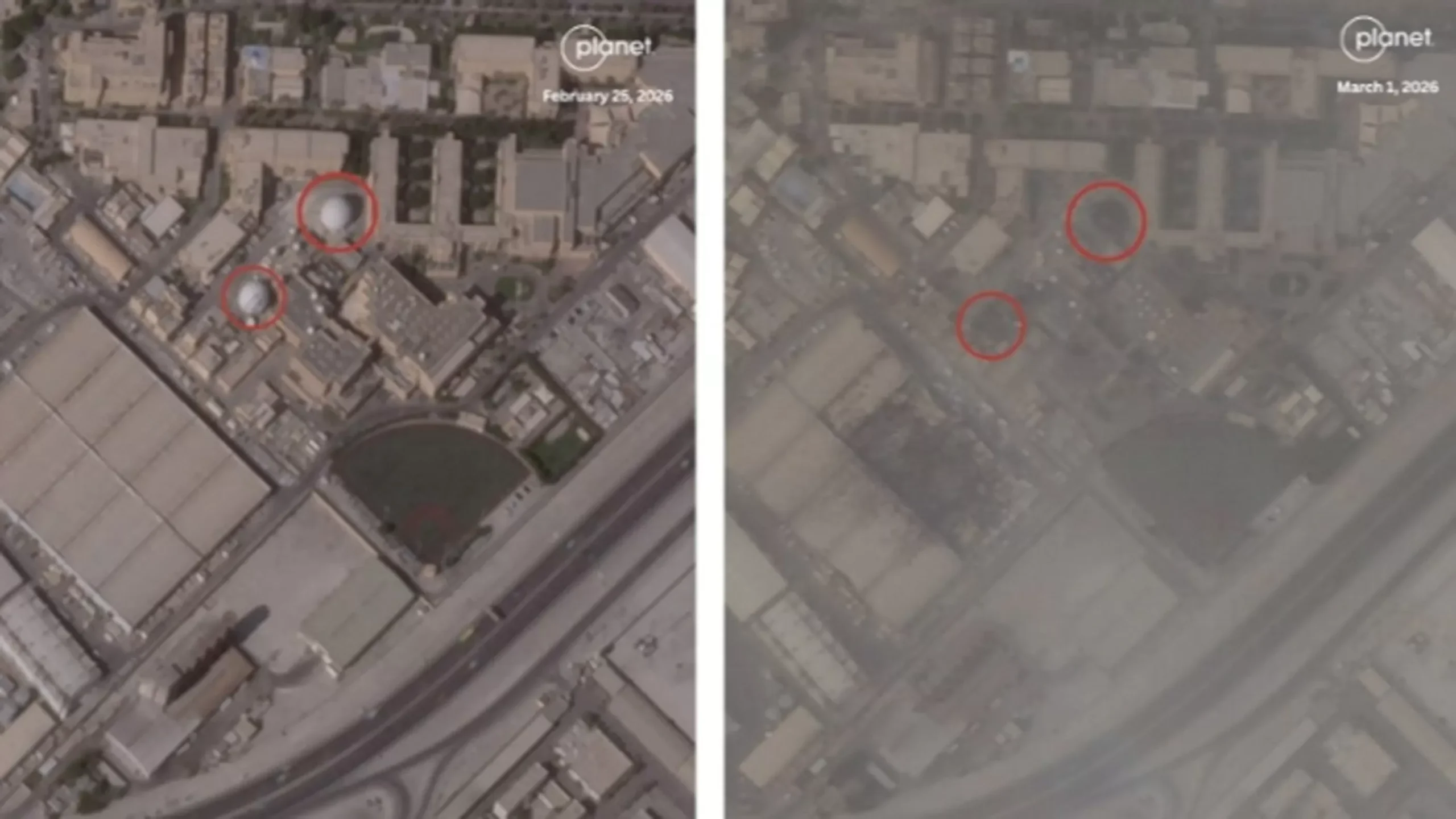
Iranian drones and missiles have been making headlines recently for their successful targeting of sensitive facilities. Available imagery has shown that these weapons have been able to hit their intended targets with precision, causing significant damage to the equipment inside.
The use of drones and missiles in warfare is not a new concept, but the effectiveness of Iranian weapons in recent attacks has caught the attention of the world. This success can be attributed to the advanced technology and capabilities of these weapons, as well as the skilled operators behind them.
One of the most notable incidents involving Iranian drones and missiles was the attack on the Aramco oil facilities in Saudi Arabia in September 2019. The attack, which was claimed by Houthi rebels in Yemen, caused a significant disruption in the global oil supply and sent shockwaves through the international community.
The attack was carried out using drones and missiles, and the precision with which the targets were hit was evident in the aftermath. The images released by the Saudi government showed the extent of the damage, with multiple structures and equipment completely destroyed.
This was not an isolated incident, as there have been several other attacks on sensitive facilities in the Middle East that have been attributed to Iranian weapons. In fact, the United States has accused Iran of being behind the attack on the US Embassy in Baghdad in December 2019, which was carried out by Iranian-backed militias.
The success of these attacks has raised concerns among countries in the region and beyond, as it showcases Iran’s growing military capabilities. The use of drones and missiles has given Iran an edge in asymmetric warfare, where they can target their enemies without directly engaging in a full-scale conflict.
But what makes Iranian drones and missiles so effective? For one, they are equipped with advanced technology that allows them to navigate and hit their targets with precision. These weapons also have the capability to be launched from long distances, making it difficult for their enemies to detect and intercept them.
In addition, Iran has invested heavily in its drone and missile programs, developing indigenous technology and capabilities. This has allowed them to produce these weapons at a lower cost, making them more accessible and easier to deploy in various conflicts.
The success of Iranian drones and missiles has not gone unnoticed by the international community. Some experts believe that these weapons could pose a threat to global security, as they can be used by non-state actors to carry out attacks on sensitive facilities.
However, it is important to note that Iran has maintained that its drones and missiles are solely for defensive purposes and will only be used in response to aggression from its enemies. In fact, the Iranian government has stated that its military strategy is based on deterrence rather than aggression.
Despite this, the successful targeting of sensitive facilities by Iranian weapons has raised concerns among some countries, particularly the United States. The US has imposed sanctions on Iran’s missile program, citing concerns over its growing capabilities.
In response, Iran has continued to develop and test its drones and missiles, showcasing its determination to defend itself and its interests. This has also served as a message to its enemies that any attack on Iran will not go unanswered.
In conclusion, the available imagery of Iranian drones and missiles successfully targeting sensitive facilities is a testament to the country’s growing military capabilities. These weapons have proven to be effective in asymmetric warfare, giving Iran an edge in conflicts with its enemies. While concerns have been raised about their potential threat to global security, Iran has maintained that its weapons are for defensive purposes only. As tensions continue to rise in the region, the world will be closely watching the developments of Iran’s drone and missile programs.