
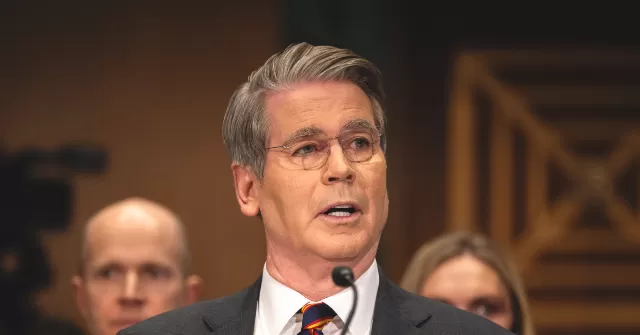
In a move to ensure the safety of oil tankers passing through the Strait of Hormuz, Treasury Secretary Scott Bessent announced on Friday that the U.S. Navy will soon begin escorting them. This decision comes in response to the growing threat of Iranian terrorist attacks in the region.
The Strait of Hormuz, located between Iran and Oman, is a crucial waterway through which a significant portion of the world’s oil supply passes. It is also a highly volatile area, with tensions between the United States and Iran on the rise. In recent months, there have been multiple attacks on oil tankers in the region, which have been attributed to Iran.
In light of these developments, Secretary Bessent’s announcement is a welcome relief for the oil industry and the global economy. The U.S. Navy’s presence in the Strait of Hormuz will serve as a deterrent to any potential attacks by Iran, ensuring the safe passage of oil tankers and maintaining the stability of the global oil market.
The decision to escort tankers through the Strait of Hormuz is a clear indication of the United States’ commitment to protecting its interests and those of its allies. It also sends a strong message to Iran that any attempts to disrupt the flow of oil through the region will not be tolerated.
Secretary Bessent emphasized that the U.S. Navy will begin escorting tankers “soon,” but did not provide a specific timeline. This shows that the United States is taking swift action to address the situation and will not hesitate to take necessary measures to protect its interests.
The move has been met with widespread support from the international community, with many countries expressing their gratitude for the United States’ proactive stance. This is a testament to the strong leadership of the United States and its commitment to maintaining peace and stability in the region.
Furthermore, the decision to escort tankers through the Strait of Hormuz will also have a positive impact on the global economy. With the safe passage of oil tankers, there will be no disruptions in the supply of oil, which could have a significant impact on the prices of oil and other commodities.
In addition to protecting oil tankers, the U.S. Navy’s presence in the Strait of Hormuz will also serve as a safeguard for other commercial vessels passing through the region. This will not only benefit the United States but also the international community as a whole.
It is worth noting that this is not the first time the United States has taken action to protect the Strait of Hormuz. In 1987 and 1988, during the Iran-Iraq War, the U.S. Navy escorted oil tankers through the region to prevent them from being attacked by Iranian forces. This move was crucial in ensuring the safe passage of oil and maintaining stability in the global oil market.
In conclusion, Secretary Bessent’s announcement of the U.S. Navy’s soon-to-be escort of oil tankers through the Strait of Hormuz is a positive development that will have far-reaching benefits. It not only ensures the safety of oil tankers and other commercial vessels but also sends a strong message to Iran that the United States will not tolerate any threats to its interests. This move is a testament to the United States’ strong leadership and commitment to maintaining peace and stability in the region.