
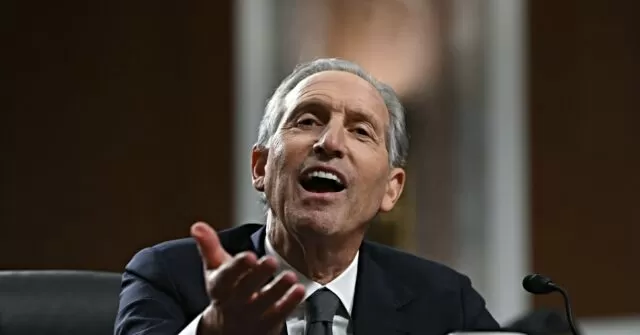
On Tuesday, the state of Washington, under the leadership of the Democratic party, passed a controversial wealth tax. This move has caused quite a stir, with many questioning the impact it will have on the state’s economy and its residents. And just hours after the bill was passed, former Starbucks CEO Howard Schultz announced his decision to move to the Republican-run state of Florida.
The passing of the wealth tax in Washington has been met with both praise and criticism. Supporters of the tax argue that it will help address income inequality and provide much-needed funds for important social programs. However, opponents argue that it will drive away wealthy individuals and businesses, ultimately hurting the state’s economy.
One of those wealthy individuals who have decided to leave the state is Howard Schultz. The former Starbucks CEO, who has been a vocal critic of the wealth tax, wasted no time in announcing his move to Florida. In a statement, Schultz cited the state’s business-friendly policies and lower taxes as the main reasons for his decision.
This move by Schultz has once again brought the debate on wealth taxes to the forefront. While some may see it as a way for the rich to avoid paying their fair share, others see it as a necessary step to address the growing wealth gap in our society. But what does this mean for the state of Washington and its residents?
First and foremost, the departure of Howard Schultz is a significant loss for the state. As the former CEO of Starbucks, Schultz has been a major contributor to the state’s economy, creating thousands of jobs and investing in various community projects. His move to Florida is a clear indication that the wealth tax has pushed him away from the state he once called home.
Moreover, Schultz’s departure may also have a ripple effect on other wealthy individuals and businesses in the state. With the implementation of the wealth tax, many may follow in his footsteps and move to more tax-friendly states, resulting in a loss of revenue for Washington. This could have a detrimental impact on the state’s economy, especially in the midst of a pandemic where businesses are already struggling to stay afloat.
But it’s not just about the economic impact. The passing of the wealth tax also raises questions about the fairness and effectiveness of such a policy. While it may seem like a solution to address income inequality, it may not be as effective as proponents claim. In fact, studies have shown that wealth taxes often lead to a decrease in economic growth and job creation, ultimately hurting the very people it aims to help.
On the other hand, Florida’s business-friendly policies have attracted many wealthy individuals and businesses in recent years. With no state income tax and lower property taxes, it’s no surprise that Schultz and many others have chosen to make the move. This not only benefits the individuals but also the state’s economy as a whole.
In light of these developments, it’s important for policymakers to carefully consider the impact of such policies on their state’s economy and residents. While addressing income inequality is a noble goal, it should not come at the cost of driving away valuable contributors to the economy.
In conclusion, the passing of the wealth tax in Washington and Howard Schultz’s subsequent move to Florida has sparked a heated debate on the effectiveness and fairness of such policies. While the intentions may be good, the consequences could be detrimental to the state’s economy. It’s time for policymakers to find a balance between addressing income inequality and creating a business-friendly environment that benefits all.