
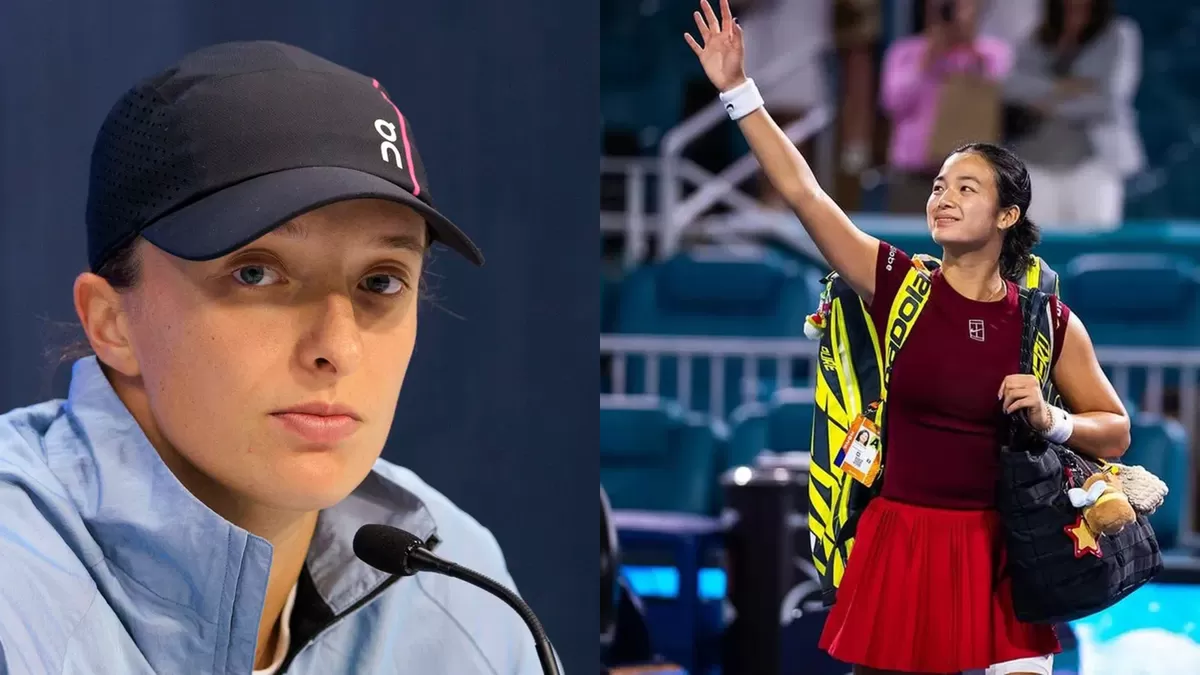
Tennis has long been considered a pioneer when it comes to gender equality in sports. However, even in this progressive sport, debates over prize money, scheduling, and media attention continue to arise. At the recent BNP Paribas Open in Indian Wells, two rising stars in women’s tennis, Iga Swiatek and Alexandra Eala, shared their honest views on the ongoing ATP-WTA inequality debate.
Swiatek, the 2020 French Open champion, and Eala, the 2021 Australian Open Junior Girls’ champion, are both young players making their mark on the professional circuit. Despite their different backgrounds and experiences, they both echoed a similar sentiment – that there is no room for gender inequality in tennis.
The issue of prize money is one that has been discussed extensively in tennis. While the Grand Slams offer equal prize money to men and women, there is still a discrepancy in the prize money offered at ATP and WTA events. This has been a point of contention for many players, including top-ranked players such as Serena Williams and Simona Halep.
Speaking on the topic, Swiatek said, “I think we should earn the same amount of money as the guys, but also we have to remember that the guys have more viewers, so that’s why they have more income. I think it’s a tricky topic, but I think we should talk more about the fact that we should just help each other. It’s not about the money, it’s about the sport.”
Eala, who hails from the Philippines, added, “For me, personally, I think not only here in tennis but in all fields, no matter what gender you are, if you work hard for it, you deserve the same amount of recognition and payment.”
Their wise words serve as a reminder that the fight for gender equality in sports is not just about equal pay, but also about receiving the same level of respect and recognition. While the WTA has made great strides in promoting women’s tennis, there is still work to be done in terms of media coverage and scheduling.
Eala pointed out, “Both men’s and women’s tennis are equally exciting but unfortunately, the men’s matches get more airtime and prime court assignments. I think it’s important for the media and tournament organizers to give equal opportunities to both genders.”
Swiatek also added, “I understand that we still have a long way to go, but we are doing a great job. I think we deserve more attention, more sponsors, more everything. I think the tournaments should be organized in a way that will show how important women’s tennis is.”
The voices of these two young players carry a lot of weight in the ongoing debate about gender inequality in tennis. They are the future of the sport and their views are a reflection of the changing attitudes towards gender equality. It is heartening to see that even at a young age, they are aware of the challenges and determined to make a difference.
Their statements also highlight the fact that gender inequality in sports is not just a women’s issue, but a societal issue that needs to be addressed by both men and women. It is not about one gender being superior to the other, but about equal opportunities for everyone, regardless of gender.
Tennis has always been a sport that prides itself on its progressive values. From the introduction of equal prize money at the Grand Slams to the implementation of on-court coaching, the tennis world has constantly strived to promote equality and inclusivity. However, there is always room for improvement and the voices of young players like Swiatek and Eala serve as a reminder that the fight for gender equality is far from over.
As the debate over ATP-WTA inequality resurfaces, it is important to listen to these young players and their views. They are the future of the sport and their opinions should be valued and taken into consideration. It is time for the tennis world to come together and work towards a more equal and inclusive future.
In conclusion, Iga Swiatek and Alexandra Eala have broken the silence on the ongoing ATP-WTA inequality debate and their statements have sparked an important conversation. As we continue to celebrate the achievements of women’s tennis, let us also strive towards a future where gender equality is a given, not a debate. After all, as Swiatek aptly put it, “I’ve never been a guy, so I wouldn’t know.”