
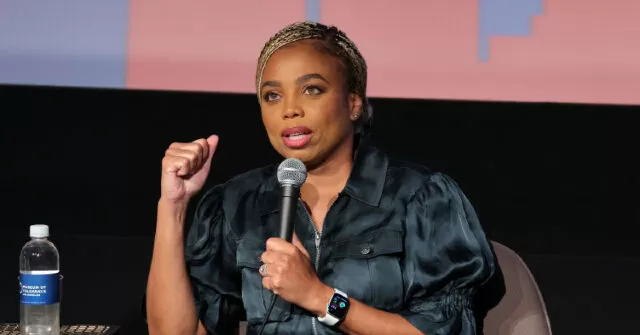
Former ESPN commentator Jemele Hill has recently made controversial comments about the Cuban and Latino communities, accusing them of being easily influenced by misinformation and shifting towards conservatism in the past decade. In a post on Breitbart, Hill expressed her disappointment with the perceived political shift among these communities, calling them “soft targets for misinformation.”
Hill’s comments have sparked outrage within the Cuban and Latino communities, who are known for their strong family values and close-knit communities. Many have accused her of generalizing and stereotyping their communities without fully understanding the reasons behind their political views.
It is undeniable that there has been a visible shift towards the right among Cubans and Latinos in recent years. However, to attribute this solely to misinformation is not only simplistic but also dismissive of the complexities of each individual’s political beliefs.
First and foremost, it is important to acknowledge that Cubans and Latinos are not a monolithic group. They come from diverse backgrounds, cultures, and experiences, and it is unfair to paint them with a broad brush. To suggest that they are easily influenced by misinformation is to undermine their intelligence and critical thinking capabilities.
Furthermore, Hill’s comments fail to recognize the unique history and struggles of the Cuban and Latino communities. Many have fled their home countries in search of a better life in the United States, and their political views are often shaped by their experiences. For Cubans, the memories of living under a communist regime and the desire for freedom and democracy greatly influence their political leanings. Similarly, for many Latinos, the immigration experience and the pursuit of the American Dream play a significant role in their political beliefs.
Instead of labeling these communities as “soft targets,” we should seek to understand the reasons behind their political shift. The rise of social media and the widespread dissemination of information have undoubtedly played a role in shaping people’s opinions. However, to blame it solely on misinformation ignores the larger societal and political factors at play.
Moreover, it is important to recognize that political ideologies are not static and can evolve over time. The fact that there has been a shift towards conservatism among Cubans and Latinos does not mean that they were previously misinformed or misguided. It simply means that they have reevaluated their beliefs and found alignment with a different political ideology.
Rather than demonizing these communities, we should engage in meaningful conversations and bridge the divide between differing political views. It is essential to respect each individual’s right to hold their own beliefs and opinions, even if they may differ from our own.
In today’s highly polarized political climate, it is easy to label and dismiss those who hold different beliefs. However, it is imperative to remember that at the core, we are all human beings with our own unique experiences and perspectives. As a society, we must strive towards understanding and empathy, rather than division and animosity.
In conclusion, Jemele Hill’s comments on the Cuban and Latino communities shifting towards conservatism and being “soft targets for misinformation” are misguided and dismissive of the complexities of each individual’s political beliefs. Rather than labeling and stereotyping, it is important to engage in productive dialogue and seek to understand the reasons behind this shift. Let us strive towards unity and empathy, rather than division and judgment.