
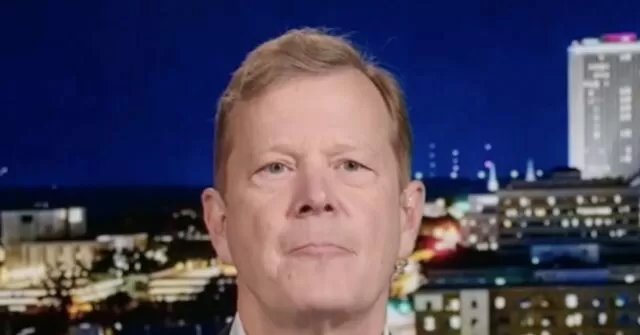
On Tuesday, Fox News Channel’s “Ingraham Angle” featured an insightful discussion with Breitbart News senior contributor and author, Peter Schweizer. The topic at hand was the recent U.S. military strikes on Iran and the potential implications it could have on China.
Schweizer, whose latest book, The Invisible Coup: How American Elites and Foreign Powers Use Immigration as a Weapon, delves into the complex relationships between immigration, national security, and foreign influence, provided a unique perspective on the situation.
According to Schweizer, the U.S. military strikes on Iran have the potential to be a “disaster for China on multiple stages.” He explained that China has been heavily invested in the Iranian economy, particularly in the energy sector. With the recent strikes, the stability of the region and the safety of China’s investments are now at risk.
But it’s not just economic implications that Schweizer is concerned about. He also pointed out that China has been using Iran as a strategic partner in their efforts to expand their global influence. The country has been providing Iran with weapons and technology, which could now fall into the wrong hands.
Furthermore, Schweizer believes that China may also use this situation to their advantage in the ongoing trade negotiations with the United States. He stated, “China is going to be looking at this situation and saying, ‘We’re going to use this to our advantage in the trade negotiations. We’re going to try to get the U.S. to back off on some of the positions they’ve taken.'”
Schweizer’s insights shed light on the complexities of the U.S.-China relationship and how the recent military strikes on Iran could have far-reaching consequences. But what makes this situation even more concerning is the potential for China to use it as a bargaining chip in their trade negotiations with the U.S.
In recent years, China has been taking aggressive measures to expand its global influence, from building military bases in the South China Sea to investing in countries around the world. And with the U.S. being their biggest economic rival, any opportunity to weaken their position would be advantageous for China.
But what does this mean for the United States? Schweizer believes that it is a wake-up call for American leaders to re-evaluate their approach to China. He stated, “We need to recognize that China is not a friend of the United States. They are a strategic competitor, and they are not interested in a level playing field.”
The recent events in Iran serve as a reminder that the U.S. cannot afford to turn a blind eye to China’s actions. The country’s aggressive tactics and their willingness to use any means necessary to achieve their goals should not be underestimated.
In conclusion, Peter Schweizer’s analysis of the U.S. military strikes on Iran and its potential impact on China is a wake-up call for American leaders and citizens alike. It highlights the need for a more proactive approach to dealing with China and their expanding global influence. The United States must remain vigilant and take necessary measures to protect its interests and maintain its position as a global superpower. Let us hope that our leaders take heed of Schweizer’s warning and act accordingly.