
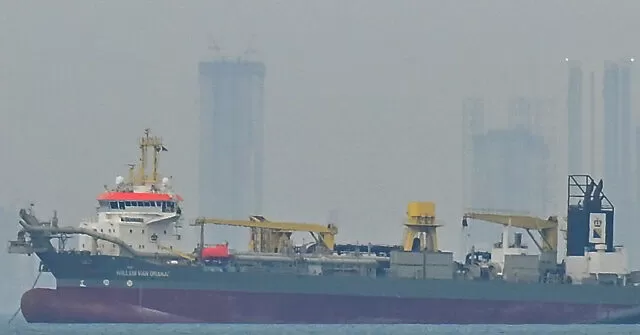
Iran’s Islamic Revolutionary Guard Corps (IRGC) has recently issued a new threat to the global oil trade, warning that it will “burn” any oil tanker that attempts to pass through the strategic Strait of Hormuz. This has caused great concern and fear among the international community, as this vital waterway is responsible for the transport of one-fifth of the world’s oil supply.
The IRGC’s threat comes in the wake of escalating tensions between Iran and the United States, as the two countries continue to engage in a war of words and actions that threaten to destabilize the entire region. This latest threat is just the latest in a series of provocative actions by Iran, as it seeks to flex its military muscle and assert its dominance in the Gulf of Oman.
According to reports, the IRGC has also launched “indiscriminate” strikes across the Gulf of Oman, targeting commercial ships and oil tankers. These attacks have caused significant damage to several vessels, raising concerns about the safety and security of ships passing through the Strait of Hormuz.
The IRGC, which is considered a terrorist organization by the United States, has long been a key player in Iran’s military and political landscape. Established in 1979 after the Iranian revolution, the IRGC has been responsible for carrying out Iran’s foreign policy objectives, including support for militant groups in the Middle East.
The recent rise in tensions between Iran and the US has been fueled by the Trump administration’s decision to withdraw from the Iran nuclear deal, which was signed in 2015 under the Obama administration. This move has led to increased economic sanctions on Iran, crippling its economy and leading to widespread discontent among its people.
Amidst the mounting pressure, Iran has resorted to using its military might to assert its dominance and retaliate against its perceived enemies. However, its threats and actions have only served to further isolate the country and raise concerns about its intentions in the region.
The threats to “burn” oil tankers passing through the Strait of Hormuz are not only a direct disruption to the global oil trade, but also a violation of international law and a threat to the safety of innocent civilians. Such provocative and reckless actions can have serious consequences and must be strongly condemned by the international community.
In response to these threats, the US has deployed a carrier strike group to the Gulf region, along with B-52 bombers and additional troops. This has further escalated tensions and raised fears of a military conflict between the two countries.
The Strait of Hormuz is a vital waterway for global trade, and any disruption to its smooth functioning can have far-reaching consequences for the global economy. It is imperative that all parties involved exercise restraint and work towards de-escalation, in order to avoid any potential catastrophic consequences.
The international community must also take a stand against Iran’s aggressive and destabilizing actions in the region. It is important to send a strong message to Iran that such threats and attacks will not be tolerated and will be met with a unified and firm response from the global community.
In addition, Iran must be held accountable for its actions and urged to return to the negotiating table to find a peaceful solution to the ongoing tensions. The international community, led by the United Nations, must play a crucial role in facilitating talks and promoting a diplomatic approach to resolving the crisis.
Furthermore, it is important for Iran’s neighboring countries to also take a stand against its actions, as they are the ones most directly affected by the tensions in the region. It is crucial for them to come together and find a common ground to address the threats posed by Iran and work towards a stable and peaceful Middle East.
In conclusion, the recent threats by Iran’s Islamic Revolutionary Guard Corps to “burn” oil tankers passing through the Strait of Hormuz and its indiscriminate strikes in the Gulf of Oman are highly concerning and must be taken seriously. The international community must come together and take a strong stance against Iran’s aggressive actions, and work towards finding a peaceful resolution to the escalating tensions. It is only through cooperation and dialogue that we can avoid a potentially catastrophic conflict and ensure the safety and security of the global oil trade and the people of the region.