
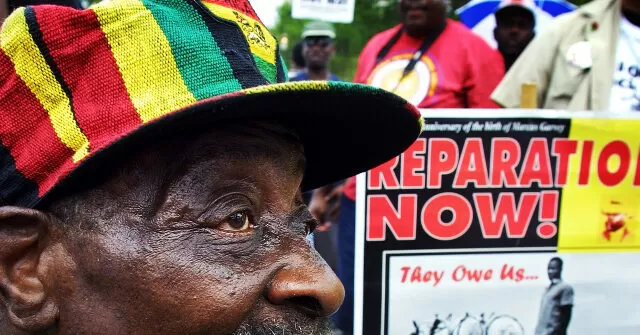
The Illinois Reparations Commission recently released a report that delves into the state’s history of racial harms against black residents. This groundbreaking report has sparked conversations and debates about the impact of historical injustices on the present and the need for reparations to address them.
The commission, which was established in 2019 by Illinois Governor JB Pritzker, was tasked with identifying and documenting the various forms of harm inflicted upon black residents throughout the state’s history. This includes the enslavement of black people, discrimination in housing and employment, segregation, and police brutality.
After months of research and collaboration with community members and historians, the commission released its report, titled “A Statewide Call to Action: The Illinois Reparations Report,” on Wednesday.
The report is a comprehensive and sobering account of the deep-rooted injustices that have plagued black communities in Illinois for centuries. It highlights the fact that these injustices were not isolated incidents, but rather systemic and institutionalized practices that have shaped the state’s history.
One of the key findings of the report is the existence of slavery in Illinois. While many may associate slavery with the southern states, the commission’s research revealed that there were at least 100 documented cases of individuals being held in bondage in Illinois from the late 1700s to the early 1800s. This serves as a reminder that the legacy of slavery is not limited to one region but has affected the entire country.
The report also sheds light on the rampant discrimination and segregation that black residents have faced in Illinois. This includes redlining practices that prevented black families from obtaining mortgages and buying homes in certain neighborhoods, as well as the creation of racially segregated public housing projects that exacerbated poverty and inequality.
Furthermore, the commission’s report highlights the violence and brutality that black communities have endured at the hands of law enforcement. From the lynching of innocent black men to the more recent cases of police brutality and racial profiling, the report serves as a stark reminder of the devastating consequences of systemic racism.
The release of this report comes at a critical time when the country is grappling with issues of racial justice and equity. It serves as a call to action for the state of Illinois to take responsibility for its past wrongdoings and implement measures to address the harm that has been inflicted upon black communities.
One of the key recommendations of the report is the establishment of a reparations program to provide redress for the harms inflicted upon black residents. This would include financial compensation, as well as investments in education, housing, and economic development in black communities.
Many have welcomed the report and its recommendations, acknowledging the need for reparations to address the generational effects of historical injustices. However, there are also critics who argue that reparations are not the solution and that they would only perpetuate a victim mentality.
Nevertheless, the release of this report is a significant step towards acknowledging and confronting the state’s history of racial harms. It serves as an important reminder that in order to move forward, we must first acknowledge and come to terms with the past.
Governor Pritzker has expressed his support for the report and its recommendations, stating, “We must recognize, as a state, that we must take meaningful action to eradicate the historical injustices that have been committed against black communities and to achieve equity and justice for all.”
The Illinois Reparations Commission’s report serves as a wake-up call for the state to address its history of racial harms and take concrete steps towards healing and reparations. It is time for Illinois, and the rest of the country, to acknowledge and take responsibility for the injustices of the past and work towards a more just and equal future for all.