
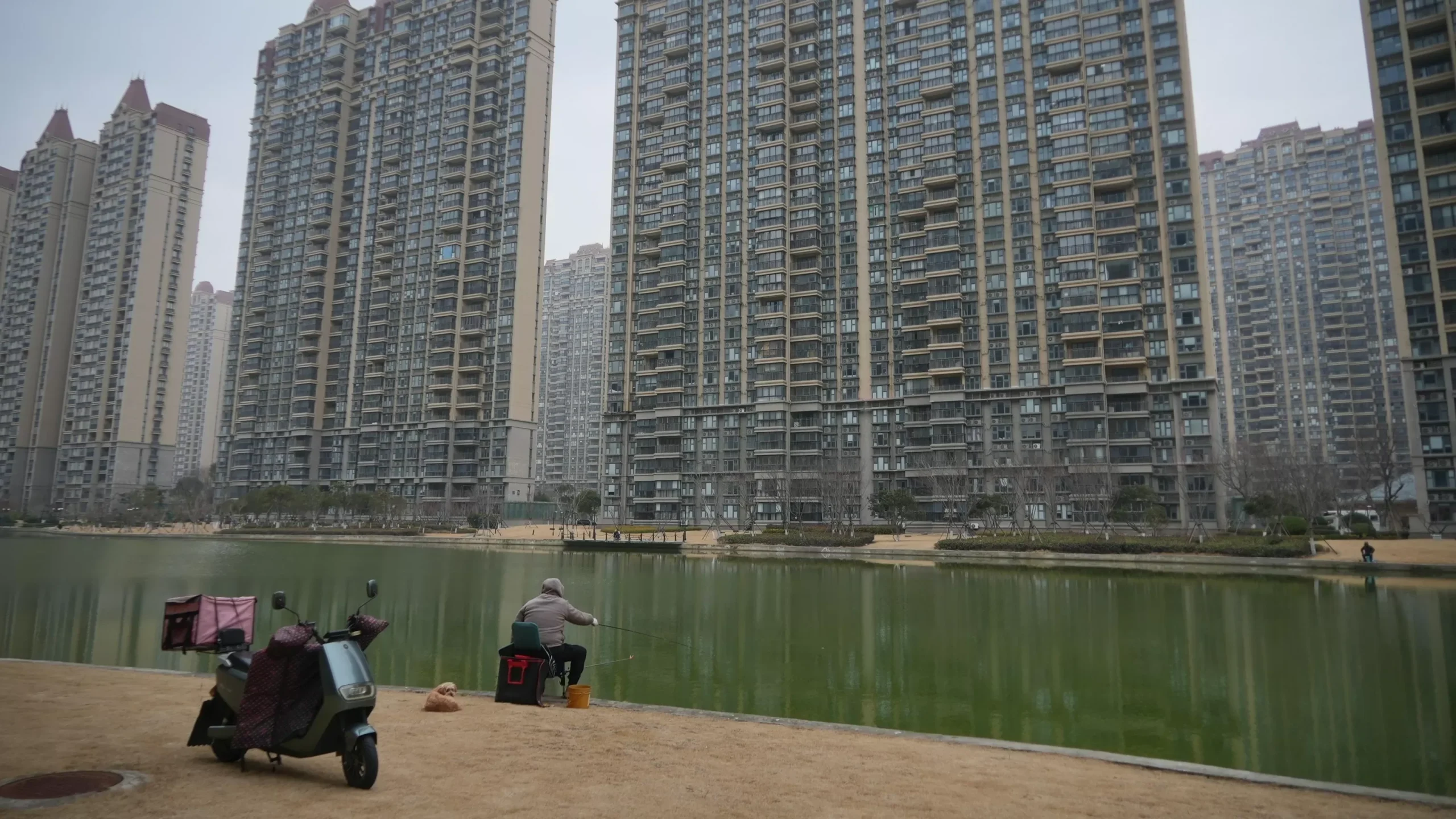
As China’s property market continues to decline and youth unemployment rates rise, a new trend is emerging among young professionals in the country. Faced with the high cost of living in megacities, many are choosing to leave behind the hustle and bustle for a simpler and more affordable lifestyle in remote towns.
The Chinese property market has been a hot topic for years, with skyrocketing prices and a growing number of empty apartments. However, in recent months, the market has taken a sharp downturn, leaving many homeowners and investors in a state of panic. This has had a ripple effect on the economy, leading to a rise in unemployment, particularly among the younger generation.
As a result, many young professionals are feeling the pressure to find affordable housing and make ends meet. This has led them to look beyond the big cities and towards smaller, more remote towns. These towns, once overlooked and considered undesirable, are now becoming a haven for those seeking a more affordable and peaceful way of life.
One such town is Xinghua, located in the eastern province of Jiangsu. With a population of just over one million, it is a far cry from the bustling megacities of Beijing and Shanghai. However, for many young professionals, it offers a much-needed respite from the high cost of living. The town boasts a variety of affordable housing options, from small apartments to traditional courtyard homes, all at a fraction of the cost of big city living.
For 25-year-old marketing executive, Liang Chen, the decision to move to Xinghua was an easy one. “I was struggling to make ends meet in Shanghai, constantly worrying about rent and other expenses. But here in Xinghua, I can afford a spacious apartment and still have money left over for savings and leisure activities,” she says.
But it’s not just about the cost of living. Many young professionals are also drawn to the slower pace of life and the sense of community in these smaller towns. In megacities, it’s easy to feel lost in the crowd, but in places like Xinghua, people know each other and are more willing to lend a helping hand.
In addition to the affordable housing and sense of community, these remote towns also offer a chance for young professionals to pursue their passions and dreams. With a lower cost of living, they are able to take risks and start their own businesses or pursue creative endeavors without the fear of financial instability.
This trend is not limited to Xinghua alone. Similar stories can be found in other remote towns across China, such as Lijiang in Yunnan province and Yangshuo in Guangxi province. These towns, once known for their natural beauty and tourist attractions, are now attracting a new wave of young professionals seeking a better quality of life.
Of course, this trend is not without its challenges. Moving to a remote town means leaving behind the convenience and amenities of big cities. However, for many, the trade-off is worth it. As 28-year-old accountant, Wang Tao, puts it, “I may not have access to the latest restaurants or shopping malls, but I have a peaceful and affordable life here. And that’s what matters to me.”
The shift towards remote towns is not just limited to young professionals. Many families are also choosing to relocate to these areas, seeking a better environment to raise their children. This has led to a revitalization of these towns, with new businesses and services popping up to cater to the growing population.
In conclusion, while the decline of China’s property market and rise in youth unemployment may seem like a cause for concern, it has also sparked a positive trend of young professionals seeking a more affordable and fulfilling lifestyle in remote towns. This shift not only benefits the individuals involved but also has the potential to revitalize these smaller communities and contribute to the overall growth of the country. So, for those feeling burnt out by the fast-paced city life, perhaps it’s time to consider a move to a remote town and experience a different side of China.