
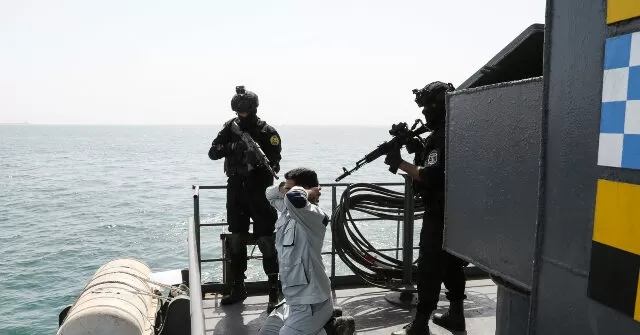
Iranian and Russian naval forces recently conducted joint exercises in the Gulf of Oman and Indian Ocean as tensions continue to rise between the United States and Iran. The exercises, which were held amidst fears of possible U.S. military action, were described by Iranian officials as a show of strength and unity between the two countries.
The joint drills, named “Iran-Russia Maritime Security Belt,” involved naval vessels, helicopters, and special forces from both countries. They included training exercises on countering terrorism, piracy, and improving rescue and relief operations. The maneuvers were conducted near the strategic Strait of Hormuz, a vital waterway for global oil supplies, and the Sea of Oman.
These drills come at a time when the United States has increased its military presence in the region, with the deployment of an aircraft carrier and B-52 bombers. The U.S. has also imposed additional sanctions on Iran, further escalating tensions between the two nations.
The Iranian and Russian naval exercises have been seen as a message to the United States, warning against any potential military aggression. Iranian Rear Admiral Gholamreza Tahani stated, “We have a message of peace and friendship, and we have a message for our enemies that we will strongly defend our interests.”
The exercises also highlight the strong alliance between Iran and Russia. The two countries have been long-time allies, with a shared interest in countering Western influence in the region. Russian support has been crucial for Iran in the face of U.S. sanctions and international isolation.
The joint drills have been met with mixed reactions from the international community. While some have expressed concern over the growing tensions in the region, others have praised the cooperation between Iran and Russia. Chinese Foreign Ministry spokesman Geng Shuang stated, “We believe that under the current circumstances, such joint exercises are not conducive to easing tensions in the region.”
The United States, however, has been critical of the drills, calling them “irresponsible and provocative.” U.S. National Security Advisor John Bolton stated, “We call on the Iranian regime to cease all provocation. We are not seeking war, but we will defend American interests.”
Amidst rising tensions, there have been fears of a potential military conflict between the United States and Iran. The U.S. has accused Iran of being behind recent attacks on oil tankers in the Gulf of Oman, a claim which Iran has vehemently denied. The situation has also been compounded by the U.S. withdrawing from the 2015 nuclear deal and imposing harsh sanctions on Iran.
In the face of these challenges, the joint naval exercises between Iran and Russia serve as a reminder of their strong partnership and determination to defend their interests. The drills also send a message to the United States that any potential aggression will not go unanswered.
Despite the ongoing tensions, Iran has reiterated its commitment to peace and stability. Foreign Minister Mohammad Javad Zarif stated, “Iran is committed to peace, stability, and security in the region. We are not looking for war, but we will defend ourselves against any aggression.”
The joint exercises also showcase Iran’s capabilities in the face of mounting pressure from the United States. Iran’s involvement in the drills demonstrates its ability to defend its territorial waters and respond to any threats.
In addition to demonstrating military strength, the drills also serve to strengthen the economic ties between Iran and Russia. The two countries have been working to expand their economic cooperation, with a focus on energy, transportation, and agriculture. The joint exercises will further enhance this partnership, providing a boost to their economies.
The successful conclusion of the joint drills has been hailed as a victory for Iran and Russia. The exercises have not only strengthened their military capabilities but have also sent a clear message to the United States that any aggression will not be tolerated. As tensions continue to escalate, it is important for all parties involved to exercise restraint and work towards finding a peaceful solution. The international community must also play a role in de-escalating the situation and promoting dialogue between all parties.
In conclusion, the joint naval exercises between Iran and Russia serve as a display of their strong alliance and determination to defend their interests. The drills also send a message to the United States that any aggression will be met with a strong response. It is hoped that these exercises will contribute to easing tensions in the region and pave the way for peaceful resolution of issues between all parties involved.