
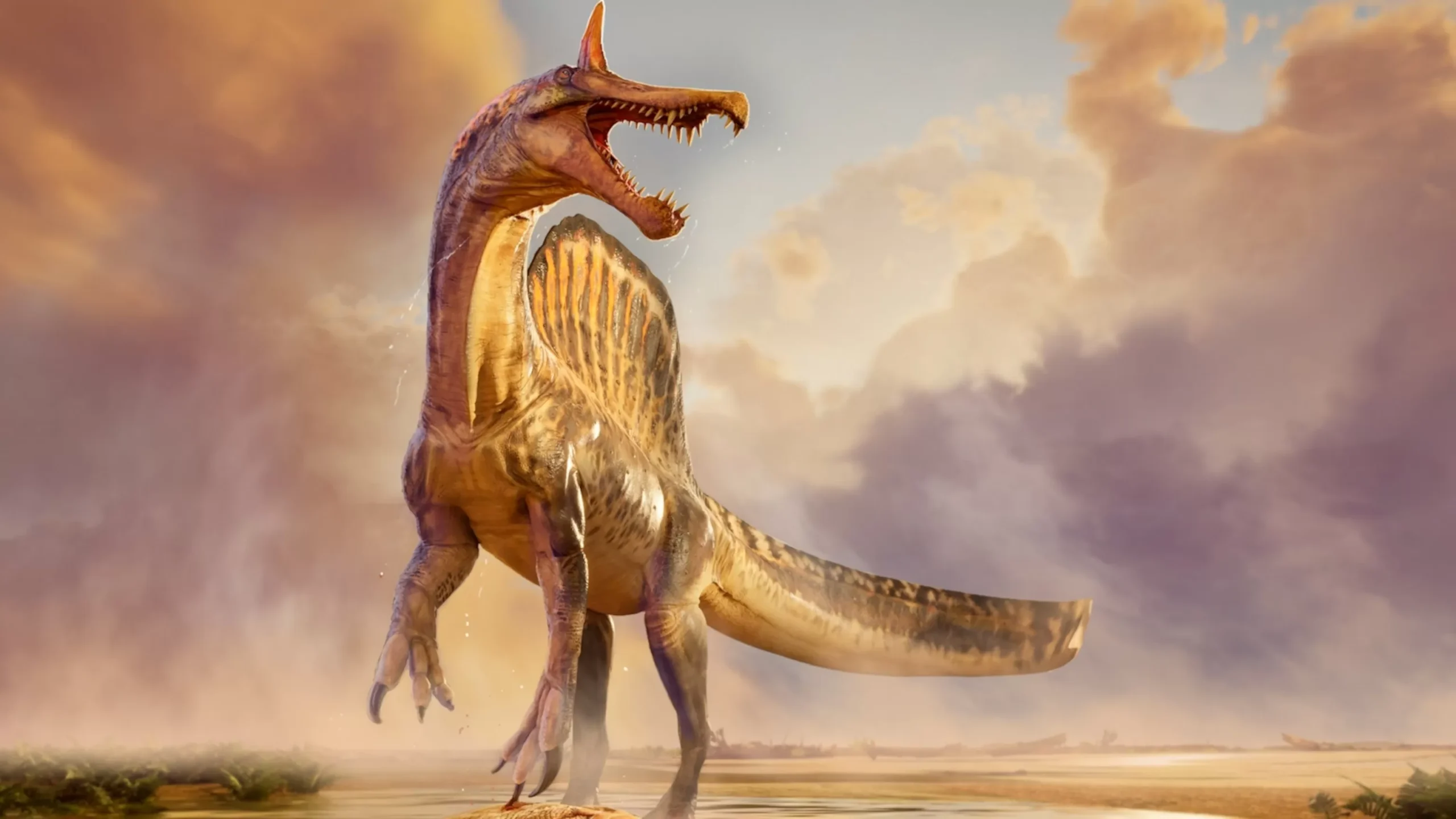
In a groundbreaking expedition to Niger in West Africa, a team of paleontologists have made an incredible discovery – fossils of a new species of Spinosaurus, named Spinosaurus Mirabilis. This exciting find has opened up new possibilities for our understanding of the ancient world and the creatures that inhabited it.
The expedition, which took place in 2022, was led by a team of international researchers, including experts from Niger, Germany, and the United States. It was a collaborative effort that brought together different perspectives and expertise in the field of paleontology.
The team’s journey to Niger was not an easy one. The harsh climate and rugged terrain made the search for fossils a daunting task. However, their determination and perseverance paid off when they stumbled upon a site that contained a wealth of fossilized remains.
As they carefully excavated the area, they were amazed to find bones and teeth that were unlike anything they had seen before. After thorough analysis and comparison with other known species, the team confirmed that they had indeed discovered a new species of Spinosaurus.
The Spinosaurus Mirabilis is believed to have lived approximately 100 million years ago during the Cretaceous period. It was a massive creature, measuring up to 15 meters in length and weighing around 8 tons. Its most distinctive feature was its large sail-like structure on its back, which was possibly used for thermoregulation or display purposes.
This fascinating new species is also characterized by its long, narrow snout, sharp teeth, and powerful limbs. Its size and physical features suggest that it was a formidable predator, possibly even bigger than the well-known Tyrannosaurus Rex.
The discovery of Spinosaurus Mirabilis has sparked great excitement and interest in the paleontological community. It has provided a rare opportunity to study a previously unknown species and gain insight into its behavior, diet, and evolutionary history.
One of the most significant implications of this finding is its potential to challenge existing theories and assumptions about the evolution of dinosaurs. The Spinosaurus Mirabilis has features that are distinct from other known species, suggesting that the diversity of dinosaurs was even greater than previously thought.
Moreover, this discovery also sheds light on the ancient landscape of West Africa. It was once believed that this region was covered by a vast ocean during the Cretaceous period, making it an unlikely habitat for dinosaurs. However, the presence of Spinosaurus Mirabilis fossils suggests that this area was, in fact, a diverse and thriving ecosystem.
The discovery of Spinosaurus Mirabilis also has significant cultural and economic implications for Niger. The country is known for its rich fossil deposits, and this new finding further solidifies its position as a premier destination for paleontological research. It also presents opportunities for tourism and education, as the site of the discovery could potentially become a popular attraction for visitors and students alike.
The Spinosaurus Mirabilis has captured the imagination of people worldwide, and its discovery has been met with much enthusiasm and awe. It is a testament to the endless possibilities of scientific research and the constant evolution of our understanding of the world.
As we continue to unravel the mysteries of our planet’s past, the discovery of Spinosaurus Mirabilis serves as a reminder of the importance of preserving our natural history and the need for continued exploration and discovery. It is a remarkable achievement that highlights the power of collaboration and the tireless efforts of scientists in expanding our knowledge of the world around us.
In conclusion, the 2022 expedition to Niger has yielded a groundbreaking discovery – a new species of Spinosaurus, the Spinosaurus Mirabilis. This remarkable find has opened up new avenues for research and has the potential to reshape our understanding of dinosaurs and their evolution. It is a testament to the endless wonders of our planet and the exciting possibilities that lie ahead in the field of paleontology.