
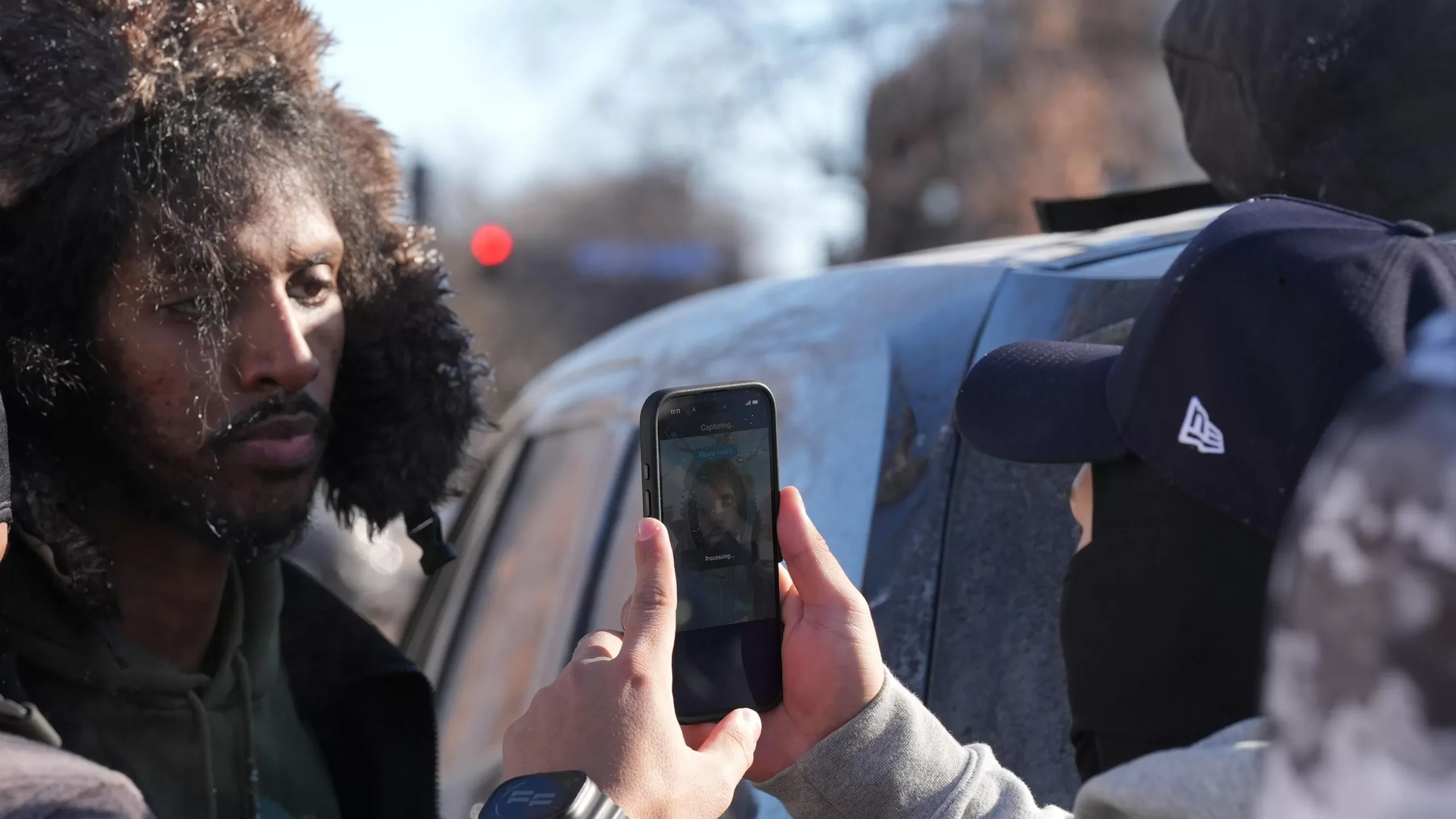
The Trump administration’s immigration crackdown in Minneapolis has been making headlines recently, but it’s not just the controversial policies that are causing concern. The tactics being used by the government to carry out their mass deportation campaign are shedding light on the advanced surveillance technologies being employed.
In recent months, Immigration and Customs Enforcement (ICE) has been conducting raids in Minneapolis, targeting undocumented immigrants for deportation. These raids have sparked fear and outrage in the community, with many questioning the methods being used by the government.
One of the most concerning aspects of these raids is the use of advanced surveillance technologies. ICE has been utilizing a variety of tools to track and monitor individuals, including facial recognition software, license plate readers, and cell phone tracking devices.
Facial recognition software, in particular, has been a major point of contention. This technology uses algorithms to analyze facial features and match them to a database of known individuals. While it has been touted as a useful tool for law enforcement, it has also been criticized for its potential to be biased and inaccurate.
In the case of the Minneapolis raids, ICE has been using facial recognition software to identify and track individuals. This has raised concerns about the privacy and civil liberties of those being targeted. Many fear that innocent individuals may be caught up in the system and wrongly identified as undocumented immigrants.
Another technology being used by ICE is license plate readers. These devices are mounted on vehicles or stationary objects and can capture images of license plates, along with the date, time, and location. This information is then stored in a database and can be used to track the movements of individuals.
Cell phone tracking devices, also known as Stingrays, are also being used by ICE in their operations. These devices mimic cell phone towers and can intercept and collect data from nearby phones, including location information and call logs. This technology has been criticized for its potential to violate the privacy of individuals and for its lack of transparency.
The use of these surveillance technologies by ICE has raised concerns about the government’s ability to track and monitor individuals without their knowledge or consent. Many argue that these tactics are a violation of privacy and civil liberties, and that there needs to be more transparency and oversight in their use.
However, there are also those who support the use of these technologies, arguing that they are necessary for national security and to enforce immigration laws. They argue that the government has a responsibility to protect its citizens and that these tools are an effective way to do so.
Regardless of one’s stance on the issue, the use of these surveillance technologies by ICE is providing valuable insights into the extent of the government’s capabilities. It is also sparking important conversations about the balance between security and privacy in our society.
In response to the concerns raised by these raids, the Minneapolis City Council has passed a resolution calling for a ban on the use of facial recognition technology by city departments, including the police. This is a positive step towards protecting the privacy and civil liberties of individuals in the community.
The Trump administration’s immigration crackdown in Minneapolis may be controversial, but it is also shedding light on the advanced surveillance technologies being used by the government. While there are valid concerns about the potential misuse of these tools, it is also important to recognize their potential benefits. As a society, we must continue to have open and honest discussions about the use of these technologies and strive to find a balance between security and privacy.