
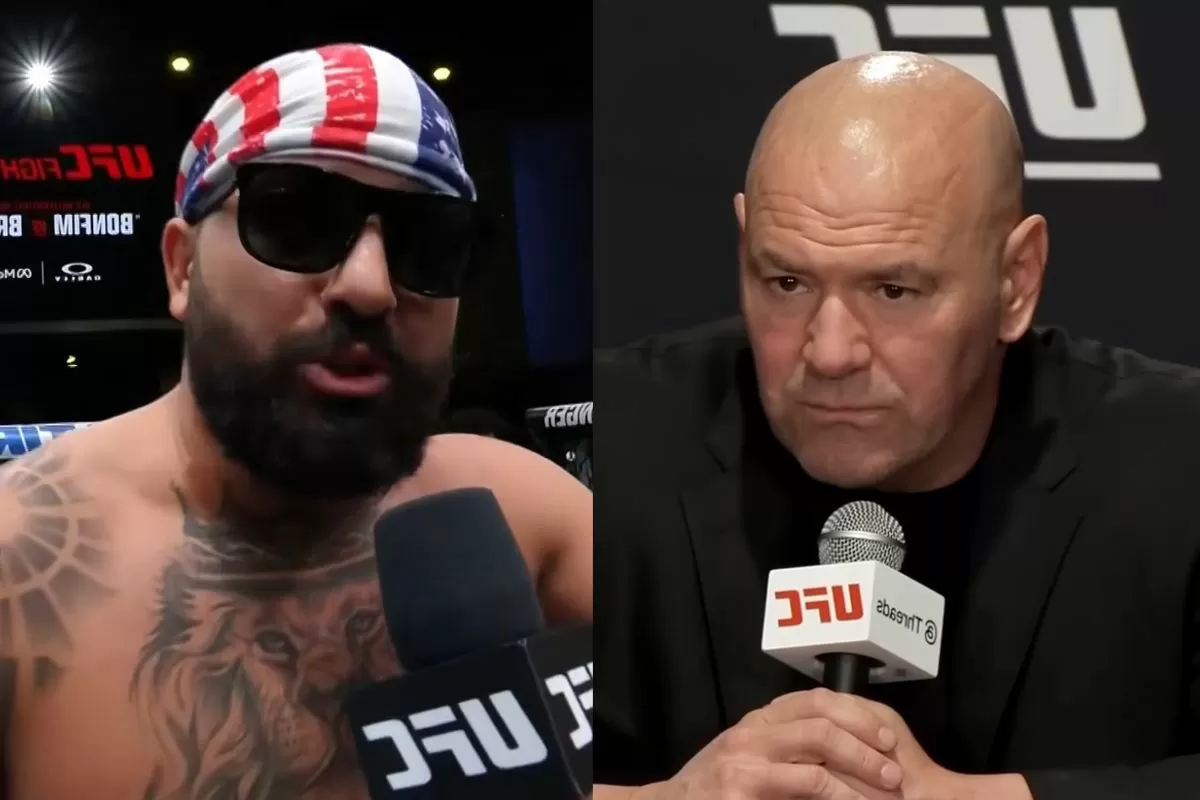
Josh Hokit didn’t waste any time to respond to Dana White’s criticism. After White expressed his disapproval of Hokit’s behavior at UFC 324, the heavyweight fighter came back with a strong and receipt-filled response. Following his impressive performance and $100,000 bonus at the event in Las Vegas, Hokit made it clear that he won’t back down from White’s judgment. This incident has once again highlighted the growing tension between the UFC CEO and some of its fighters.
The post-fight antics in question occurred when Hokit, after securing a dominant win, took a victory lap around the cage, jumping and celebrating with fans before eventually exiting. White didn’t hold back in expressing his disapproval of Hokit’s actions, stating in a recent interview, “I didn’t love what he did after his fight.” However, Hokit was quick to defend himself, reminding White of his own past actions.
In a post on Twitter, Hokit attached a screenshot from a 2014 interview where White himself is seen jumping on the cage and celebrating with McGregor after his victory. Hokit captioned the post, “Thought you didn’t mind post-fight antics, boss? I guess it depends on who’s doing it.” This sly response gained a lot of attention and started a conversation about double standards in the UFC.
Hokit’s performance at UFC 324 was nothing short of impressive. He finished his opponent in the first round, earning a $100,000 bonus for Performance of the Night. This win took his unbeaten record to 11-0, making him one of the most promising heavyweight prospects in the UFC. Despite his incredible performance, White’s criticism seemed to overshadow the victory.
This is not the first time White has been at odds with his fighters. In the past, he has been involved in public feuds with big names like Jon Jones and Conor McGregor. However, with Hokit, it seems like White has drawn a line between what he deems acceptable and unacceptable behavior from his fighters. But with the tables turned now, it’s clear that Hokit has no problem challenging White’s judgment.
It’s not uncommon for fighters to have disagreements with their bosses. However, what sets Hokit apart is his determination to stand up for himself and his actions. His response to White’s criticism has not only garnered support from his fans but has also opened up an important conversation about the treatment of fighters in the UFC.
Hokit’s actions have also shed light on the pressure and scrutiny that fighters face in the world of MMA. Being a fighter requires a certain level of bravado and showmanship, and post-fight celebrations are often seen as an integral part of the sport. However, when White himself sets different standards for different fighters, it creates confusion and frustration among the fighters.
In a recent interview, Hokit stated, “I’m not trying to be disrespectful to anyone. I’m just proud of my performance and wanted to celebrate with the fans.” This statement reflects how Hokit’s intentions were never to disrespect anyone, but simply to revel in a well-deserved victory. It’s important to remember that fighters put their bodies and minds through grueling training and fights, and being able to celebrate and bask in the glory of their triumph is crucial for their mental well-being.
While Hokit might have ruffled some feathers with his response, it’s clear that he has also gained a lot of respect for standing up for himself. His actions have inspired other fighters to speak up against any potential double standards and have opened up a dialogue between the fighters and the UFC.
In conclusion, Josh Hokit’s post-fight antics and subsequent response to Dana White’s criticism have not only highlighted the current tension between the UFC CEO and some of its fighters but have also brought important issues to the forefront. Hokit’s performance and behavior have proven that he is not only a talented fighter but also a strong individual who is unafraid to speak his mind. As he continues to climb the ranks in the UFC, let’s hope that his actions will bring about positive changes and a more respectful relationship between fighters and their boss.