
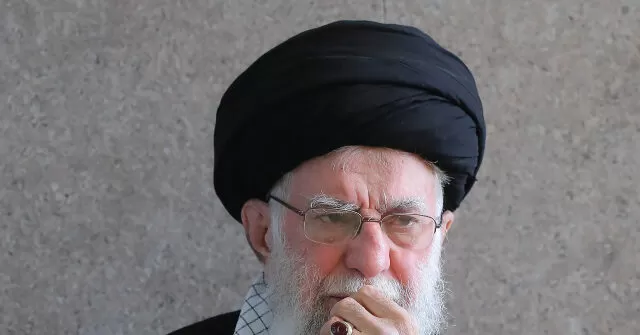
Iranian Supreme Leader Ali Khamenei has recently relocated to a heavily fortified underground compound in Tehran, according to reports from sources close to the regime. This move comes amidst rising concerns over a possible U.S. military strike on Iran.
According to these sources, Khamenei’s decision to seek shelter in a bunker is a precautionary measure to ensure his safety in the event of an attack. His son is now overseeing day-to-day operations, taking on a more prominent role in the regime’s leadership.
This development is a clear indication of the seriousness with which the Iranian regime is taking the threat of a U.S. strike. It also highlights the regime’s deep-rooted fear and insecurity in the face of potential military action.
The tensions between the United States and Iran have been steadily escalating in recent months. The U.S. has accused Iran of being responsible for a series of attacks on oil tankers in the Gulf of Oman, as well as shooting down a U.S. drone. In response, the U.S. has imposed heavy economic sanctions on Iran, crippling its economy and putting immense pressure on the regime.
The U.S. has also deployed additional military forces to the region, including an aircraft carrier and B-52 bombers. This has further fueled speculation of a potential military strike on Iran.
In light of these developments, it is understandable that Khamenei and his inner circle would take measures to protect themselves. However, this move also speaks to the fragile state of the Iranian regime and its lack of faith in its own ability to withstand an attack.
Iran’s Supreme Leader has always projected an image of strength and power, but his recent actions indicate a sense of fear and vulnerability. This is a stark contrast to the confident and defiant rhetoric that the Iranian regime has been using in response to U.S. aggression.
The fact that Khamenei’s son is now taking on a more prominent role in the regime’s operations is also telling. It shows that the regime is preparing for the possibility of Khamenei being incapacitated or even killed in a U.S. strike.
This development also sheds light on the true nature of the Iranian regime and its leadership. Despite their bold claims of being a powerful and united front, the regime is clearly divided and struggling to maintain control.
The relocation of Khamenei to a bunker also raises questions about the regime’s ability to protect its citizens in the event of a U.S. strike. If the Supreme Leader himself is not safe, what about the ordinary citizens of Iran?
This situation serves as a reminder of the devastating consequences of war and the importance of finding a peaceful resolution to conflicts. The people of Iran, like people everywhere, deserve to live in safety and security, free from the constant threat of violence and destruction.
It is also important to note that the U.S. has repeatedly stated that its goal is not to start a war with Iran, but to prevent it from acquiring nuclear weapons and to protect its allies in the region. The U.S. has made it clear that it is open to negotiations and is willing to engage in diplomatic efforts to address the issues at hand.
In the midst of all the tension and fear, it is crucial to remember that there is always room for dialogue and peaceful resolution. War should never be the first option, and every effort should be made to find a way to de-escalate the situation. This is especially important for the sake of innocent civilians who are caught in the crossfire.
In conclusion, the relocation of Iranian Supreme Leader Ali Khamenei to a fortified bunker underscores the growing tensions between the U.S. and Iran. It is a clear indication of the regime’s fear and insecurity in the face of potential military action. However, this situation also highlights the need for peaceful resolution and the importance of finding a way to de-escalate the situation. Only through open communication and diplomatic efforts can a lasting and peaceful solution be reached. Let us hope that all parties involved will choose the path of peace and avoid the devastating consequences of war.