
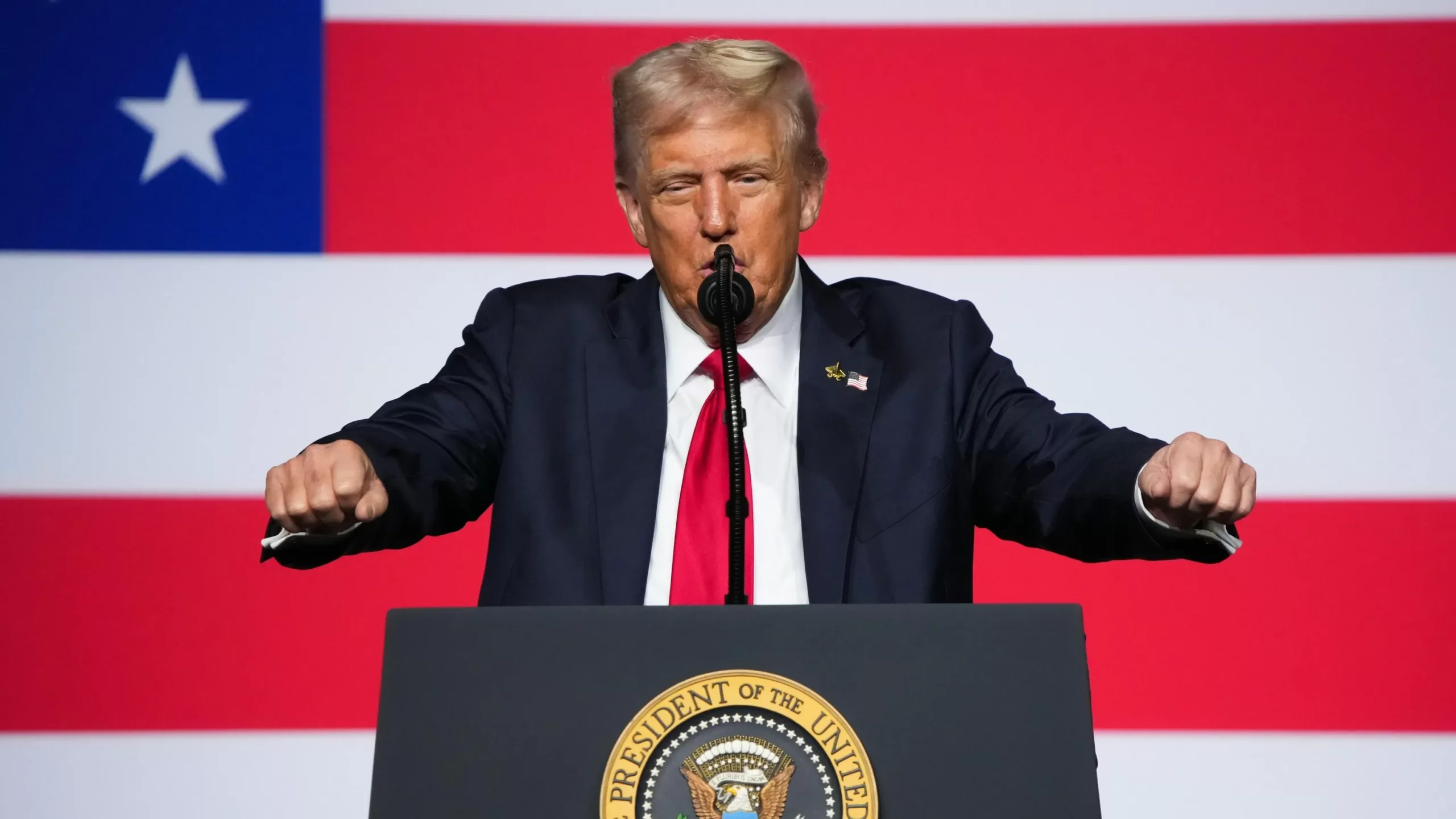
President Donald Trump is no stranger to controversy and unpredictability. Throughout his political career, he has defied traditional conservative ideology and pursued a path that was often seen as unconventional. However, as he nears the end of his term, Trump has made a surprising shift and openly embraced the conservative blueprint that he had previously tried to distance himself from.
During his 2016 campaign, Trump’s platform was based on populism and nationalism, rather than conservative principles. He promised to shake up the political establishment, but his policies were often in direct contrast to those of his conservative counterparts. He advocated protectionist trade policies and attacked his Republican opponents for their support of free trade. He also promised to put America first, even if it meant going against traditional conservative values.
However, as the 2020 election approached, Trump’s messaging began to shift. He started to align himself more closely with the Republican Party and its conservative ideals. This was evident in his choice of Mike Pence as his running mate, who is known for his conservative views. Trump also began to focus on issues such as immigration and law and order, which are important to the conservative base.
Despite these changes, many conservatives were still skeptical of Trump and his commitment to their ideals. After all, he had a history of being a Democrat and had previously supported liberal causes. But as he enters the final months of his term, Trump has made an even more dramatic shift and is now openly embracing the conservative blueprint that he had once tried to distance himself from.
One of the main indicators of Trump’s change in stance is his Supreme Court nominations. Throughout his presidency, he has successfully appointed three conservative judges to the highest court in the land. This move has been applauded by conservatives, who see it as a lasting impact on the judiciary system. Additionally, Trump’s policies on taxes, deregulation, and healthcare have been in line with traditional conservative beliefs.
Even his foreign policy has taken a more conservative turn. Trump has been tough on China, recognizing the threat it poses to America’s economy and national security. He has also been a strong ally to Israel, moving the US embassy to Jerusalem and recognizing Israeli sovereignty over the Golan Heights. These actions have been praised by conservative voters and politicians alike.
Trump’s shift towards conservatism has been met with both praise and criticism. Some argue that it is purely a political tactic to secure his re-election, while others see it as a genuine change of heart. Whatever the case may be, Trump’s embrace of the conservative blueprint has solidified his support within the Republican Party and has made him a more formidable opponent in the upcoming election.
But what does this mean for the country? As we enter a new era of American politics, it is important to analyze the potential impacts of Trump’s transformation. On one hand, his policies may align more closely with traditional conservative values, which could lead to stability and economic growth. On the other hand, his bold and sometimes controversial decisions could further polarize the country and deepen divisions.
Despite the uncertainties, one thing is clear – President Trump is not backing down from his conservative stance. He is determined to continue his fight for America first, even if it means going against the grain of traditional conservative ideals. With this determination and his newfound embrace of conservatism, Trump is setting the tone for a new era of Republican leadership.
In conclusion, President Trump’s shift towards conservatism has been a surprising and significant development in his presidency. While it may have been met with skepticism at first, his actions and policies have shown a clear commitment to conservative values. Whether this is a political strategy or a genuine transformation, only time will tell. But for now, Trump’s embrace of the conservative blueprint is changing the landscape of American politics and setting the stage for the upcoming election.