
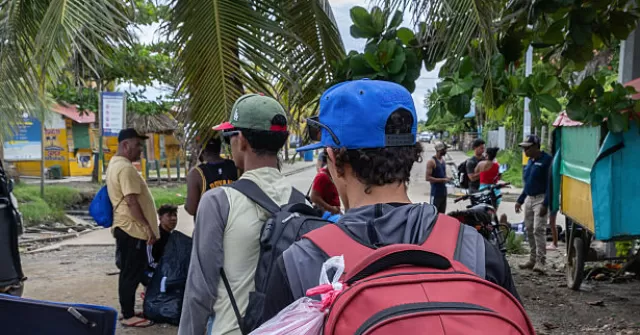
In recent months, the United States has seen a significant increase in the number of migrants crossing its southern border. Many of these migrants are fleeing poverty and violence in their home countries, seeking a better life in the land of opportunity. However, as they make their way north, they are faced with treacherous journeys and dangerous conditions. And now, a new trend has emerged – self-deportation.
According to an article in Rolling Stone, many of the poor migrants who were drawn north by President Joe Biden’s welcoming policies are now choosing to return to their home countries. But instead of taking the same route they came, they are self-migrating southwards through the jungles of Central America. And as they make this journey, they are walking past the skulls of dead migrants who have lost their lives in the same pursuit.
The article paints a grim picture of the reality faced by these self-deportees. They are forced to navigate through dense jungles, filled with the bones of those who came before them. The journey is long and arduous, with little food or water and the constant fear of being caught by authorities. But despite these challenges, these migrants are determined to return home, even if it means risking their lives once again.
The decision to self-deport is not an easy one. These migrants have left everything behind in search of a better life, and now they are faced with the harsh reality that their dreams may not come true. But what is even more heartbreaking is the fact that they are returning to the very conditions they were trying to escape. Poverty, violence, and lack of opportunities await them in their home countries, but they are willing to face it all rather than continue their journey north.
The article also sheds light on the reasons behind this new trend. The Biden administration’s welcoming policies have led to a surge in migrants at the southern border, overwhelming the already strained immigration system. As a result, many of these migrants are being turned away or facing long wait times to have their cases heard. This has left them with no choice but to return home on their own.
But amidst all the challenges and hardships, there is a glimmer of hope. The article highlights the resilience and determination of these self-deportees. They may have given up on their American dream, but they have not given up on their hopes for a better life. They are willing to start over and rebuild their lives in their home countries, despite the difficulties they may face.
The Rolling Stone article has sparked a much-needed conversation about the realities of immigration and the struggles faced by those seeking a better life. It serves as a reminder that behind the numbers and statistics, there are real people with real stories and dreams. And while the journey may be difficult, these migrants are willing to take the risk in pursuit of a better future.
In conclusion, the self-deportees walking past the skulls of dead migrants in Central American jungles is a poignant reminder of the harsh realities faced by those seeking a better life. It is a testament to the resilience and determination of these migrants, who are willing to risk it all for a chance at a better future. As a nation, we must address the root causes of migration and work towards creating a more welcoming and inclusive society for all. Only then can we truly live up to our ideals as a land of opportunity.