
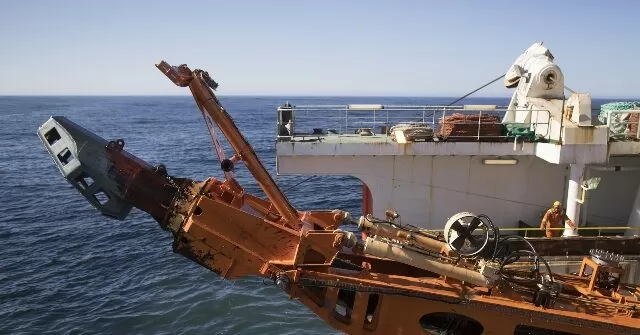
President Donald Trump has once again made a bold move in his efforts to protect America’s interests. In April, he issued an executive order that authorizes mineral exploration on the ocean floor, in an effort to maintain our country’s leadership in deep sea science and technology. This pioneering deep sea mining effort has sparked both excitement and concern among maritime experts and green activists.
The executive order, titled “Protecting America’s Ocean Economy and National Security in the Arctic and Atlantic Oceans,” aims to promote economic growth and national security by expanding our nation’s access to critical minerals found in the ocean floor. These minerals, such as cobalt, copper, and nickel, are essential for the production of high-tech devices and renewable energy technologies.
This move by President Trump has been met with enthusiasm by many in the maritime industry. They see it as a step towards reducing our dependence on foreign sources for these critical minerals and boosting our economy. The United States currently imports over 80% of its rare earth minerals, which are used in everything from smartphones to military equipment. By tapping into our own resources, we can reduce our reliance on other countries and create jobs for American workers.
However, this executive order has also raised concerns among environmentalists and green activists. They fear that deep sea mining could have a detrimental impact on the delicate ecosystems of the ocean floor. The process of extracting minerals from the seabed involves dredging and drilling, which can disrupt marine life and destroy habitats. There are also concerns about the potential for toxic chemicals and waste to be released into the ocean, further damaging the environment.
In response to these concerns, maritime experts and green activists have been scrambling to stop Trump’s deep sea mining effort. They argue that the potential risks and consequences of this type of mining far outweigh the benefits. They also point out that there are alternative ways to obtain these critical minerals, such as recycling and developing new technologies.
One of the main concerns is the lack of regulations and oversight in deep sea mining. Currently, there are no international laws specifically governing this type of mining, and the United States has yet to establish its own regulations. This has led to fears that companies will prioritize profit over environmental protection, leading to irreversible damage to our oceans.
In addition, there are concerns about the impact on indigenous communities who rely on the ocean for their livelihoods. Deep sea mining could disrupt their traditional fishing grounds and threaten their way of life.
Despite these concerns, President Trump remains determined to move forward with his deep sea mining effort. He believes that it is crucial for America to have access to these critical minerals in order to maintain our technological and economic leadership. He has also promised to work with environmental groups and experts to ensure that proper regulations and safeguards are in place to protect the ocean and its inhabitants.
In conclusion, President Trump’s executive order to authorize mineral exploration on the ocean floor has sparked both excitement and concern. While it has the potential to boost our economy and reduce our dependence on foreign sources, there are also valid concerns about the environmental and social impacts of deep sea mining. It is important for all stakeholders to come together and find a balance between economic growth and environmental protection. With proper regulations and oversight, we can ensure that America’s pioneering deep sea mining effort is a success for both our country and the ocean.