
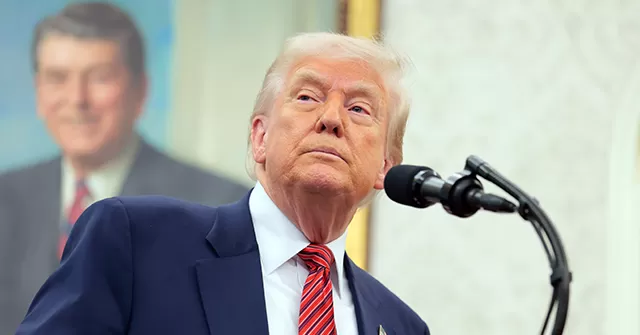
In recent years, there has been a widespread belief that budget deficits inevitably lead to higher trade deficits. This idea has been perpetuated by many economists and politicians, causing concern and fear among the general public. However, a growing number of economists have successfully challenged this notion, arguing that there is no direct correlation between budget deficits and trade deficits. This is particularly relevant in light of President Trump’s recent tax cuts, which have been met with criticism and skepticism about their potential impact on the trade deficit.
One of the main arguments against the idea that budget deficits lead to higher trade deficits is the fact that trade deficits are not solely determined by a country’s budgetary policies. In fact, trade deficits are influenced by a multitude of factors, such as exchange rates, domestic and global demand, and trade policies. Therefore, it is simplistic and misleading to attribute trade deficits solely to budget deficits.
Furthermore, it is important to understand that budget deficits can actually have a positive impact on the economy. When a government runs a budget deficit, it means that it is spending more money than it is collecting in revenue. This can lead to increased investment in public infrastructure, education, and social programs, which can in turn boost economic growth and create jobs. This can also lead to an increase in consumer spending, which is a major driver of economic growth.
On the other hand, reducing budget deficits through austerity measures can have a negative impact on the economy. Cutting government spending can lead to job losses, decreased consumer spending, and overall economic slowdown. This can ultimately lead to a decrease in imports and an increase in exports, resulting in a smaller trade deficit. However, this does not necessarily mean that the economy is thriving.
It is also important to note that budget deficits are not always a bad thing. In times of economic downturn, governments often use deficit spending as a tool to stimulate the economy and prevent a recession. This was the case during the global financial crisis of 2008, when many countries, including the United States, increased their budget deficits in order to stimulate economic growth. As a result, the trade deficit actually decreased during this period.
Now, let’s turn our attention to President Trump’s tax cuts. Many critics have argued that these tax cuts will lead to a larger trade deficit, as they will result in increased government spending and a larger budget deficit. However, this argument fails to take into account the potential positive effects of the tax cuts on the economy. Lower taxes can lead to increased consumer spending, which can boost economic growth and create jobs. This can also lead to an increase in exports, as a stronger economy can lead to increased demand for goods and services from other countries.
Moreover, the tax cuts are also expected to lead to increased investment in the United States. This can result in the creation of new businesses, job opportunities, and ultimately, a stronger economy. This could also lead to an increase in exports, as foreign companies may choose to invest in the United States and export their goods back to their home countries.
In addition, President Trump’s trade policies, such as renegotiating trade deals and implementing tariffs, are also expected to have a positive impact on the trade deficit. These policies aim to reduce the trade deficit by promoting fair and balanced trade, rather than simply reducing budget deficits.
In conclusion, the idea that budget deficits lead to higher trade deficits is a flawed and oversimplified notion. There are many factors that influence trade deficits, and budget deficits are just one piece of the puzzle. Moreover, budget deficits can actually have a positive impact on the economy, and reducing them through austerity measures is not always the best solution. President Trump’s tax cuts and trade policies are expected to have a positive impact on the economy and potentially lead to a decrease in the trade deficit. Therefore, it is important to look at the bigger picture and not solely focus on budget deficits when it comes to understanding the trade deficit.