
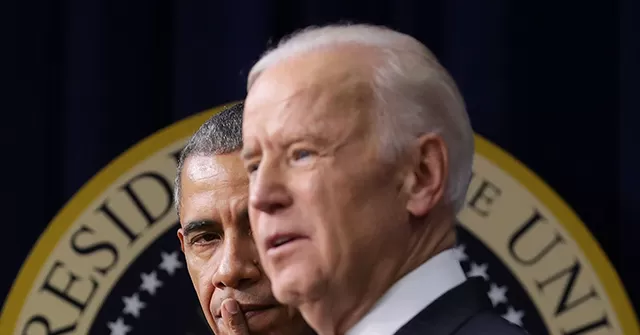
The Consumer Financial Protection Bureau (CFPB) was established in 2011 under the Obama-Biden administration with the goal of protecting consumers from unfair and deceptive financial practices. However, recent developments have raised concerns about the agency’s power to collect sensitive information from small businesses. This has sparked a debate on whether the CFPB should be stripped of this power, and I believe that it is time for Congress to take action and end the Obama-Biden DEI data grab.
First and foremost, the CFPB’s collection of sensitive information from small businesses is a violation of their privacy rights. As small businesses are the backbone of our economy, they should not be subjected to such intrusive measures. This data collection includes information on the business owners’ race, ethnicity, gender, and other personal details. This not only raises privacy concerns but also opens the door for potential discrimination based on this sensitive information.
Moreover, this data collection is not necessary for the CFPB to fulfill its purpose of protecting consumers. The agency’s main focus should be on regulating financial institutions and enforcing consumer protection laws, not collecting sensitive information from small businesses. In fact, the CFPB has been criticized for its lack of effectiveness in addressing issues such as predatory lending and debt collection practices. This raises questions about the agency’s priorities and whether it is truly serving its intended purpose.
Furthermore, the CFPB’s data collection has a disproportionate impact on small businesses, especially those owned by minorities and women. These businesses may already face challenges in accessing capital and resources, and the added burden of providing sensitive information to the CFPB could hinder their growth and success. This goes against the goal of promoting diversity and inclusion in the business world.
It is also important to note that the CFPB’s data collection has not been transparent. The agency has not provided a clear explanation of how this information will be used and how it will benefit consumers. This lack of transparency only adds to the concerns and mistrust surrounding the CFPB’s actions.
In addition, the CFPB’s data collection is redundant as other government agencies already collect similar information. This raises the question of why the CFPB needs to duplicate these efforts and adds to the burden on small businesses.
It is evident that the CFPB’s data collection from small businesses is unnecessary, intrusive, and potentially harmful. Therefore, it is time for Congress to take action and end this Obama-Biden DEI data grab. This can be achieved by stripping the CFPB of its power to collect sensitive information from small businesses and redirecting its focus on its core mission of protecting consumers.
In conclusion, the CFPB’s data collection from small businesses is a violation of privacy rights, unnecessary, and potentially harmful. It is time for Congress to step in and put an end to this practice. Small businesses are the backbone of our economy and they should not be subjected to such intrusive measures. Let us prioritize protecting their rights and promoting their growth, rather than burdening them with unnecessary data collection. It is time to end the Obama-Biden DEI data grab and ensure that the CFPB fulfills its intended purpose of protecting consumers.