
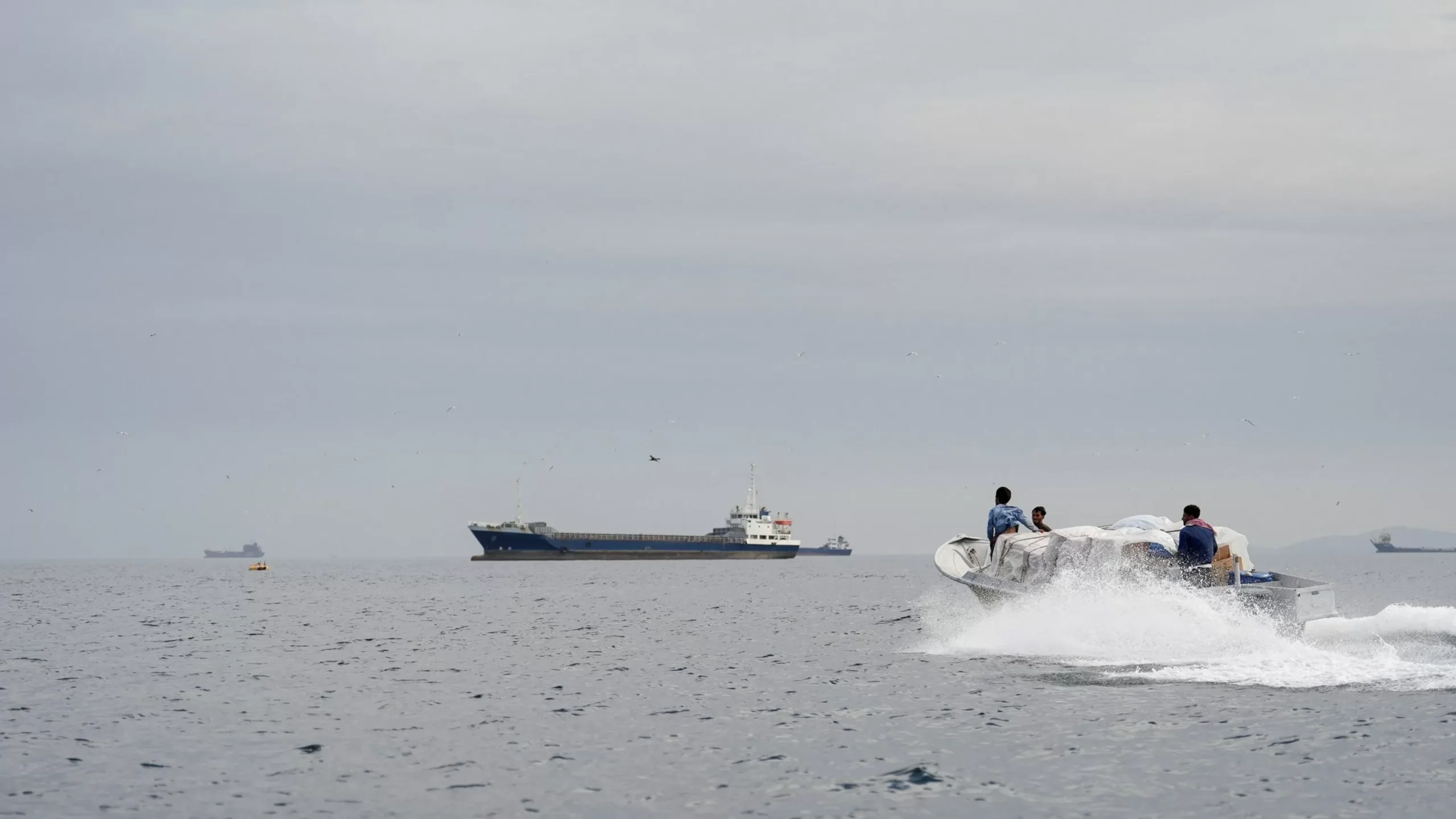
After months of tension and conflict, both the United States and Iran have declared that the Strait of Hormuz is now “completely open.” This news comes as a relief to the international community, as the strait is a vital waterway for global oil trade. However, despite this declaration, there are still serious questions surrounding the restoration of traffic to pre-war levels.
The Strait of Hormuz, located between Iran and Oman, is a narrow waterway that connects the Persian Gulf to the Arabian Sea. It is a crucial route for oil tankers, with an estimated 20% of the world’s oil passing through it. Therefore, any disruption to traffic in this area can have a significant impact on the global economy.
The tensions between the United States and Iran have been escalating since the U.S. withdrew from the 2015 nuclear deal and imposed sanctions on Iran. In response, Iran has been accused of attacking oil tankers in the strait and seizing a British-flagged tanker. These actions have led to heightened security measures and a decrease in traffic in the strait.
However, in recent weeks, both countries have made efforts to de-escalate the situation. The U.S. has stated that it does not seek war with Iran, and Iran has released the British-flagged tanker. This has led to the declaration that the strait is now “completely open.”
While this news is undoubtedly a positive development, there are still concerns about the restoration of traffic to pre-war levels. The decrease in traffic has caused a ripple effect on the global oil market, with prices fluctuating and supply chains being disrupted. It will take time for the market to stabilize and for countries to regain confidence in using the strait for oil trade.
Moreover, there are also concerns about the safety and security of ships passing through the strait. The recent attacks on oil tankers have raised questions about the vulnerability of ships in this area. It is crucial for both the U.S. and Iran to continue their efforts to ensure the safety of ships and prevent any future attacks.
Another factor that could affect the restoration of traffic is the ongoing tensions between the U.S. and Iran. While both countries have expressed a desire to de-escalate the situation, there is still a risk of further conflict. Any escalation could lead to a disruption of traffic once again, causing more economic damage.
Despite these concerns, there is hope that the strait will return to its pre-war levels of traffic. The international community has a vested interest in the stability of this vital waterway, and efforts are being made to ensure its safety and security. The U.S. has announced plans to form a coalition to protect ships passing through the strait, and other countries have also expressed their willingness to contribute.
In addition, the recent release of the British-flagged tanker by Iran is a positive sign of cooperation and a step towards easing tensions. It is essential for both the U.S. and Iran to continue to engage in dialogue and find a peaceful resolution to their differences.
In conclusion, the declaration that the Strait of Hormuz is now “completely open” is a significant step towards restoring stability in the region. However, there are still challenges to overcome before traffic can return to pre-war levels. The international community must continue to work together to ensure the safety and security of this vital waterway. With continued efforts and cooperation, we can hope to see the strait fully operational once again, benefiting the global economy and promoting peace in the region.