
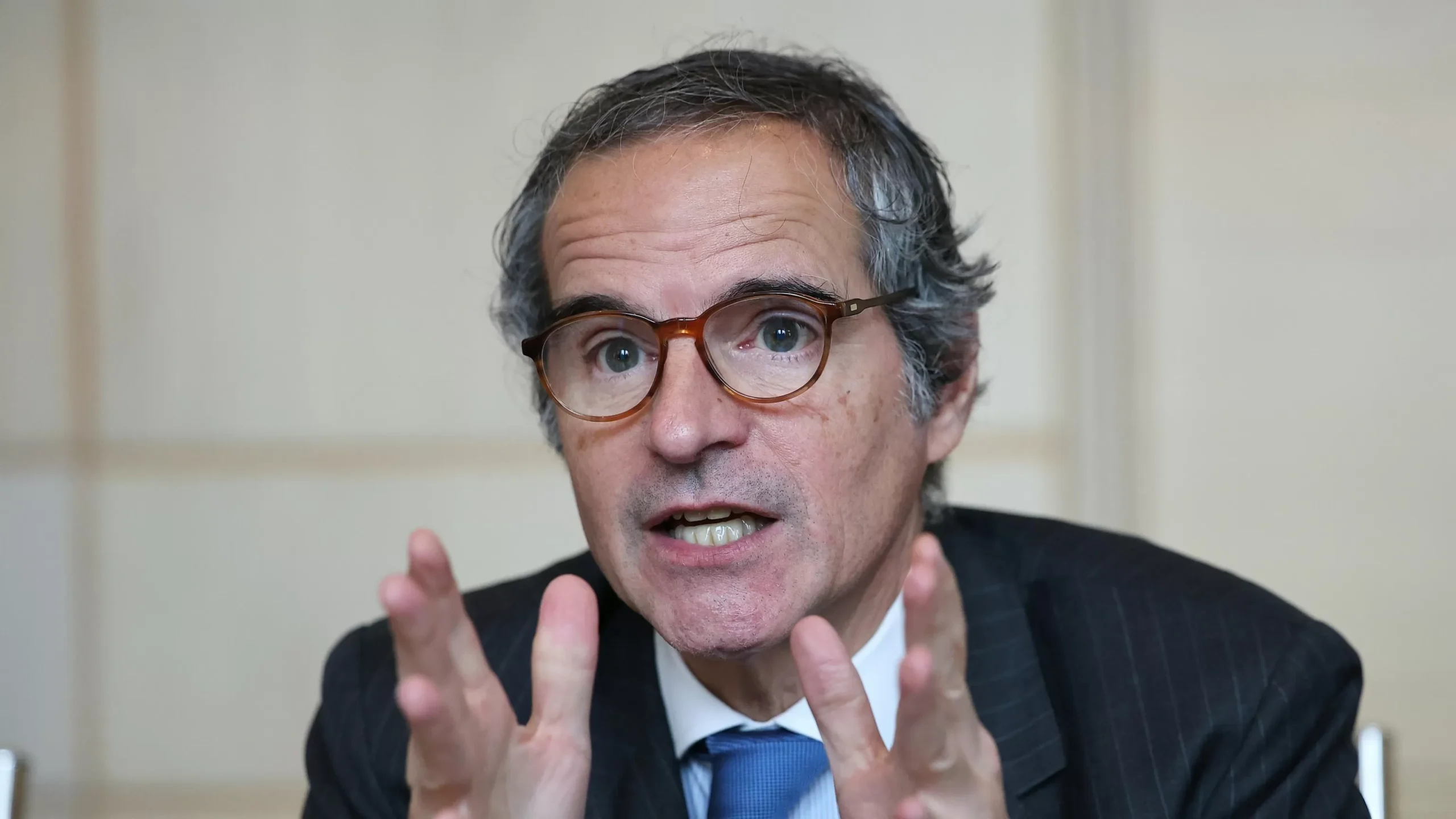
The United Nations’ nuclear watchdog, International Atomic Energy Agency (IAEA), has played a crucial role in monitoring and verifying Iran’s nuclear activities for years. As the world eagerly awaits a potential agreement between the United States and Iran to end their long-standing war in the Middle East, the head of the IAEA, Rafael Grossi, has emphasized the need for “very detailed” measures to be put in place in order to effectively verify Iran’s nuclear activities.
Grossi’s statement comes at a critical time, as negotiations between the U.S. and Iran have resumed in Vienna, with the aim of reviving the 2015 nuclear deal, also known as the Joint Comprehensive Plan of Action (JCPOA). The deal, which was signed by Iran and six world powers, aimed to limit Iran’s nuclear program in exchange for lifting economic sanctions. However, in 2018, the U.S. unilaterally withdrew from the deal, leading to a series of escalations and tensions between the two nations.
In an interview with the BBC, Grossi stressed the importance of having a strong verification mechanism in place in any potential agreement between the U.S. and Iran. He stated, “What we need to do is make sure that the verification and monitoring activities are very detailed, very robust, and very intrusive, so that there is no room for doubt about what is happening.” This sentiment echoes the IAEA’s long-standing stance on the issue, which has always emphasized the need for transparency and thoroughness in verifying Iran’s nuclear activities.
The IAEA has been at the forefront of monitoring Iran’s nuclear program since the JCPOA was signed in 2015. Under the deal, Iran agreed to limit its uranium enrichment activities and allow IAEA inspectors access to its nuclear facilities in exchange for the lifting of economic sanctions. However, with the U.S. withdrawal from the deal, Iran has gradually increased its uranium enrichment activities, leading to concerns about its nuclear capabilities.
Grossi’s statement also highlights the IAEA’s commitment to upholding its mandate of ensuring the peaceful use of nuclear energy. The agency’s role in monitoring Iran’s nuclear activities is crucial in maintaining global peace and security, and any potential agreement between the U.S. and Iran must not compromise this mandate. Grossi reiterated this by stating, “We are not there to make deals. We are there to make sure that the deal is being implemented.”
The IAEA’s role in verifying Iran’s nuclear activities is not limited to just the JCPOA. The agency also plays a crucial role in monitoring and verifying Iran’s compliance with the Nuclear Non-Proliferation Treaty (NPT), which aims to prevent the spread of nuclear weapons. Iran, as a signatory to the NPT, has a legal obligation to cooperate with the IAEA and allow access to its nuclear facilities for inspections.
In light of this, the IAEA’s call for “very detailed” measures to be put in place in any potential U.S.-Iran agreement is not only necessary but also crucial in ensuring the credibility and effectiveness of the deal. Grossi’s statement also serves as a reminder to both parties that the IAEA will not compromise on its mandate and will continue to play a vital role in maintaining global peace and security.
As negotiations between the U.S. and Iran continue, it is imperative that all parties involved prioritize the IAEA’s role in verifying Iran’s nuclear activities. The agency’s expertise and experience in this field are unparalleled, and any potential agreement must take this into consideration. The IAEA’s commitment to transparency and thoroughness in its verification process is crucial in building trust and confidence between the U.S. and Iran, and ultimately, in achieving a lasting peace in the Middle East.
In conclusion, the head of the IAEA’s call for “very detailed” measures to be put in place in a potential U.S.-Iran agreement is a reminder of the agency’s crucial role in maintaining global peace and security. As negotiations continue, it is imperative that all parties involved prioritize the IAEA’s mandate and work towards a comprehensive and effective agreement that addresses all concerns regarding Iran’s nuclear activities. The IAEA stands ready to fulfill its responsibilities and ensure that any potential agreement is implemented transparently and effectively.