
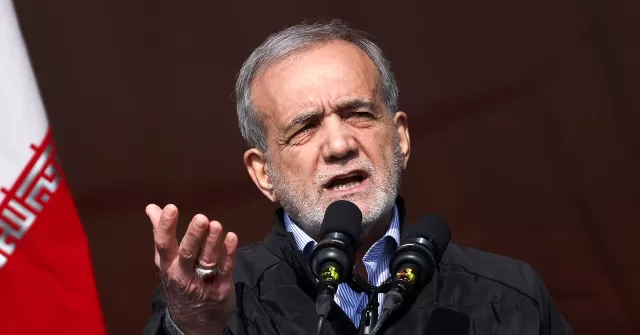
Iranian President Masoud Pezeshkian has issued a strong warning to the United States, threatening “widespread consequences” for their blockade of Iran’s ports. This statement was made during a phone call with French President Emmanuel Macron on Tuesday, highlighting the growing tensions between Iran and the U.S. in the Strait of Hormuz.
The Strait of Hormuz, located between Iran and Oman, is a crucial waterway for global oil trade, with one-fifth of the world’s oil passing through it. In recent months, tensions have been rising in the region, with the U.S. imposing sanctions on Iran and increasing their military presence in the area.
President Pezeshkian’s warning comes as a response to the U.S. decision to block Iran’s ports, which has severely impacted the country’s economy. The U.S. has been pressuring other countries to stop buying oil from Iran, causing a significant decline in their oil exports and revenue.
During the phone call, President Pezeshkian expressed his frustration with the U.S. actions, stating that the blockade of Iran’s ports is a violation of international law and a threat to global trade. He also emphasized that Iran will not stand idly by and will take necessary measures to protect its interests.
The French President, who has been trying to mediate between the U.S. and Iran, expressed his concerns over the escalating tensions in the region. He urged both sides to engage in dialogue and find a peaceful solution to the issue.
This latest development has further heightened the already tense relationship between Iran and the U.S. In recent months, there have been several incidents in the region, including attacks on oil tankers and the downing of a U.S. drone by Iran. The U.S. has also accused Iran of being behind the recent attacks on Saudi oil facilities, a claim which Iran has denied.
The U.S. has been increasing its military presence in the region, with the deployment of additional troops and warships. This has raised concerns among other countries, including France, who fear that any miscalculation or misunderstanding could lead to a full-blown conflict in the region.
President Pezeshkian’s warning of “widespread consequences” for the U.S. blockade of Iran’s ports is a clear message that Iran will not back down in the face of U.S. pressure. The country has been facing severe economic hardships due to the sanctions, and the blockade of its ports has only added to their woes.
The U.S. has been using its economic power to try and force Iran to change its policies, but this approach has only led to further tensions and instability in the region. The international community has also expressed concerns over the impact of the U.S. sanctions on the Iranian people, who are bearing the brunt of these actions.
It is essential for all parties involved to engage in constructive dialogue and find a peaceful resolution to the issue. The Strait of Hormuz is a vital waterway for global trade, and any disruption in its operations will have severe consequences for the global economy.
President Pezeshkian’s warning should serve as a wake-up call for the U.S. to reconsider its actions and find a more diplomatic approach towards Iran. The French President’s efforts to mediate between the two countries should also be supported and encouraged by the international community.
In conclusion, the threat of “widespread consequences” by President Pezeshkian is a clear indication of Iran’s determination to protect its interests and stand up against the U.S. pressure. It is crucial for all parties involved to exercise restraint and work towards finding a peaceful solution to the issue. The world cannot afford another conflict in the already volatile region, and it is time for all sides to come to the negotiating table and find a way to de-escalate the tensions.