
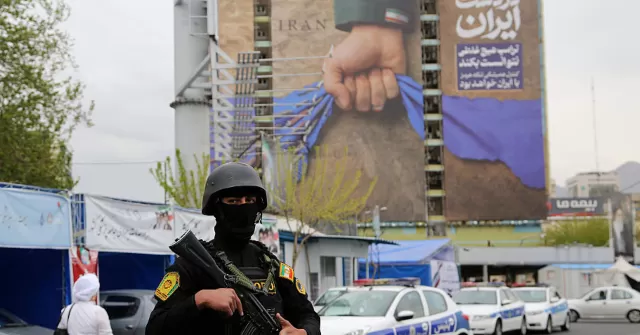
President Donald Trump’s recent decision to impose a blockade on Iran has sent shockwaves through the international community. While the move has been met with mixed reactions, there is no denying that it has the potential to deliver a staggering blow to the Iranian economy. This, in turn, could have a significant impact on the country’s military-industrial complex, which relies heavily on cash flows from the regime to sustain itself.
The blockade, which was announced by President Trump in a tweet on Monday, has been described as a “maximum pressure campaign” against Iran. It includes strict sanctions on the country’s oil exports, which are a major source of revenue for the regime. These sanctions are aimed at crippling the Iranian economy and forcing the regime to come to the negotiating table to discuss its nuclear program and other destabilizing activities in the region.
One of the main consequences of this blockade is the potential loss of revenue for the Iranian regime. With the US being one of the largest importers of Iranian oil, the country stands to lose billions of dollars in revenue. This loss of income will undoubtedly have a ripple effect on the Iranian economy, which is already struggling due to years of mismanagement and corruption.
But the impact of the blockade goes beyond just the economy. The Iranian military-industrial complex, which is a key pillar of the regime’s power, is also likely to feel the effects. The regime relies heavily on these cash flows to fund its military operations and support its vast network of soldiers and thugs. Without this financial support, the regime will struggle to maintain its grip on power.
The Iranian military-industrial complex is a vast network of state-owned and private companies that produce weapons, ammunition, and other military equipment for the regime. These companies are heavily reliant on the regime for funding and are often used as a source of income for the ruling elite. With the blockade in place, these companies will struggle to stay afloat, and many may be forced to shut down, leading to widespread job losses and economic turmoil.
Furthermore, the blockade will also make it difficult for the regime to continue its support for proxy groups and terrorist organizations in the region. These groups, such as Hezbollah in Lebanon and the Houthis in Yemen, rely on the Iranian regime for financial and military support. With the loss of revenue from oil exports, the regime will have a hard time sustaining this support, which could weaken these groups and reduce their ability to carry out attacks.
The impact of the blockade is already being felt in Iran, with the country’s currency, the rial, plummeting to record lows against the US dollar. This has led to a rise in inflation and a sharp increase in the cost of living for ordinary Iranians. The people of Iran, who have already been suffering under the regime’s oppressive policies, will now have to bear the brunt of the economic consequences of the blockade.
Despite these challenges, there is hope that the blockade could bring about positive change in Iran. The regime has been notorious for its human rights abuses, support for terrorism, and pursuit of nuclear weapons. By cutting off its main source of income, the US is sending a strong message to the regime that its actions will not be tolerated. This could potentially force the regime to change its behavior and come to the negotiating table to find a peaceful solution to its conflicts.
In conclusion, President Trump’s blockade of Iran has the potential to deliver a staggering blow to the country’s economy and military-industrial complex. While there will undoubtedly be challenges and difficulties ahead, this move could ultimately lead to positive change in Iran and the wider region. The US and its allies must continue to stand firm and maintain the pressure on the regime until it changes its destructive behavior. The world is watching, and the people of Iran are counting on us to bring about a better future for their country.