
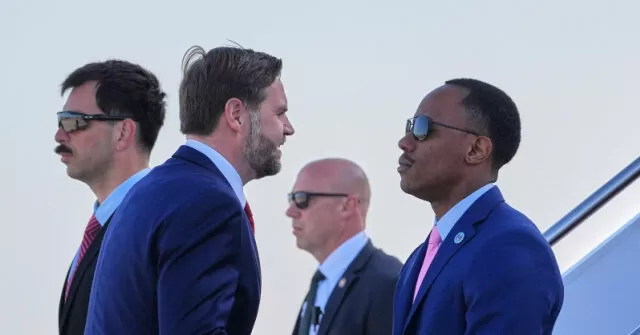
Vice President JD Vance, at the young age of 41, has taken on a pivotal role in the current administration. His recent trip to Islamabad, Pakistan for negotiations with Iran during the two-week ceasefire marks a major moment for both the vice president and the administration as a whole. This move showcases the administration’s commitment to finding peaceful solutions to global conflicts and solidifies Vance’s position as a key player in international diplomacy.
The decision to send Vice President Vance to Islamabad for negotiations with Iran comes at a crucial juncture in the ongoing ceasefire. The two-week ceasefire, which was brokered by the United Nations, has provided a much-needed respite from the violence and tension that has plagued the region for far too long. It is a testament to the tireless efforts of the administration and its commitment to promoting peace and stability in the world.
Vance’s trip to Pakistan is a clear indication of the administration’s determination to find a lasting solution to the conflict with Iran. His presence in Islamabad sends a strong message to both Iran and the international community that the United States is committed to finding a peaceful resolution to the ongoing tensions. This move also highlights the importance of diplomacy in resolving conflicts and showcases the administration’s willingness to engage in dialogue with its adversaries.
The vice president’s visit to Pakistan is also a significant step towards strengthening the relationship between the two countries. Pakistan has long been a key ally of the United States in the region, and this visit will further solidify the bond between the two nations. It is a clear demonstration of the administration’s efforts to build strong and mutually beneficial partnerships with countries around the world.
During his visit, Vice President Vance will meet with top officials from both Pakistan and Iran to discuss the ongoing ceasefire and explore ways to move towards a lasting peace agreement. His diplomatic skills and expertise in international relations will undoubtedly play a crucial role in these negotiations. Vance’s ability to build bridges and find common ground will be instrumental in finding a resolution that benefits all parties involved.
The vice president’s trip to Pakistan also highlights the importance of the region in global affairs. As a key player in the Middle East, Pakistan’s role in promoting peace and stability cannot be underestimated. The administration’s decision to send Vance to Islamabad for negotiations with Iran is a clear recognition of Pakistan’s strategic importance in the region and its potential to play a crucial role in resolving conflicts.
Moreover, Vance’s visit to Pakistan is a testament to the administration’s commitment to promoting democracy and human rights around the world. Pakistan has made significant strides in recent years towards strengthening its democratic institutions and promoting human rights. The vice president’s visit will provide an opportunity to further strengthen these efforts and showcase the administration’s support for these values.
In conclusion, Vice President JD Vance’s trip to Islamabad, Pakistan for negotiations with Iran during the two-week ceasefire is a significant moment for both the vice president and the administration. It highlights the administration’s commitment to finding peaceful solutions to global conflicts and showcases Vance’s role as a key player in international diplomacy. This visit also serves as a reminder of the importance of diplomacy and dialogue in resolving conflicts and promoting peace and stability in the world.