
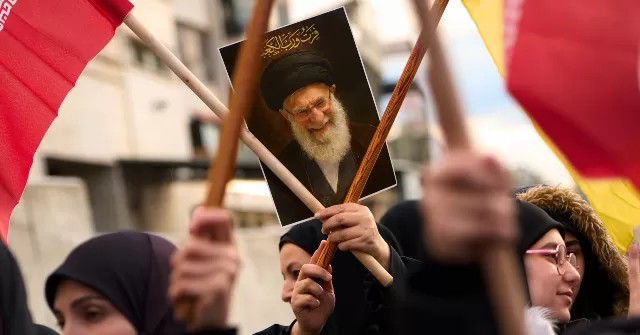
The nation of Iran was plunged into mourning on Thursday as the Islamist ruling regime held nationwide events to honor the late dictator, Ayatollah Ali Khamenei. It has been 40 days since his passing and the country came together to pay their respects to a leader who had been in power for over three decades. However, amidst the large crowds and grand ceremonies, one notable absence was felt – that of his son and current “supreme leader”, Mojtaba Khamenei.
The absence of Mojtaba Khamenei was conspicuous and has sparked speculation about his whereabouts. It is believed that he may have been sidelined by the regime in order to avoid any potential power struggle. After all, Mojtaba Khamenei was being groomed to take over the reins from his father and his absence from such a significant event raises questions about the future of the regime.
The mourning events were held in various cities across Iran and were organized by the ruling regime. The streets were lined with people, many dressed in black, holding posters and photos of the late dictator. The atmosphere was somber and reflective as people remembered the man who had been at the helm of the country for so long.
But despite the efforts of the regime to showcase the public’s support for the late Ayatollah, there was a noticeable absence of the current “supreme leader”. It is believed that Mojtaba Khamenei is currently in hiding, possibly in fear of his safety. This is a clear indication of the power struggle that may be taking place behind closed doors within the ruling regime.
The absence of Mojtaba Khamenei also speaks volumes about the public’s perception of the current regime. The fact that he was not present at such a significant event, one that was organized and orchestrated by the regime itself, shows that he does not have the support of the people. This could be a sign of the growing dissatisfaction and disillusionment with the current ruling regime.
It is no secret that the people of Iran have been living under an oppressive regime for decades. Ayatollah Ali Khamenei’s rule was marked by human rights abuses, suppression of freedom of speech, and a lack of basic rights for the citizens of Iran. The mourning events may have been organized to showcase the public’s support for the late dictator, but it also highlighted the ongoing struggle for democracy and freedom in the country.
The absence of Mojtaba Khamenei also raises questions about the future of the regime. With no clear successor in sight, the power vacuum left by the late Ayatollah’s passing could lead to a power struggle within the ruling elite. This could potentially weaken the regime and open up opportunities for change and progress in the country.
As the people of Iran mourn the passing of Ayatollah Ali Khamenei, they also look towards the future with hope and determination. The absence of Mojtaba Khamenei at the mourning events serves as a reminder that change is possible and that the people have the power to shape their own destiny. The regime may try to hold onto power, but the people’s desire for freedom and democracy cannot be suppressed forever.
In conclusion, the mourning events held by the Islamist ruling regime of Iran for Ayatollah Ali Khamenei may have been grand and orchestrated, but they also shed light on the current state of the country. The absence of Mojtaba Khamenei speaks volumes about the power struggle within the regime and the public’s growing dissatisfaction with their rule. It is a reminder that the people of Iran deserve better and that change is on the horizon. The future of Iran may be uncertain, but one thing is clear – the people’s determination for a better tomorrow cannot be silenced.