
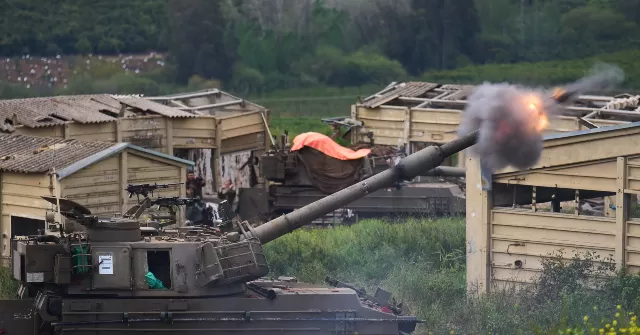
Undaunted by Iran’s claim that its ceasefire agreement was conditioned on Israel halting its operations against Hezbollah in Lebanon, the Israel Defense Forces (IDF) launched another round of airstrikes in Lebanon on Thursday. This move by the IDF comes as a response to Iran’s recent blockade of the Strait of Hormuz, a vital shipping route for oil exports.
The ongoing conflict between Israel and Lebanon has been a cause of concern for the international community. The tension between the two nations has been escalating in recent months, with both sides engaging in military actions. However, Israel’s latest airstrikes in Lebanon have raised the stakes even higher.
Despite Iran’s attempt to use the ceasefire agreement as a bargaining tool, Israel has remained steadfast in its determination to protect its citizens and maintain its security. The IDF’s actions are a clear message to Iran and its allies that Israel will not back down in the face of threats and aggression.
The airstrikes targeted Hezbollah positions in southern Lebanon, a known stronghold for the militant group. According to the IDF, the airstrikes were a response to Hezbollah’s continued attacks on Israeli territory and its involvement in the Syrian civil war. The IDF also stated that the strikes were necessary to prevent further attacks on Israel and to degrade Hezbollah’s capabilities.
This latest round of airstrikes follows a series of similar attacks by the IDF in recent weeks. Israel has made it clear that it will not tolerate any threats to its sovereignty and will take all necessary measures to protect its citizens. The IDF’s actions have been praised by many in the international community, with countries such as the United States and the United Kingdom expressing their support for Israel’s right to defend itself.
Meanwhile, Iran’s blockade of the Strait of Hormuz has caused a major disruption in the global oil market. The strait is a crucial shipping route for oil exports, with nearly 20% of the world’s oil passing through it. This move by Iran has been condemned by the international community, with many countries calling for the immediate lifting of the blockade.
The timing of Iran’s blockade is no coincidence. It is a clear attempt by the country to exert its influence and pressure Israel into halting its operations in Lebanon. However, Israel has shown that it will not be intimidated by such tactics and will continue to take necessary actions to ensure its security.
The escalating tension between Israel and Iran has also raised concerns about the stability of the region. The ongoing conflict in Syria, where both Israel and Iran have been involved, has already caused immense suffering and displacement for the Syrian people. It is imperative that all parties involved in the conflict exercise restraint and work towards a peaceful resolution.
In the midst of this tense situation, Israel’s determination to protect its citizens and maintain its security is commendable. The country has shown resilience and strength in the face of constant threats and attacks. The IDF’s actions are a testament to Israel’s commitment to defending its people and its right to exist as a sovereign nation.
As the situation in the Middle East continues to unfold, it is important for all parties to prioritize peace and stability. It is crucial for Iran to understand that its aggressive actions will only lead to further escalation and instability in the region. The international community must also play a role in de-escalating the situation and finding a peaceful resolution.
In conclusion, Israel’s latest airstrikes in Lebanon are a necessary response to Iran’s continued aggression and attempts to use the ceasefire agreement as a bargaining tool. The country has shown its determination to protect its citizens and maintain its security, despite facing numerous challenges. It is now up to all parties involved to work towards a peaceful resolution and ensure the stability of the region.