
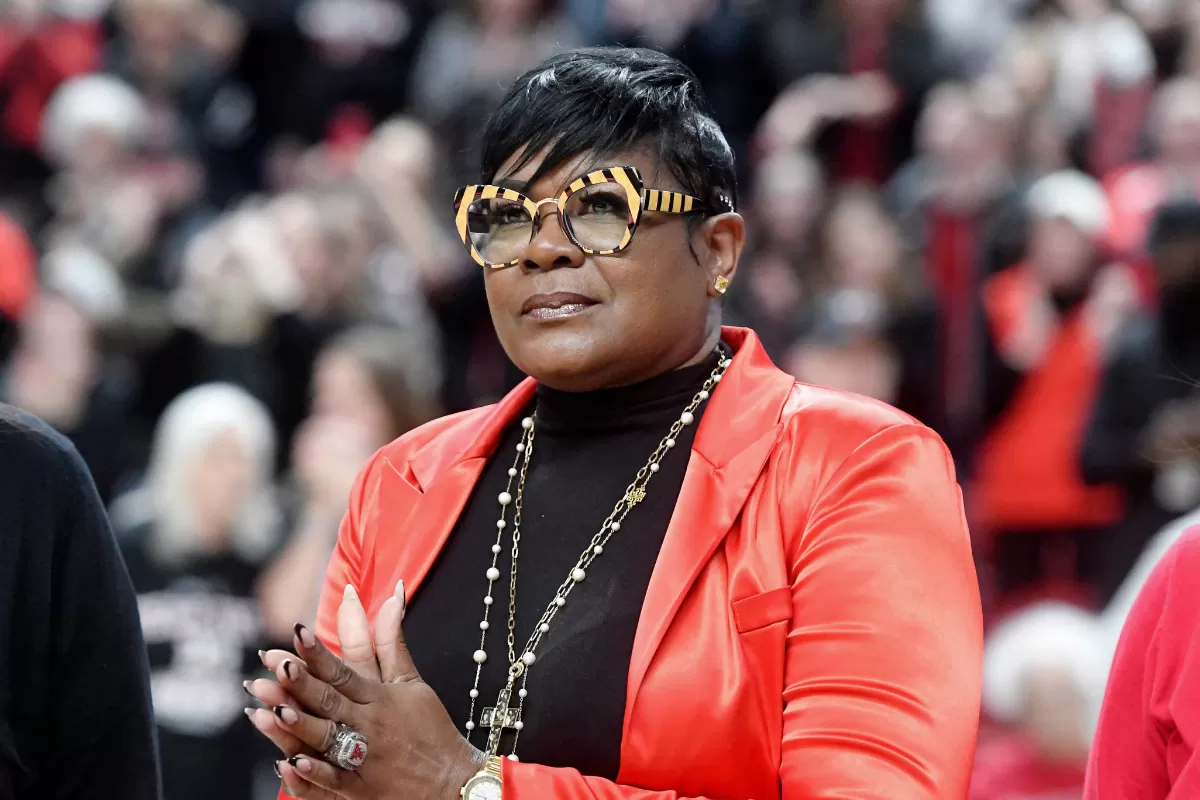
The WNBA has reached a major milestone this year as it celebrates its 30th anniversary. The league has come a long way since its inception in 1996, and it has been a platform for some of the most talented and inspiring female athletes in the world. As part of the celebration campaign, the WNBA shared a video on social media, highlighting its achievements over the past three decades. However, the league’s choice for its leading voice has sparked a debate about who truly represents its past and future.
The WNBA’s 30th-anniversary celebration was meant to honor its legends, but the league’s decision to have Sheryl Swoopes as its leading voice has caused controversy. Swoopes, a three-time WNBA MVP and four-time champion, is undoubtedly one of the greatest players in the league’s history. However, her recent comments about the LGBTQ+ community have raised concerns among fans and players alike.
In an interview with a local radio station, Swoopes expressed her views on the inclusion of transgender athletes in women’s sports. She stated, “I don’t think it’s fair for a transgender female to compete in a women’s sport because it’s not fair. I don’t think it’s fair for a man to compete in a women’s sport.” These comments have been met with backlash from the LGBTQ+ community and their allies, who believe that Swoopes’ views are discriminatory and go against the WNBA’s values of inclusivity and diversity.
The WNBA has always been a trailblazer in promoting equality and social justice. The league has been at the forefront of advocating for LGBTQ+ rights and has been a safe space for players to express their true selves. The WNBA’s partnership with the Gay, Lesbian, and Straight Education Network (GLSEN) and its annual Pride Month celebrations are a testament to its commitment to creating an inclusive environment for all.
Therefore, it is understandable why Swoopes’ comments have caused such a stir within the WNBA community. Many fans and players have expressed their disappointment and called for the league to reconsider its decision to have her as the leading voice for its 30th-anniversary celebration. They believe that Swoopes’ views do not align with the WNBA’s values and that she is not the right messenger to represent the league’s past and future.
The WNBA has responded to the backlash by releasing a statement that reads, “The WNBA is an inclusive league that celebrates diversity and welcomes all athletes, regardless of their gender identity or sexual orientation. We do not condone any form of discrimination and will continue to promote equality and respect for all individuals.” The league has also announced that it will be reviewing its decision and will make necessary changes to ensure that the 30th-anniversary celebration is a true reflection of its values.
The WNBA’s 30th-anniversary celebration is a significant moment for the league and its fans. It is a time to honor the past, celebrate the present, and look towards the future. However, the controversy surrounding Swoopes’ comments has overshadowed the celebration and has sparked a much-needed conversation about inclusivity and representation in sports.
As the WNBA continues to grow and evolve, it is crucial for the league to have a leading voice that represents its values and principles. The league has a responsibility to its fans and players to promote equality and create a safe and inclusive environment for all. It is time for the WNBA to listen to the calls for change and choose a messenger who truly embodies its past and future.
In conclusion, the WNBA’s 30th-anniversary celebration has been marred by controversy, but it has also sparked a much-needed conversation about inclusivity and representation in sports. The league’s decision to have Sheryl Swoopes as its leading voice has raised concerns among fans and players, but it has also highlighted the importance of having a messenger who truly represents the WNBA’s values. As the league moves forward, it is crucial for it to listen to the voices of its community and make the necessary changes to ensure that the WNBA remains a beacon of inclusivity and equality in the world of sports.