
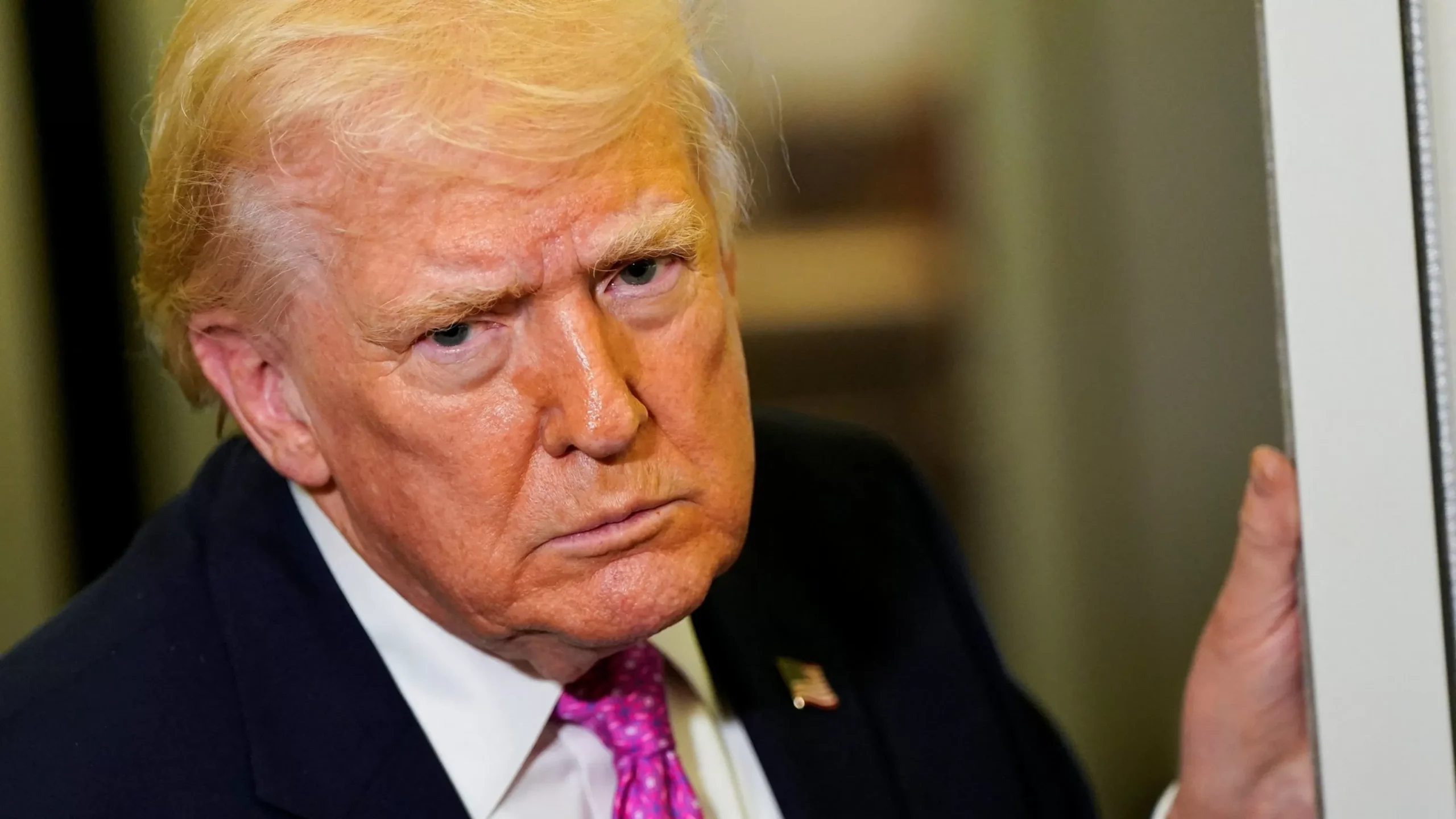
As tensions rise in the Middle East, the world is once again facing the threat of soaring oil and gas prices. The recent attacks on oil tankers in the Strait of Hormuz, a crucial shipping route for global energy supplies, have been attributed to Iran. As a result, the United States finds itself in a precarious position, with President Trump suggesting that it is not the responsibility of the US to solve this issue.
The Strait of Hormuz, located between Iran and Oman, is a narrow waterway that connects the Persian Gulf with the Arabian Sea. It is a vital route for the transportation of oil and gas, with nearly one-fifth of the world’s oil passing through it. Therefore, any disruption in this region has a significant impact on the global economy.
Iran, a major player in the region, has been accused of being behind the recent attacks on oil tankers. These attacks have caused a sharp increase in oil prices, with fears of further escalation if tensions continue to rise. The US has responded by sending additional troops to the region and imposing economic sanctions on Iran. However, President Trump has made it clear that he does not see it as the US’s responsibility to solve this issue.
This stance has sparked debate and criticism from various quarters. Some argue that the US, as a global superpower, has a moral obligation to maintain stability in the region and protect the flow of vital resources. Others believe that the US should not get involved in conflicts that do not directly affect its national interests.
However, President Trump’s statement should not be misconstrued as a lack of concern or action on the part of the US. The US has a long-standing commitment to ensuring the safety and security of the region and its allies. The recent deployment of troops and economic sanctions are evidence of this commitment.
Moreover, President Trump’s approach to the issue is a strategic one. By not taking direct responsibility, the US is sending a strong message to Iran and other nations that it will not be held accountable for their actions. This approach also puts pressure on other countries to step up and take action to ensure the stability of the region.
Furthermore, the US is not alone in this fight. Many other countries, including the United Kingdom, France, and Germany, have also condemned the attacks and expressed their support for the US. This collective effort sends a clear message to Iran that its actions will not go unnoticed or unpunished.
It is also essential to note that the US has been working towards reducing its dependence on foreign oil and gas. This move has made the US less vulnerable to fluctuations in global energy prices. Therefore, while the situation in the Strait of Hormuz is concerning, it will not have a severe impact on the US economy.
In conclusion, the recent attacks on oil tankers in the Strait of Hormuz have caused a surge in oil and gas prices, with Iran being blamed for the disruption. While President Trump has stated that it is not the US’s responsibility to solve this issue, it does not mean that the US is turning a blind eye. The US remains committed to maintaining stability in the region and has taken strategic measures to address the situation. With the support of its allies, the US is sending a strong message to Iran that its actions will not be tolerated. As the situation continues to unfold, it is essential for all parties involved to work towards a peaceful resolution and ensure the safety of the vital energy route.