
Europe’s Mad Dash to Decommission Nuclear Power Plants: A Strategic Mistake?
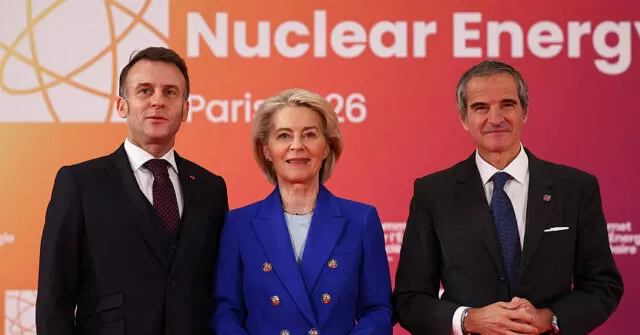
In a surprising turn of events, European Commission President Ursula von der Leyen has admitted that the decision to phase out nuclear power in Europe may have been a mistake. This statement comes as a shock to many, as Europe has long been seen as a leader in the fight against climate change and a strong advocate for renewable energy sources. However, it seems that in the rush to embrace green energy, Europe may have overlooked the benefits of nuclear power.
Von der Leyen’s admission came during a speech at the European Parliament, where she acknowledged that the decision to decommission nuclear power plants was a “strategic mistake”. She went on to say that nuclear energy should have been given more consideration as a clean and reliable source of energy.
This statement has sparked a debate among environmentalists, policymakers, and the general public. Many are now questioning whether Europe’s mad dash to decommission nuclear power plants was a hasty decision that could have long-term consequences.
The decision to phase out nuclear power in Europe was made in the aftermath of the Fukushima disaster in 2011. The catastrophic accident in Japan raised concerns about the safety of nuclear energy and led many European countries to re-evaluate their reliance on it. As a result, several countries, including Germany, Belgium, and Switzerland, announced plans to shut down their nuclear power plants and transition to renewable energy sources.
At the time, this decision was seen as a bold and necessary step towards a greener future. However, as time has passed, it has become clear that the transition to renewable energy is not as straightforward as initially thought. While renewable energy sources such as wind and solar power have their advantages, they also have their limitations. They are intermittent, meaning they are not always available, and they require significant investments in infrastructure and storage solutions.
On the other hand, nuclear power offers a reliable and constant source of energy, with zero carbon emissions. It is also cost-effective and has a much smaller land footprint compared to renewable energy sources. Furthermore, advancements in technology have made nuclear power plants safer and more efficient than ever before.
So why did Europe rush to decommission its nuclear power plants? The answer lies in the fear of nuclear disasters and the negative perception of nuclear energy. However, it is essential to note that the Fukushima disaster was an extreme case and not representative of the overall safety record of nuclear power. In fact, according to the International Atomic Energy Agency, nuclear power has one of the lowest accident rates of any energy source.
Moreover, the decision to phase out nuclear power has had unintended consequences. As Europe struggles to meet its emission reduction targets, it has had to rely more on fossil fuels, such as coal and gas, to meet its energy demands. This has resulted in an increase in carbon emissions, which goes against the very goal of transitioning to renewable energy.
In light of these facts, it is clear that Europe’s mad dash to decommission nuclear power plants may have been a strategic mistake. However, it is not too late to correct this error. The European Commission must take a more balanced approach to energy policy and consider the benefits of nuclear power in the fight against climate change.
This does not mean that Europe should abandon its efforts to transition to renewable energy sources. On the contrary, it should continue to invest in and develop these sources. However, it should also recognize the role that nuclear power can play in achieving a sustainable and low-carbon future.
In conclusion, Ursula von der Leyen’s admission that Europe’s decision to phase out nuclear power may have been a mistake is a wake-up call for policymakers. It is time to re-evaluate the role of nuclear energy in Europe’s energy mix and give it the consideration it deserves. By doing so, Europe can move towards a greener future while also ensuring a reliable and constant source of energy for its citizens. It is not too late to correct this mistake and make the necessary changes to secure a sustainable future for generations to come.