
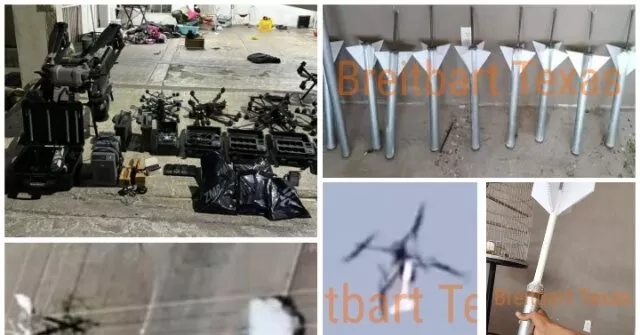
Mexican drug cartels have been making headlines for their increasingly sophisticated methods of conducting illegal activities. One such example is the use of drones along the U.S.–Mexico border, where federal agencies have confirmed the presence of tens of thousands of unmanned flights in recent years. This revelation has raised concerns about the rapidly evolving threat posed by these cartels, as they continue to expand their aerial surveillance capabilities.
According to a statement released by U.S. Customs and Border Protection to Breitbart Texas, a staggering 42,000 drone flights were detected near the border in FY25. This number is alarming and points to the magnitude of the problem at hand. The use of drones by Mexican drug cartels is not a new phenomenon, but the scale at which it is being carried out is a cause for concern.
One of the main reasons for the use of drones by drug cartels is to track Border Patrol agents and their activities. By having a bird’s eye view of the border, these cartels can easily evade law enforcement and continue their illegal activities without getting caught. In addition, drones are also being used to coordinate smuggling operations, making it easier for cartels to transport drugs across the border undetected.
The use of drones by Mexican drug cartels is not limited to tracking and smuggling. These unmanned aerial vehicles are also being used to probe American airspace. This poses a significant risk to the safety and security of the United States. With the ability to fly over restricted areas and gather intelligence, cartels can potentially use drones to carry out attacks or gather information for future criminal activities.
The fact that drug cartels are now using drones on an industrial scale is a clear indication of the level of sophistication and resources at their disposal. It is a worrying trend that must be addressed immediately. The threat posed by these drones is rapidly evolving, and it is crucial for authorities to take decisive action before it’s too late.
The use of drones by Mexican drug cartels has not only raised concerns among law enforcement officials but has also caught the attention of the public. The idea of drones flying over our borders and potentially posing a threat to our safety is unsettling. However, it is essential to understand that this is not just a border issue; it is a national security issue that requires a coordinated and effective response.
In recent years, the U.S. government has taken steps to combat the use of drones by drug cartels. In 2018, the Department of Homeland Security initiated the “Small Unmanned Aircraft Systems (sUAS) Threats and Mitigation” program, which aims to develop and implement counter-drone technologies to protect critical infrastructure and national security. Additionally, the Federal Aviation Administration (FAA) has strict regulations in place for the use of drones in the U.S. airspace, and any violation of these regulations can result in severe consequences.
While these measures are a step in the right direction, more needs to be done to effectively address the use of drones by Mexican drug cartels. This includes investing in advanced technologies to detect and neutralize drones, increasing surveillance along the border, and collaborating with Mexican authorities to crack down on the production and distribution of these aerial vehicles.
It is also essential for the public to be aware of this issue and report any suspicious drone activity immediately. As citizens, we all have a role to play in keeping our borders safe and secure. By working together, we can help prevent the use of drones by drug cartels and protect our communities from the dangers they pose.
In conclusion, the use of drones by Mexican drug cartels along the U.S.–Mexico border is a rapidly evolving threat that requires immediate attention. The detection of over 42,000 drone flights near the border in FY25 is a wake-up call for authorities to take decisive action. It is crucial that we work together to address this issue and protect our borders, our communities, and our nation from the dangers posed by these aerial vehicles.