
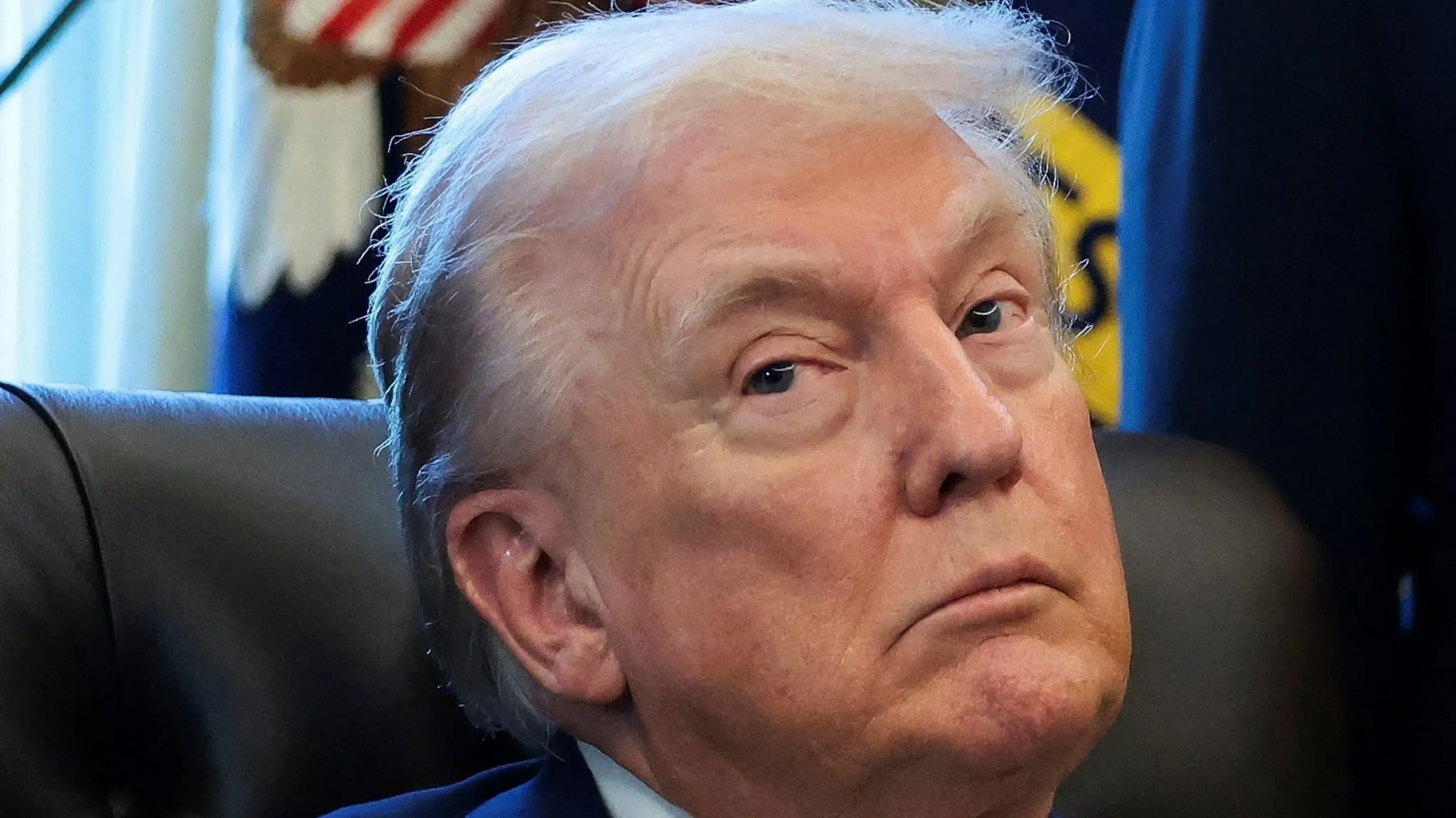
In a recent address to Republican lawmakers, President Donald Trump called for the nationalization of voting in the upcoming 2026 midterm elections. This bold move has caused quite a stir in the political arena, with many speculating about the potential implications and benefits of such a decision.
President Trump’s call for nationalizing voting comes at a crucial time for the Republican party, as they gear up for what is expected to be a highly contested midterm election. With the Democrats gaining ground in recent years, President Trump’s proposal aims to secure a Republican victory and ensure a fair and transparent electoral process.
The concept of nationalizing voting involves the federal government taking control of the election process, rather than leaving it in the hands of individual states. This would mean implementing a uniform set of rules and regulations for voting across the country, eliminating the potential for discrepancies and ensuring that every vote is counted.
One of the main arguments in favor of nationalizing voting is to prevent voter fraud. With different states having different voting procedures and regulations, it becomes easier for individuals to manipulate the system and cast fraudulent votes. By nationalizing voting, President Trump hopes to eliminate this threat and ensure the integrity of the electoral process.
Another potential benefit of nationalizing voting is the potential increase in voter turnout. With a uniform set of rules and procedures, it becomes easier for citizens to understand and participate in the electoral process. This could lead to a more engaged and informed electorate, ultimately resulting in a stronger democracy.
President Trump’s call for nationalizing voting has received support from many Republican lawmakers, who see it as a necessary step to secure a Republican victory in the 2026 midterms. Senator Mitch McConnell, the Republican leader in the Senate, stated that nationalizing voting would “protect the integrity of our elections and ensure that every American’s vote counts.”
However, this proposal has also faced criticism from Democrats, who see it as an attempt to suppress voter turnout and consolidate power for the Republican party. They argue that nationalizing voting could lead to voter suppression, particularly for marginalized communities who already face barriers to voting.
Despite these concerns, President Trump remains adamant about his proposal, stating that “nationalizing voting is the only way to ensure a fair and honest election.” He has also called on Republican lawmakers to work towards making this a reality in the coming years.
As we approach the 2026 midterm elections, the call for nationalizing voting has sparked a much-needed conversation about the current state of our electoral process. While there are valid arguments on both sides, it is clear that something needs to be done to address the issues of voter fraud and low turnout.
Nationalizing voting may not be a perfect solution, but it is a step in the right direction towards a more transparent and fair electoral process. It is time for our elected officials to put aside their political differences and work towards implementing a system that truly represents the voices of all Americans.
In conclusion, President Trump’s call for nationalizing voting with the 2026 midterm elections on the horizon is a bold move that has the potential to bring much-needed reform to our electoral process. It is a call to action for all Americans to come together and ensure that our democracy remains strong and vibrant. Let us embrace this opportunity and work towards a future where every vote truly counts.