
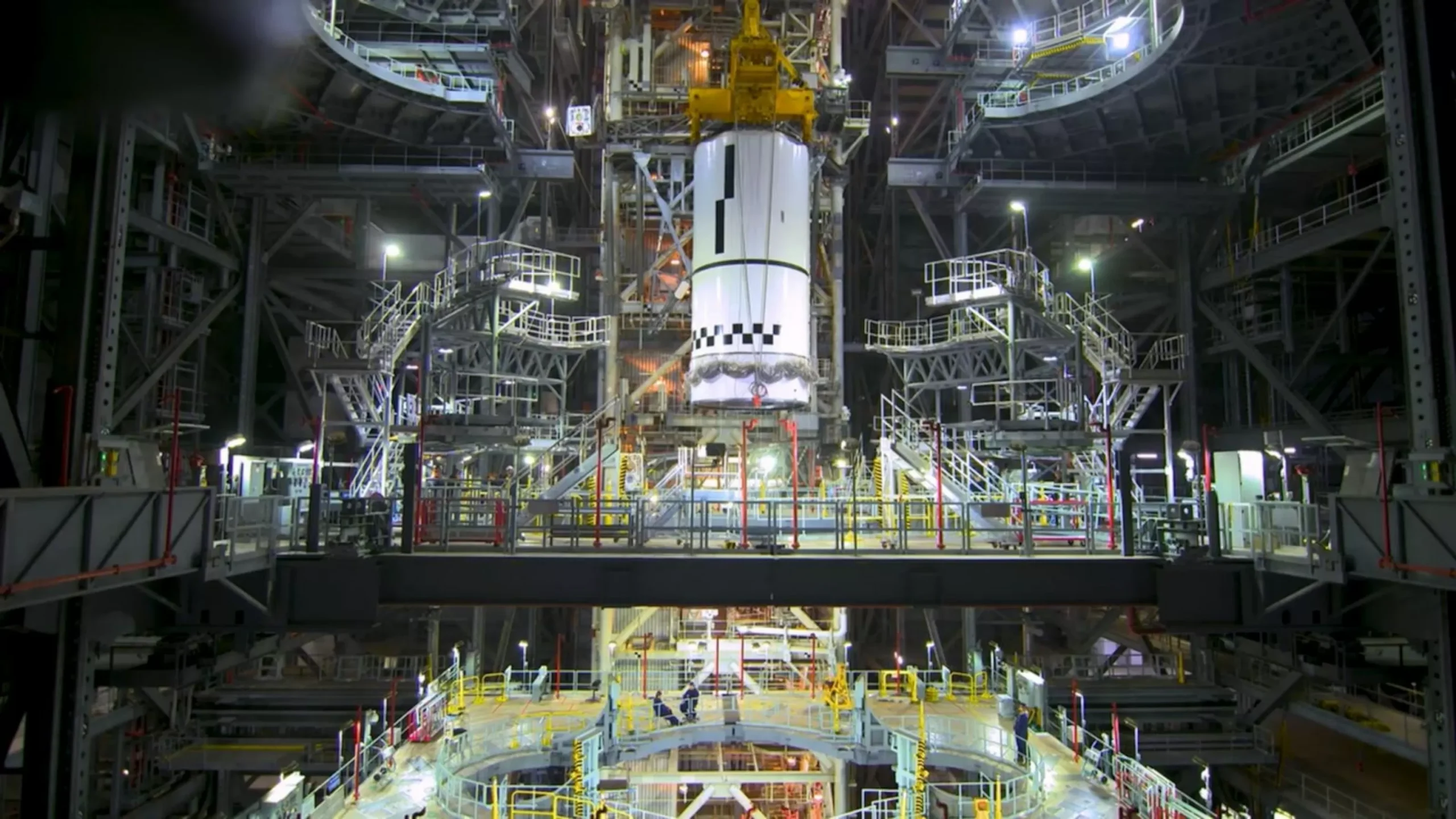
NASA, the National Aeronautics and Space Administration, is gearing up for its most ambitious mission yet – a crewed lunar mission. It has been more than 50 years since humans last set foot on the moon, and now, NASA is all set to make history once again. The space agency is preparing to roll out its Space Launch System rocket and Orion spacecraft, marking a significant step towards this monumental mission.
The Space Launch System (SLS) rocket is a powerful, advanced launch vehicle designed by NASA to take astronauts and cargo beyond Earth’s orbit. It is currently the most powerful rocket in the world and has been in development for over a decade. The Orion spacecraft, on the other hand, is NASA’s next-generation crewed spacecraft, capable of carrying astronauts to the moon and beyond.
The first crewed lunar mission, also known as Artemis III, is scheduled to take place in 2024. This mission will see the first woman and the next man land on the moon’s surface, paving the way for future exploration and potentially, the establishment of a sustainable presence on the moon.
This is a crucial moment for NASA as it marks a significant milestone in the agency’s history. The last time humans walked on the moon was in 1972 during the Apollo 17 mission. Now, with the advancements in technology and the determination to push the boundaries of space exploration, NASA is all set to make its mark on the moon once again.
The SLS rocket and Orion spacecraft are the backbone of NASA’s plans for the Artemis mission. The SLS rocket will be responsible for launching the Orion spacecraft, along with its crew and cargo, into deep space. The Orion spacecraft, with its state-of-the-art systems and capabilities, will carry the astronauts to their destination and back safely.
One of the most remarkable features of the SLS rocket is its ability to generate 8.8 million pounds of thrust, making it the most powerful rocket in existence. This is crucial for the Artemis mission as it will have to carry a significant amount of cargo and equipment to the moon. The SLS rocket is also designed to be flexible and adaptable, allowing NASA to use it for various missions in the future.
The Orion spacecraft, on the other hand, is equipped with advanced technology and systems to ensure the safety and success of the crew. It has a spacious cabin, providing enough room for up to four astronauts to travel to the moon and back. The spacecraft also has a robust thermal protection system, keeping the crew safe from the extreme temperatures of deep space.
The SLS rocket and Orion spacecraft have been undergoing rigorous testing to ensure their readiness for the Artemis mission. The recent Green Run test, where the SLS rocket’s core stage was fired for a full-duration test, was a significant milestone in this process. The test was a success, demonstrating the rocket’s ability to generate the required thrust and function as expected.
The Orion spacecraft has also been through various tests, including the Ascent Abort-2 test, where it demonstrated its launch abort system’s capability to keep the crew safe in case of an emergency during launch. These tests have proven the reliability and readiness of these vehicles for the Artemis mission.
Moreover, the SLS rocket and Orion spacecraft are not the only components of the Artemis mission. NASA has also been developing the Gateway, a space station orbiting the moon, which will serve as a staging point for future missions. The Gateway will also play a crucial role in providing support for the astronauts during their time on the moon.
The Artemis mission is not just about returning to the moon; it is also about paving the way for future exploration and discoveries. By establishing a sustainable presence on the moon, NASA will gain valuable knowledge and experience that will be crucial for future missions to Mars and beyond.
The Artemis mission is a testament to human ingenuity, determination, and the endless possibilities of space exploration. It is a momentous occasion that will inspire generations to come and motivate us to push the boundaries of what is possible. With the SLS rocket and Orion spacecraft, NASA is on its way to making history once again and taking humanity to new heights.
In conclusion, NASA’s upcoming launch of the SLS rocket and Orion spacecraft is a significant step towards the first crewed lunar mission in over 50 years. The agency has been working tirelessly to make this mission a reality, and with the advancements in technology and the determination of the team,