
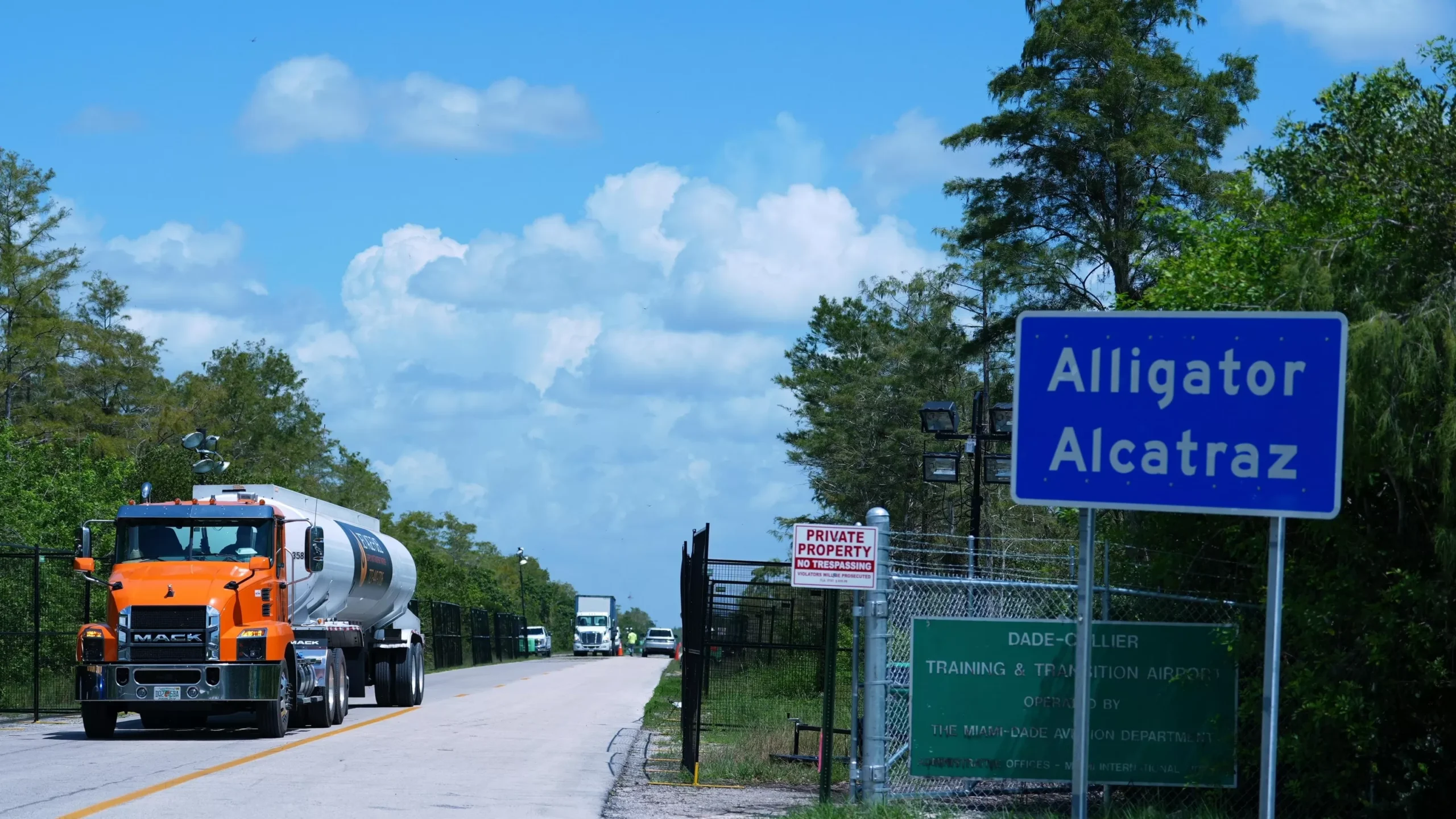
In a recent court ruling, a federal judge has denied a request to close an immigration detention center in the Florida Everglades, commonly known as “Alligator Alcatraz.” This decision has sparked debates and raised concerns about the conditions of the facility, which has been notorious for its harsh treatment of immigrants. Despite the calls for its shutdown, the judge’s decision has kept the center running, much to the dismay of activists and human rights organizations.
The detention center, located in the heart of the Florida Everglades, has been a subject of controversy for years. Its nickname, “Alligator Alcatraz,” is a grim reference to the notorious Alcatraz prison, known for its inhumane conditions and treatment of inmates. The facility has gained notoriety due to its isolated location and allegations of mistreatment of detainees. Many have described it as a “prison within a prison,” where immigrants are held in cramped conditions, denied basic rights, and subjected to abuse and neglect.
The request to close the center was filed by a group of activists and human rights organizations, who have been advocating for the rights of immigrants. They argued that the conditions at the facility were inhumane and violated the rights of the detainees. The group also highlighted the lack of medical care, inadequate facilities, and reports of physical and sexual abuse within the center. The request gained widespread support and attention, with many calling for the immediate shutdown of the facility.
However, in a surprising turn of events, the federal judge denied the request to close the center. In his ruling, the judge stated that while he acknowledged the concerns raised by the activists, there was no evidence to support the claims of mistreatment and abuse. He also noted that the facility was being monitored regularly by the authorities, and steps were being taken to address any issues that arose. The judge further added that shutting down the center would create chaos and put a strain on the already overwhelmed immigration system.
The ruling has disappointed many, who were hoping for a different outcome. The decision has been met with criticism from human rights organizations and activists, who believe that the judge overlooked the evidence and failed to acknowledge the plight of the detainees. They argue that the facility has a history of mistreatment and abuse, and the decision to keep it open only perpetuates the cycle of injustice towards immigrants.
On the other hand, supporters of the judge’s ruling believe that the decision was fair and just. They argue that the facility serves a vital purpose in detaining immigrants who have violated the country’s laws. They also point out that the accusations of mistreatment and abuse are unfounded and that the facility provides all necessary amenities for the detainees. They believe that the center is a necessary evil and that closing it down would only lead to more problems in the immigration system.
The ruling has once again brought into focus the debate surrounding immigration detention centers in the United States. While some believe that these facilities are necessary for maintaining law and order, others argue that they are a violation of human rights and a reflection of a broken immigration system. The “Alligator Alcatraz” detention center has become a symbol of this debate, with its name evoking images of injustice and cruelty.
In the end, the federal judge’s decision to keep the center open has stirred emotions and sparked discussions about the treatment of immigrants in the United States. It has also highlighted the need for a comprehensive and humane approach towards immigration, where the rights and well-being of individuals are not compromised. As the debate continues, it is vital to remember that behind the statistics and numbers are real people, with families and dreams, who deserve to be treated with dignity and respect.