
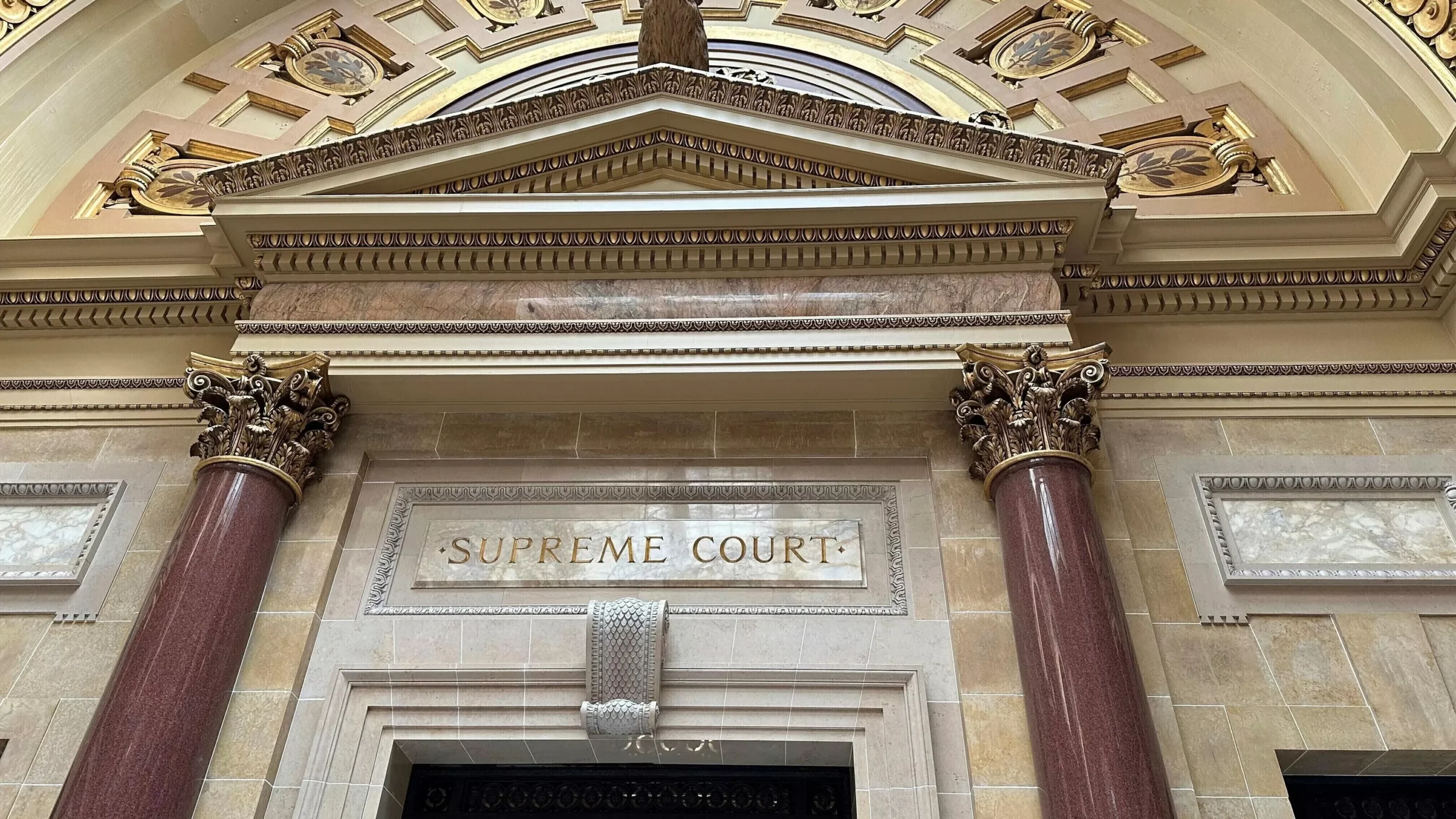
The Wisconsin Supreme Court has taken a crucial step towards ensuring fair and unbiased congressional elections in the state. In a recent ruling, the court has ordered two three-judge panels to hear two lawsuits that argue the current congressional maps in Wisconsin are unconstitutional as they heavily favor the Republican party.
This decision by the Wisconsin Supreme Court is a significant development in the ongoing battle for fair representation in the state. For years, the issue of gerrymandering has plagued the electoral system in Wisconsin, with the current congressional maps being drawn in a way that gives an unfair advantage to one political party.
The two lawsuits, filed by the Democratic Party and a group of voters, argue that the current congressional maps violate the constitutional rights of voters by diluting their voices and unfairly benefiting one party over the other. The plaintiffs have argued that the maps were drawn to ensure the dominance of the Republican party in Wisconsin’s congressional delegation, despite the fact that the state is evenly divided between Democrats and Republicans.
The Wisconsin Supreme Court’s decision to hear these lawsuits is a significant victory for democracy and fair representation. By ordering two three-judge panels to hear the cases, the court has shown its commitment to upholding the principles of fairness and equality in the electoral process.
The importance of this decision cannot be overstated. The outcome of these lawsuits will have a far-reaching impact on the future of Wisconsin’s congressional elections. If the court rules in favor of the plaintiffs, it would mean that the current congressional maps would have to be redrawn in a way that ensures fair representation for all voters, regardless of their political affiliation.
This ruling also sends a strong message to lawmakers and political parties that gerrymandering will not be tolerated in Wisconsin. It is a clear indication that the state’s highest court is willing to step in and correct any attempts to manipulate the electoral process for political gain.
The issue of gerrymandering has been a hotly debated topic in recent years, with many states facing legal challenges over the fairness of their electoral maps. However, the Wisconsin Supreme Court’s decision to hear these lawsuits shows that the state is taking a proactive approach towards addressing this issue and ensuring fair representation for all its citizens.
Furthermore, this ruling highlights the importance of an independent and impartial judiciary in safeguarding the integrity of the electoral process. The Wisconsin Supreme Court has shown that it is committed to upholding the rule of law and protecting the rights of voters, regardless of their political leanings.
In conclusion, the Wisconsin Supreme Court’s decision to order two three-judge panels to hear the lawsuits challenging the state’s congressional maps is a significant step towards fair and unbiased congressional elections. This ruling reaffirms the principle that every vote counts and that the electoral process should not be manipulated for political gain. Let us hope that the outcome of these lawsuits will pave the way for a more fair and representative democracy in Wisconsin.