
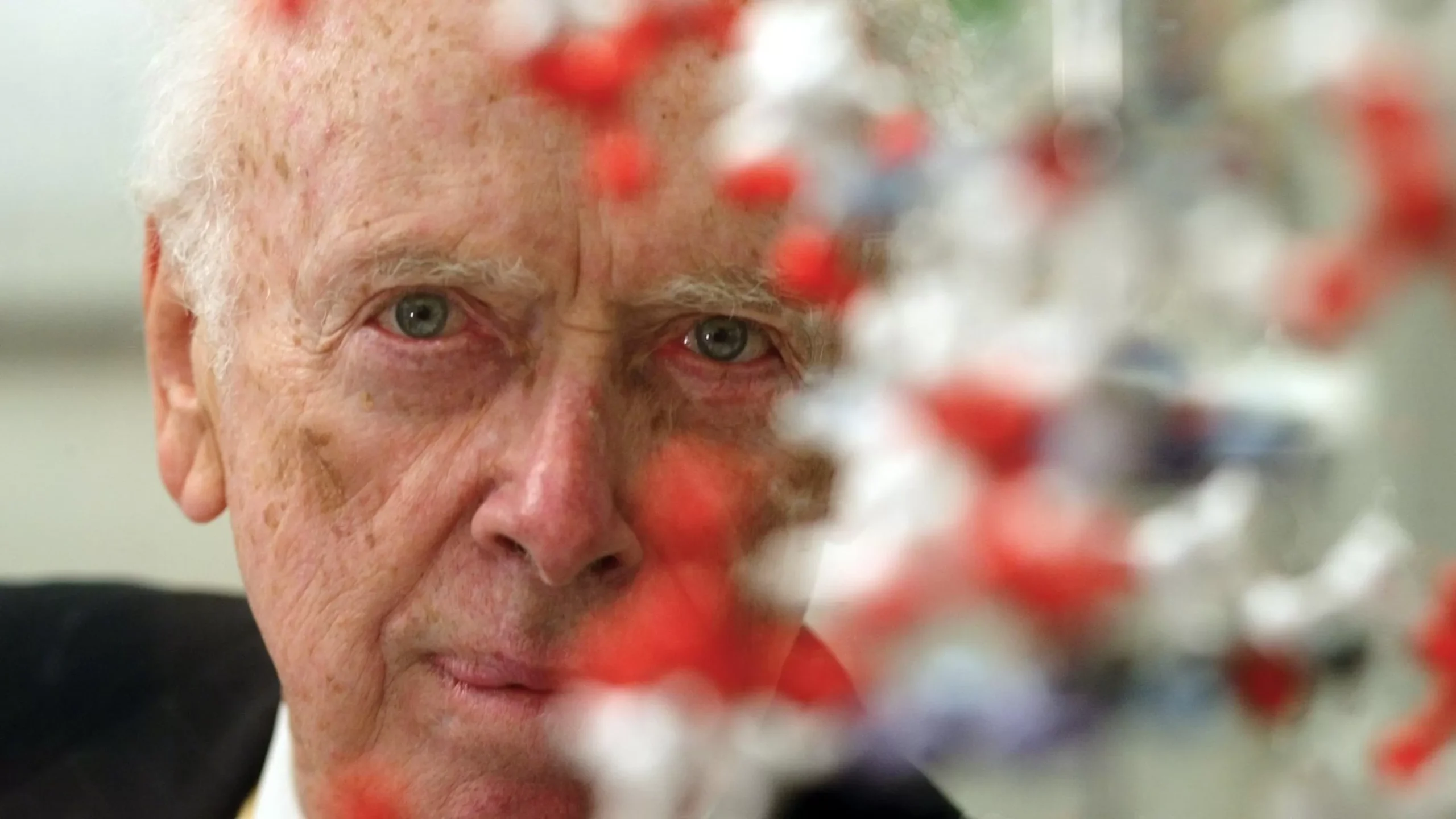
Renowned scientist James Watson, who shared a Nobel Prize for his groundbreaking work in discovering the double-helix structure of the DNA molecule, has passed away at the age of 92. His death has left the scientific community in mourning and has sparked a wave of tributes and remembrances for his immense contributions to the field of genetics.
Born on April 6, 1928, in Chicago, Illinois, James Dewey Watson was a curious and ambitious child who showed a keen interest in science from a young age. He pursued his passion for biology and chemistry at the University of Chicago, where he received his Bachelor’s degree in zoology in 1947. He then went on to earn his Ph.D. in zoology from Indiana University in 1950.
Watson’s career took a significant turn when he joined the Cavendish Laboratory at the University of Cambridge in 1951. It was here that he met fellow scientist Francis Crick, and together they embarked on a journey that would change the course of science forever. The duo, along with their colleague Maurice Wilkins, worked tirelessly to unravel the structure of the DNA molecule, which was considered the key to understanding the genetic code of life.
Their groundbreaking discovery, published in the journal Nature in 1953, revealed the double-helix structure of DNA, a spiral staircase-like shape that holds the genetic information of all living organisms. This discovery revolutionized the field of genetics and laid the foundation for modern molecular biology.
In recognition of their groundbreaking work, Watson, Crick, and Wilkins were awarded the Nobel Prize in Physiology or Medicine in 1962. At the young age of 34, Watson became the youngest person to receive this prestigious honor, solidifying his place in history as one of the greatest scientists of all time.
Watson’s contributions to science did not end with the discovery of the DNA structure. He continued to make significant contributions to the field, including his work on the Human Genome Project, which aimed to map the entire human genetic code. He also served as the director of Cold Spring Harbor Laboratory in New York from 1968 to 1994, where he made significant strides in cancer research.
Throughout his career, Watson was known for his sharp intellect, unrelenting curiosity, and unwavering dedication to science. He was a prolific writer, with over 20 books to his name, including the best-selling book “The Double Helix,” which chronicled the story of the DNA discovery.
Watson’s legacy extends far beyond his scientific achievements. He was a vocal advocate for diversity and inclusion in science, and his efforts paved the way for more women and minorities to enter the field. He also used his platform to raise awareness about the importance of science education and the need for continued research in the field of genetics.
The news of Watson’s passing has been met with an outpouring of tributes and condolences from the scientific community. Many have taken to social media to share their memories of working with him and the impact he had on their lives and careers.
In a statement, the Cold Spring Harbor Laboratory described Watson as a “giant in the field of genetics” and praised his “unmatched intellect and passion for discovery.” The laboratory also announced that they will be establishing a scholarship in his name to support young scientists pursuing careers in genetics.
Watson’s death is a significant loss for the scientific community, but his legacy will continue to inspire future generations of scientists. His groundbreaking work has paved the way for countless discoveries and advancements in the field of genetics, and his contributions will be remembered for years to come.
In the words of Watson himself, “Science is a wonderful thing if one does not have to earn one’s living at it.” His passion and dedication to science have left an indelible mark on the world, and his legacy will continue to inspire generations of scientists to come. Rest in peace, James Watson, your contributions to science will never be forgotten.